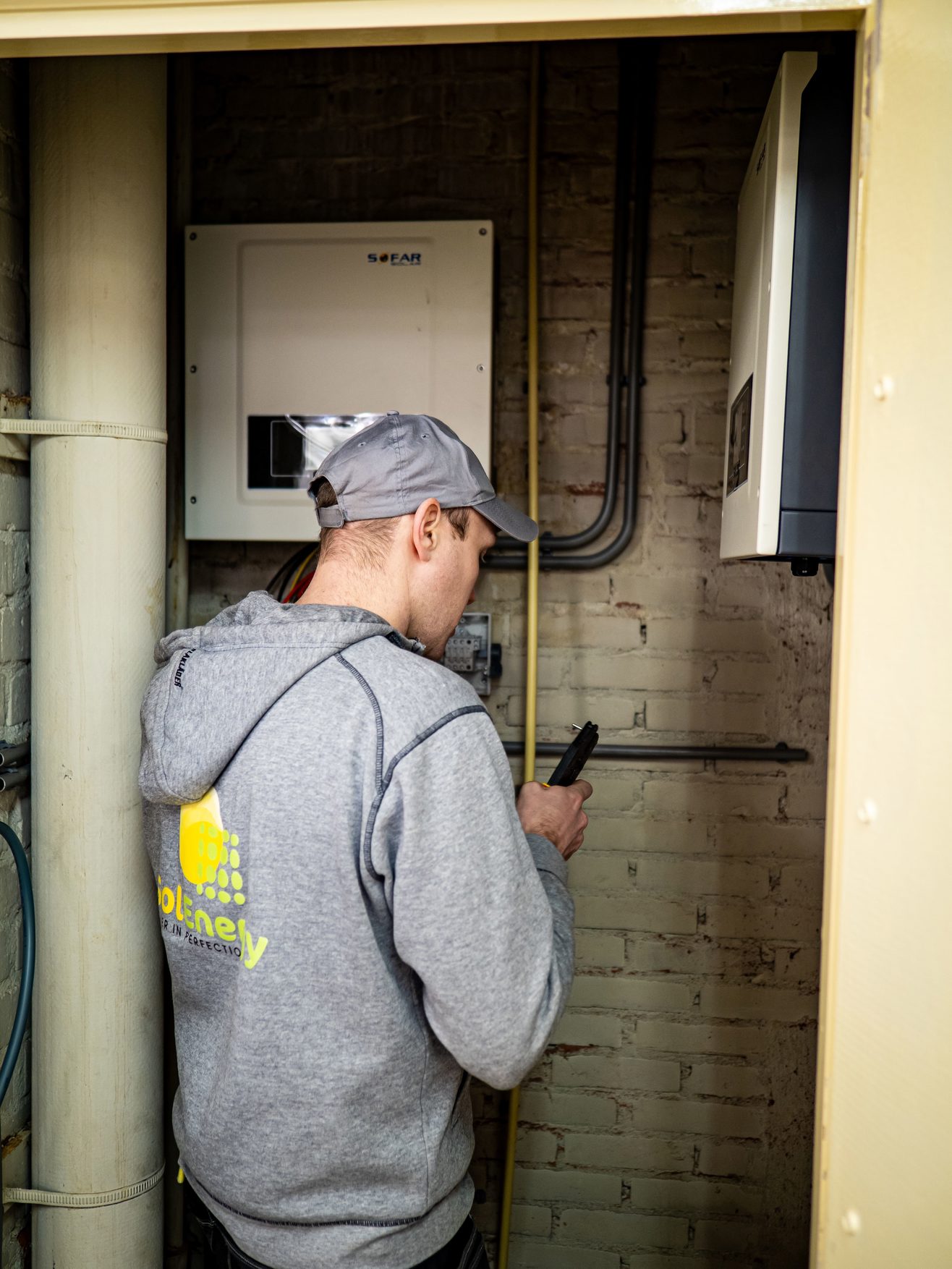
A good solar-home device stack is not the biggest stack you can afford. It is the smallest stack that gives you trustworthy visibility, leaves room for the next upgrade, and avoids buying a second device just to fix the blind spots created by the first one.
That distinction matters because many homes add solar, then add a battery, then add an EV charger, then add a monitoring platform, and only later discover that the devices do not explain the same energy flows. The result is not a smarter home. It is several dashboards arguing with each other.
The practical way to avoid that is to build the stack in layers: first the energy boundary, then the important loads, then the control layer, then long-term data and automation. Each layer should earn its place.
The short version
For most solar homes, the stack should grow in this order:
- Use the inverter app for basic production and fault visibility.
- Add a main meter when you need import, export, and whole-home consumption.
- Add circuit monitoring only for loads that change decisions, such as EV charging, hot water, heat pumps, or pool equipment.
- Choose devices with data access that fits your long-term plan, especially if Home Assistant, local APIs, MQTT, or Modbus matter.
- Add batteries, EV chargers, or smart controllers only after the monitoring layer can prove what problem they are solving.
If you cannot explain what decision a device will improve, it probably should not be the next purchase.
Start with the problem, not the product category
A solar home can need several different kinds of devices, but they do not all solve the same problem.
Before buying anything, write down the main question the stack needs to answer:
| Main question | First layer to check | Why it matters |
|---|---|---|
| Is the solar system producing normally? | Inverter app or platform | Production and fault visibility usually starts here. |
| Am I importing, exporting, or self-consuming? | Main meter | This is the house-level energy boundary. |
| Which load is driving imports or using surplus? | Circuit or appliance-level monitoring | This isolates EV charging, hot water, HVAC, or other major loads. |
| Can I automate surplus use or load shifting? | Meter plus control platform | Control is only useful if the signal is trustworthy. |
| Should I buy a battery or change tariff? | Historical interval data | Sizing and ROI need usage patterns, not one good solar day. |
This is where a lot of overbuying starts. A battery is not a monitoring system. An EV charger is not a whole-home meter. A pretty inverter app is not a complete energy-management layer. Each device needs a job.
Layer 1: inverter visibility is useful, but it is not the whole stack
The inverter app is usually the first dashboard a solar home sees. It is valuable because it can show generation, inverter status, faults, and sometimes battery behavior inside the vendor ecosystem.
But inverter visibility often becomes misleading when owners expect it to explain the whole home. Production is not the same as consumption. Export is not the same as generation. A low import number does not tell you which load used the solar.
Keep the inverter app in the stack, but treat it as the production and system-health layer unless it is explicitly backed by a correctly installed consumption meter.
If this distinction is still fuzzy, the article What a Good Solar Home Monitoring Setup Should Include Beyond the Inverter App is the right foundation.
Layer 2: main metering gives the stack a real boundary
The next high-value layer is usually a main meter or whole-home energy monitor. This is the device that tells you what is happening at the grid connection or main supply boundary.
A good main-meter layer should help answer:
- how much the home imports from the grid
- how much solar is exported
- whether daytime self-consumption is improving
- whether evening load is driving most grid cost
- whether a battery, EV charger, or hot-water strategy actually reduced imports
This is why main metering is often a better second purchase than a collection of circuit sensors. Without the boundary, you can know that one load used 8 kWh and still not know whether the home performed better overall.
For product direction, Smart Meter Selector is a useful first screen before comparing exact meters. If the site is three-phase, the recent guide Best Meter for Three-Phase Solar Homes gives a more specific comparison path.
Layer 3: circuit monitoring should be selective
Circuit monitoring is powerful when it answers a specific question. It becomes expensive clutter when it is installed just because more channels sound better.
The best circuit candidates are usually:
- EV charger
- electric hot-water system
- heat pump or ducted HVAC
- pool equipment
- workshop, rental unit, or subpanel
- battery backup or critical-load panel where separate visibility changes operation
The test is simple: would knowing this circuit's energy use change what you do?
If yes, meter it. If no, wait.
This is especially important for buyers comparing compact two-channel monitors, panel-wide systems, DIN-rail meters, and CT-based meters. A small monitor can be excellent for one or two loads. A panel monitor can be excellent for broader branch visibility. A DIN-rail Modbus meter can be excellent for installer-led measurement or inverter compatibility. None of them is automatically the best fit for every home.
For a deeper framework, see Main Meter vs Circuit Meter for Solar Homes.
Layer 4: choose the data path before the stack gets locked in
The most painful stack mistakes often show up later, when the owner wants better data access.
A device can look good on day one because the app is polished. But if the data is trapped in a cloud account, delayed, hard to export, or impossible to combine with other devices, it may become the wrong long-term anchor.
This matters if the home may eventually use:
- Home Assistant
- MQTT
- Modbus
- local HTTP APIs
- self-hosted dashboards
- tariff simulation
- EV charging automation
- solar-surplus control
- mixed-brand batteries, chargers, and meters
An app-first device can still be fine when the goal is simple viewing. A local-data device becomes more valuable when the goal is integration, automation, or long-term ownership.
The practical rule is this: if the device will become part of the control logic, not just a display, check the data path before buying. How to Choose an Energy Meter If You Care More About Data Access Than App Design covers this trade-off in more detail.
Layer 5: add control only after measurement is trustworthy
A smart controller, battery, or solar-aware EV charger can be useful, but only when the system knows what it is responding to.
Poor measurement creates poor control. If the house cannot reliably tell whether it is importing or exporting, a controller may switch at the wrong time. If the EV charger cannot see available surplus, it may charge from the grid while the owner thinks it is using solar. If the battery is sized from guesses instead of interval data, it may be too small, too large, or aimed at the wrong problem.
Before adding control hardware, confirm three things:
- The main meter reading makes sense against the utility meter or bill.
- Major flexible loads are visible enough to understand timing and size.
- The control platform receives data quickly enough for the action you expect.
For staged planning, Solar Monitoring Planner, Excess Solar Priority Calculator, and Battery Size Estimator are better first stops than buying the next box immediately.
A practical stack for a simple solar home
A simple solar home might only need three layers:
| Layer | Practical choice | What it solves |
|---|---|---|
| Solar production | Inverter app | Production, faults, warranty visibility |
| Grid boundary | Main meter or whole-home monitor | Import, export, whole-home demand |
| Planning tool | Tariff or solar-priority calculator | Helps decide whether load shifting or battery sizing is worth exploring |
This is enough when the household mainly wants to understand bills, self-consumption, and whether solar is performing as expected.
It is usually too early to buy a large circuit-monitoring system unless there is already a suspect load.
A practical stack for a solar plus EV home
A solar plus EV home needs a little more care because charging can dominate the energy picture.
A sensible stack often looks like this:
| Layer | Practical choice | What it solves |
|---|---|---|
| Solar production | Inverter app | System status and generation |
| Grid boundary | Import/export-aware meter | Shows whether charging increases grid imports |
| EV load | Charger metering or dedicated circuit monitor | Separates vehicle use from normal household load |
| Control | Solar-aware charger or automation platform | Uses surplus or off-peak windows when practical |
The key is not just to know that the EV used 12 kWh. The key is to know whether that 12 kWh came from surplus solar, cheap overnight energy, or expensive evening imports.
That is why an EV charger decision should be made with metering in mind. How to Choose an EV Charger If Future Solar Integration Matters to You is a good companion article.
A practical stack for a battery-ready home
A battery-ready home should avoid locking itself into a dead-end metering path.
The useful stack is usually:
| Layer | Practical choice | What it solves |
|---|---|---|
| Solar and grid visibility | Inverter plus main meter | Establishes production, consumption, import, and export |
| Load shape history | Interval data or monitoring history | Shows whether a battery has enough evening load to serve |
| Compatibility layer | Hybrid inverter, meter, and battery ecosystem checks | Avoids buying hardware that cannot work together later |
| Optional circuit visibility | EV, hot water, HVAC, or critical-load panel | Clarifies what a future battery would actually support |
The important mistake to avoid is buying a battery-ready inverter, a separate charger, and a separate monitor without checking whether their data and control paths can work together later.
The recent guide Best Battery-Ready Upgrade Path for Homes That Are Not Ready to Buy a Battery Yet covers that sequencing in more depth.
Where overbuying usually happens
Buying circuit-level monitoring before fixing whole-home visibility
Circuit data is tempting because it feels detailed. But if the home still cannot explain import, export, and total load, circuit data may not answer the main question.
Buying a premium EV charger when the real constraint is the meter
A charger can have excellent solar features, but it still needs the right measurement signal and electrical headroom. Sometimes the better first purchase is a compatible meter or load-management setup.
Buying a battery before understanding evening demand
A battery should be sized against real load shape, tariff spread, and backup expectations. Without that data, the system may become an expensive guess.
Buying only inside one brand because the app looks tidy
Single-brand ecosystems can be simpler, but they are not always more flexible. If the home may expand into local dashboards, mixed devices, or custom automation, data access and protocol support matter.
Adding a gateway when a direct local interface already exists
Gateways are useful when they solve a real protocol or network problem. They are unnecessary when the meter, inverter, or charger already provides the right local path.
A no-regret upgrade order
A conservative upgrade order looks like this:
- Use the existing inverter app and bill data to identify the missing question.
- Add main metering if import, export, or whole-home load is unclear.
- Validate the meter readings before making decisions from the dashboard.
- Add circuit monitoring only for loads that will change a decision.
- Decide whether local data, Home Assistant, or cloud convenience should lead the platform choice.
- Add control devices only when the target load, control signal, and payback logic are clear.
- Recheck the stack before adding batteries, EV chargers, or backup wiring.
This order keeps the stack useful without making it rigid. It also leaves room for the home to grow from basic solar monitoring into EV charging, battery planning, and automation without forcing a full rebuild.
What a good stack feels like in daily use
A well-built stack does not require the owner to open five apps and reconcile the numbers by hand.
It should make the main flows obvious:
- solar production
- household consumption
- grid import
- grid export
- battery charge and discharge, if present
- EV charging or other major flexible loads
- tariff or time-window context where relevant
It should also make uncertainty visible. If a number is estimated, delayed, cloud-dependent, or based on a partial measurement point, the owner should know that before trusting it.
For more advanced readers, this is where Home Assistant, IAMMETER Local, or a self-hosted project such as energy-device-gateway can become useful. But those layers should serve the architecture, not become the architecture by themselves.
Bottom line
The best solar-home device stack is built from the measurement boundary outward.
Start with production visibility. Add a main meter when the home needs import, export, and whole-home consumption. Add circuit monitoring only where load-level detail will change a decision. Choose the data path before the stack becomes hard to change. Add control hardware only when the monitoring layer can prove what it should control.
That approach keeps the system practical. It also keeps the budget pointed at the devices that make the next decision clearer, instead of at hardware that simply adds another dashboard.
Related reading
- How to Plan a Home Energy Monitoring Setup That You Will Not Outgrow in a Year
- How to Choose an Energy Meter If You Care More About Data Access Than App Design
- Best Meter for Three-Phase Solar Homes
- Best Battery-Ready Upgrade Path for Homes That Are Not Ready to Buy a Battery Yet