A full microinverter system is the cleaner answer when every panel needs independent conversion, panel-level visibility, and a future path into an AC-coupled ecosystem. But it is not always the most sensible answer for a real roof. If the problem is limited shade on a few modules, mixed orientations on one string, or the need to add module-level safety and monitoring to an otherwise reasonable string-inverter design, Tigo TS4-A-O can be the more cost-effective fix.
The important word is limited. Tigo optimizers are not magic boxes that turn a poor string design into a perfect system. They work best when the array already has a coherent inverter and MPPT design, and only part of the roof needs module-level help. Microinverters make more sense when the whole roof is irregular, the homeowner wants panel-by-panel AC architecture from day one, or the installer is building around an Enphase-style battery and monitoring ecosystem.
This guide compares the two paths from a buyer's point of view: not just energy yield, but design flexibility, safety, monitoring, serviceability, Home Assistant data, battery plans, and how much complexity you are taking on.
Short Answer
Choose Tigo TS4-A-O when you have a string-inverter system that is mostly sensible, but a few panels suffer from shade, mismatch, mixed orientation, or module-level safety and monitoring requirements. Its biggest advantage is selective deployment: you may be able to optimize only the modules that need it instead of replacing the whole architecture.
Choose full microinverters when each module should operate independently, when roof faces are fragmented, when future expansion is likely, when panel-level troubleshooting matters more than lowest hardware cost, or when the homeowner wants an AC-coupled platform with strong app and battery integration.
| Decision factor | Tigo TS4-A-O | Full microinverters |
|---|---|---|
| Best fit | Mostly-good string systems with targeted mismatch | Roofs where every module benefits from independence |
| Deployment style | Can be selective when design rules allow | Usually one microinverter per module |
| Conversion architecture | DC optimizer feeding a string inverter | DC-to-AC conversion at each module |
| Shade benefit | Strongest on affected modules and strings | Built into every module position |
| Monitoring | Module-level monitoring with CCA and TAP | Module-level monitoring through gateway/platform |
| Rapid shutdown | Supported with required Tigo system components | Built into many microinverter systems when installed correctly |
| Battery path | Depends on the central inverter ecosystem | Often AC-coupled and platform-led |
| Main risk | Misapplied selective deployment or weak system design | Higher upfront cost and more rooftop electronics |
What Tigo TS4-A-O Actually Does
Tigo describes TS4-A-O as an add-on module-level power electronics device for optimization, monitoring, and rapid shutdown. It is designed for shaded or mismatched modules and supports modules up to 725 W according to the current product page. Tigo also says the TS4-A-O works with TAP and CCA communication hardware and carries a 25-year warranty.
The practical meaning is simple: TS4-A-O is not a microinverter. It does not convert each panel's DC output into AC on the roof. Instead, it helps selected modules behave better inside a string-inverter system. The central inverter still matters. MPPT design still matters. String layout still matters.
That is why TS4-A-O can be very useful and very easy to oversell. It is a targeted design tool, not a universal cure.
Why Selective Deployment Is the Big Difference
Tigo's strongest argument is selective deployment. The company defines selective deployment as a mix of TS4-A-O and TS4-A-S across modules, using CCA and TAP communication, where the modules that need optimization get optimizers while the rest receive the appropriate module-level electronics for safety and monitoring.
That can reduce cost and improve return on investment because not every panel needs the same function. If three panels are shaded by a chimney in winter, optimizing those modules can make more sense than paying for a full microinverter system across the entire roof.
But selective deployment has rules. Tigo's own guidance says selective optimization should only be used when a string has its own MPPT and is actively independent of any other string. Selective deployment on parallel strings is not supported. This is a design constraint, not a footnote.
If your installer cannot clearly explain the string layout, MPPT allocation, and which modules will receive which TS4 units, pause before approving the quote.
When Tigo TS4-A-O Is Good Enough
Tigo TS4-A-O is usually worth considering when the roof has one or two specific problem areas rather than general complexity.
Good-fit scenarios include:
- a mostly sunny roof with a chimney, dormer, vent pipe, or tree shade affecting a few panels
- mixed panel orientations that are still arranged into sensible independent strings
- a retrofit where the existing string inverter is staying in place
- a system that needs rapid shutdown and module-level visibility without moving to microinverters
- a homeowner who wants better troubleshooting but does not need every part of the solar system rebuilt
- a budget-sensitive project where full microinverters would consume money better spent on system size, metering, or battery preparation
The value case is strongest when a small amount of rooftop electronics solves a clearly identified problem. If the shade pattern is known, repeatable, and limited, targeted optimization can be a smart fix.
When Microinverters Are Worth Paying For
Microinverters are usually the stronger answer when the roof itself is complicated.
They make more sense when:
- panels are spread across several roof faces with different tilt and orientation
- shade moves across the array throughout the day
- future expansion is likely and the homeowner wants a modular AC architecture
- panel-level production data is important for long-term service and warranty conversations
- the buyer prefers a single platform for inverter monitoring, app alerts, and battery integration
- the central inverter location, string design, or DC wiring path is difficult or unattractive
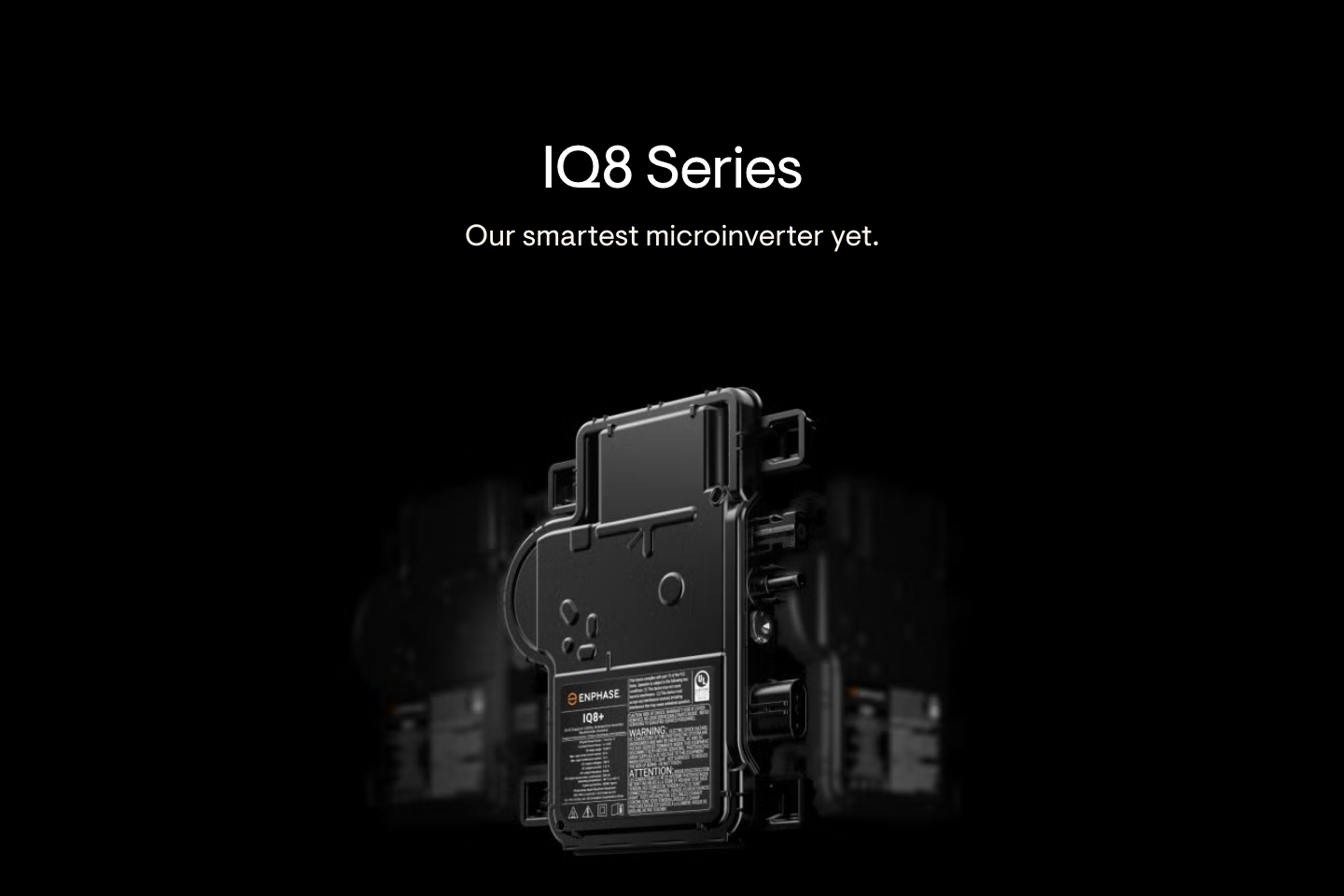
Enphase positions its IQ microinverters around module-level operation, app-based monitoring, software updates, built-in rapid shutdown, and long warranty coverage. Whether Enphase is the right brand is a separate question, but the architecture is clear: each module has its own inverter instead of relying on one central string inverter.
That architecture costs more upfront, but it can be easier to live with on roofs where almost every panel has a different job.
Monitoring: Both Can Be Panel-Level, But the Experience Differs
Both paths can provide module-level visibility, but the experience is not identical.
With Tigo, module-level monitoring depends on the broader Tigo communication setup, including CCA and TAP where required. This can be powerful for diagnostics, but it is another layer on top of the inverter platform. The homeowner may end up with a string inverter app plus Tigo monitoring plus any separate energy meter or Home Assistant dashboard.
With microinverters, monitoring is usually designed as part of the inverter ecosystem. The Enphase Home Assistant integration, for example, can expose aggregated production and individual microinverter production data through the Envoy or gateway, with the exact entities depending on the installed system and configuration.
For EnergyMeterHub readers, this distinction matters. The question is not only, "Can I see panel-level data?" It is also, "Where will that data live, how often will it update, and can it be combined with grid import, export, battery, and load data?"
If you care about whole-home visibility, do not stop at panel output. You still need clean import/export monitoring from a meter or gateway. A great panel-level app can still fail to explain why the bill is high.
Rapid Shutdown and Safety Requirements
Both Tigo MLPE and many microinverter systems can support rapid shutdown when designed and installed correctly. Tigo states that TS4-A-O provides rapid shutdown along with optimization and monitoring, while Enphase says its energy systems include built-in rapid shutdown so solar power can be turned off quickly in an emergency.
The buyer takeaway is not to treat rapid shutdown as a generic checkbox. Ask which standard or local rule the system is designed to meet, what device initiates shutdown, which modules are covered, and whether the installed inverter and MLPE combination is certified for that use.
This is especially important in retrofit projects. A quote that says "Tigo optimizers added" is not enough. You want the full safety architecture: TS4 type, CCA, TAP, transmitter requirements, inverter compatibility, commissioning steps, and documentation.
Battery and Backup Path
Battery planning is where the two choices often diverge.
A Tigo optimizer setup still depends on the central inverter architecture. If the string inverter is hybrid and battery-ready, the battery path may be neat. If it is not, the homeowner may later need an AC-coupled battery or an inverter replacement. Tigo can improve module behavior, but it does not by itself make the whole system battery-ready.
A microinverter system often points toward an AC-coupled battery path, especially inside a platform such as Enphase. That can make future storage easier to understand, but it may also lock more of the system into one vendor ecosystem.
Neither route is automatically better. The right question is: what will the next upgrade be? If the answer is only "fix shade on three panels," Tigo may be enough. If the answer is "build a solar, battery, backup, EV charging, and monitoring platform over ten years," microinverters may justify the higher starting cost.
Service and Failure Risk
Microinverters put more active electronics on the roof. Optimizers also add module-level electronics, but selective deployment can mean fewer devices than a full microinverter system. Fewer rooftop devices can reduce parts count, but it does not remove the need for good commissioning and documentation.
Service risk is less about which technology sounds simpler and more about whether the installer can diagnose it later.
Before choosing either path, ask:
- Which components will be on the roof?
- Which components will be in the switchboard or near the inverter?
- Which app or portal will show faults?
- Can the installer see module-level data remotely?
- What happens if the inverter brand, gateway, or internet connection changes?
- Who owns the monitoring account?
- Is the as-built string map documented?
A cheaper quote is not cheaper if nobody can troubleshoot it three years later.
A Practical Decision Checklist
Use this checklist before choosing Tigo TS4-A-O or full microinverters.
| Question | If the answer is yes | Likely direction |
|---|---|---|
| Are only a few modules shaded or mismatched? | The problem is targeted | Tigo TS4-A-O may be enough |
| Are many modules on different roof faces? | Every module behaves differently | Microinverters are stronger |
| Is there already a good string inverter? | Retrofit value matters | Tigo is worth pricing |
| Do you want one platform for solar, app, battery, and backup? | Ecosystem simplicity matters | Microinverters may fit better |
| Is selective deployment allowed by the string and MPPT design? | The design constraint is satisfied | Tigo becomes more credible |
| Do you need panel-level AC architecture? | Each panel should be independent | Microinverters are the clean route |
| Is budget better spent elsewhere? | Metering, battery prep, or more panels matter more | Tigo may protect the budget |
| Is the installer vague about wiring and monitoring? | Design confidence is weak | Do not proceed yet |
Recommendation by Buyer Type
For a retrofit solar owner with one shaded roof area, start by pricing Tigo TS4-A-O or another targeted optimizer path. The goal is to solve the known mismatch without rebuilding a system that otherwise works.
For a new solar buyer with a complex roof, microinverters are often easier to justify. The architecture matches the roof complexity from day one, and the monitoring story is cleaner.
For a battery-ready buyer, do not choose based on optimizer vs microinverter alone. Choose based on the full inverter and battery architecture. A Tigo-enhanced string system can be excellent if the inverter path is right; a microinverter system can be excellent if the AC-coupled platform fits your backup and storage goals.
For a Home Assistant or data-focused buyer, ask how the solar data will leave the vendor platform. Enphase has a documented Home Assistant Envoy integration, while Tigo data often sits in the Tigo monitoring layer. Either way, add grid import/export metering if you want to understand self-consumption and bills, not just panel output.
Bottom Line
Tigo TS4-A-O is the better value when the problem is specific: a few shaded modules, a retrofit string system, or a need for targeted optimization, monitoring, and rapid shutdown without paying for microinverters on every panel.
Full microinverters are the better long-term architecture when the roof is complex, every panel needs independent operation, platform simplicity matters, or the homeowner is building a broader solar-and-battery ecosystem.
The cheapest good answer is not always the cheapest hardware. It is the design that solves the actual roof problem without creating a monitoring, service, or upgrade problem later.
Related EnergyMeterHub Guides
- Microinverter vs String Inverter vs Optimizer: Which Architecture Fits a Normal Roof?
- Enphase IQ8 vs Fronius GEN24: Which Solar Upgrade Path Is Better?
- When Module-Level Visibility Is Actually Worth Paying For
- How to Plan a Home Energy Monitoring Setup That You Will Not Outgrow in a Year