A three-phase meter is worth installing in a residential solar home when the extra phase-level visibility will change a real decision: how the inverter is connected, whether one phase is importing while another exports, whether an EV charger or heat pump is stressing one phase, or whether a battery and dashboard need cleaner whole-home data.
It is usually not worth buying just because the home has three-phase supply. If the inverter, battery, and major loads are already monitored well, and the owner only needs a rough bill-level view, a simpler meter or the inverter's existing smart meter may be enough.
This guide sits between two related questions: how to read three-phase data, and which three-phase meter to buy. The focus here is earlier: deciding whether a three-phase meter is actually the right upgrade.
The short answer
A three-phase meter is usually worth it when at least two of these are true:
- the home has three-phase supply and solar export/import behavior is unclear
- the solar inverter, battery, or EV charger is connected in a way that makes phase balance important
- the owner needs reliable import/export numbers for Home Assistant, Modbus, IAMMETER Cloud, SolarAssistant, Grafana, or another dashboard
- the house has large single-phase loads, such as EV charging, heat pumps, hot water, pool equipment, or workshop circuits
- the inverter or battery ecosystem requires a supported three-phase meter for control, export limiting, or monitoring
- the utility bill or app data suggests the house is importing unexpectedly even during strong solar hours
It is less likely to be worth it when the home is single-phase, the existing inverter meter already gives accurate whole-home data, or the goal is only a basic monthly usage estimate.
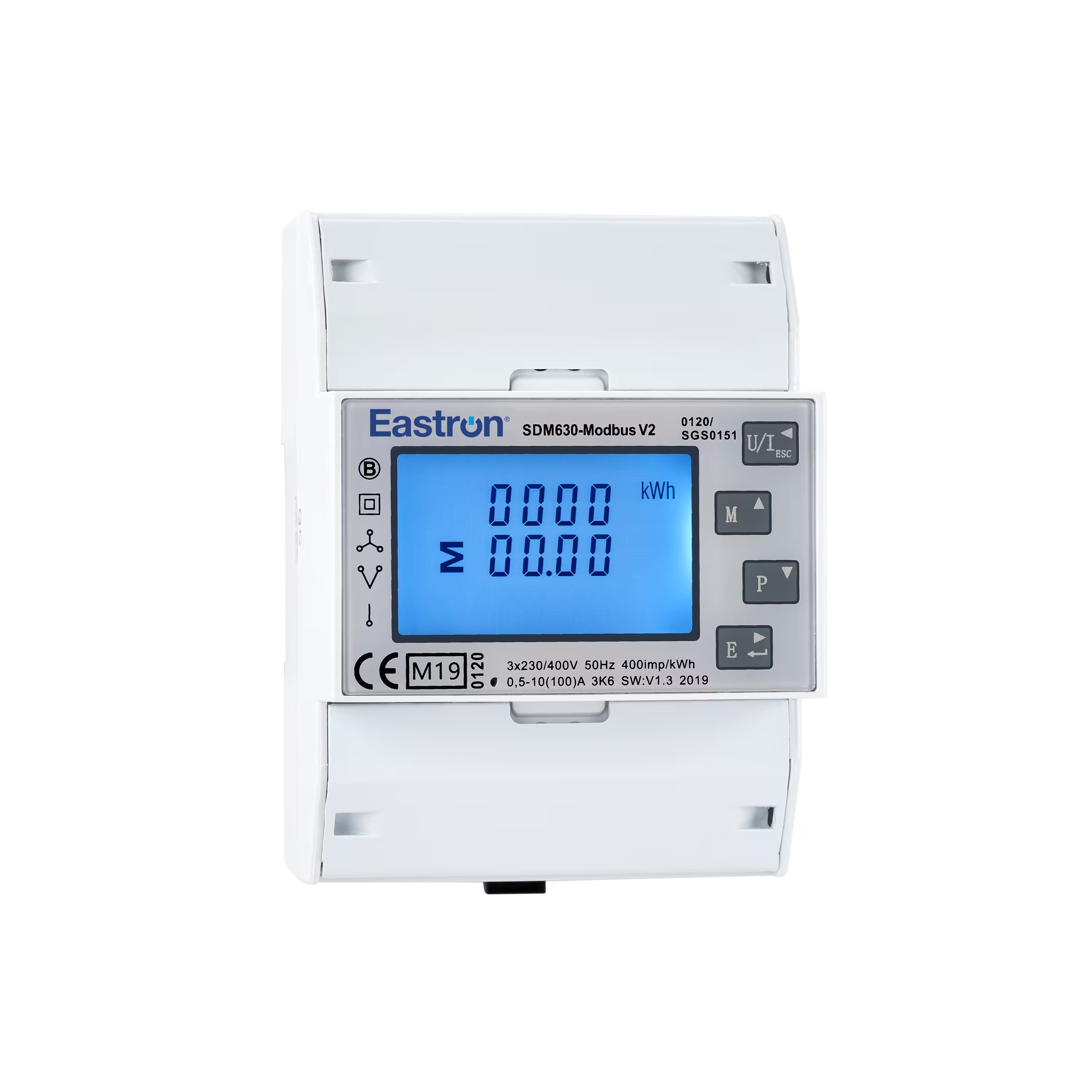
Three-phase DIN-rail meters are most useful when phase-level data changes a monitoring, control, or upgrade decision, not simply because the switchboard has three phases available.
Why three-phase solar homes are different
In a single-phase solar home, the main energy picture is usually easier to explain. Solar production, household load, grid import, and grid export all sit on one electrical phase.
In a three-phase home, the total number may hide a more complicated reality. One phase may be exporting while another imports. A single-phase EV charger may sit on one phase. A single-phase battery inverter may only support part of the house. A three-phase inverter may distribute generation differently from a single-phase load.
This does not automatically mean the system is wrong. In many markets, billing and net metering rules decide whether phase imbalance matters financially. But for monitoring, troubleshooting, and control, phase detail can be the difference between a useful dashboard and a misleading one.
A three-phase meter becomes valuable when it helps answer questions like:
- Is the home importing on one phase while exporting on another?
- Is a large load concentrated on a single phase?
- Does the inverter's export limit depend on per-phase readings or total site power?
- Is the battery covering all phases, one phase, or only selected backup circuits?
- Are Home Assistant or inverter app totals hiding a phase-specific issue?
The main situations where a three-phase meter earns its place
1. You need reliable whole-home import and export
For solar homes, the most important measurement point is often the grid boundary. If the meter at that point can show import and export per phase, it becomes much easier to understand what the site is doing.
A three-phase meter is especially useful if the inverter app only shows production, or if the smart meter data from the utility is too delayed for operational decisions. Real-time or near-real-time import/export readings can help with solar self-consumption, battery sizing, EV charging, and tariff planning.
This is the same principle behind Home Assistant's energy documentation: the energy model becomes more useful when grid, solar, battery, and individual device data are brought into one structure. For three-phase homes, the grid layer is simply more demanding.
2. Your inverter or battery ecosystem requires it
Some inverter and battery systems need a supported meter for export limiting, zero-export control, battery operation, or consumption monitoring. In that case, the first question is not which generic meter has the best app. It is which meter the inverter or battery can actually use.
Examples include vendor-approved meters from inverter ecosystems, Modbus meters with known register maps, or CT-operated meters designed for a specific platform. A generic three-phase meter may be excellent for independent monitoring and still not be accepted by the inverter for control.
If the meter will influence control decisions, prioritize official compatibility, installation guidance, and installer support before dashboard preference.
3. One large load is distorting the picture
A three-phase supply does not mean all loads are balanced. Many residential loads are still single-phase.
Common examples include:
- home EV chargers
- heat pumps
- electric hot water systems
- ovens and induction cooktops
- pool equipment
- workshop or garage circuits
- subpanels feeding a separate area
If one large load sits mostly on one phase, a total-only dashboard may miss the operational detail. The home may look fine in aggregate while one phase is doing most of the work.
A three-phase meter helps reveal whether the problem is total consumption or phase placement. That can affect whether the next fix is load shifting, circuit relocation, dynamic load management, charger settings, or simply better dashboard labeling.
4. You are planning EV charging or dynamic load management
EV charging is one of the clearest reasons to care about phase visibility.
A three-phase charger may draw across all phases. A single-phase charger may draw heavily from one phase. Some homes can support a charger comfortably in total but still need careful load management because the phase carrying the charger also carries other heavy loads.
If the charger, meter, and control platform can see the right phase data, the system can make better decisions about throttling, solar-aware charging, or avoiding overload. If the control system only sees a vague whole-home number, it may be too conservative, too slow, or simply wrong for the site's electrical layout.
This is why the meter decision should be made before assuming a future EV charger will be easy to coordinate with solar.
5. You want local dashboards or automation
A three-phase meter can be a strong foundation for Home Assistant, MQTT, Modbus, Grafana, IAMMETER Local, or similar systems, but only if the data is accessible in a clean way.
For local dashboards, check whether the meter can provide:
- per-phase voltage, current, power, and energy
- total active power and cumulative import/export energy
- separate import and export counters where possible
- a documented Modbus, MQTT, HTTP, or local API path
- stable polling without depending entirely on a vendor cloud
For Home Assistant in particular, cumulative energy sensors matter. Live watts are useful for troubleshooting, but the Energy dashboard needs long-term energy readings in kWh. Three-phase meters that expose clean cumulative entities are easier to work with than meters that only provide live power snapshots.
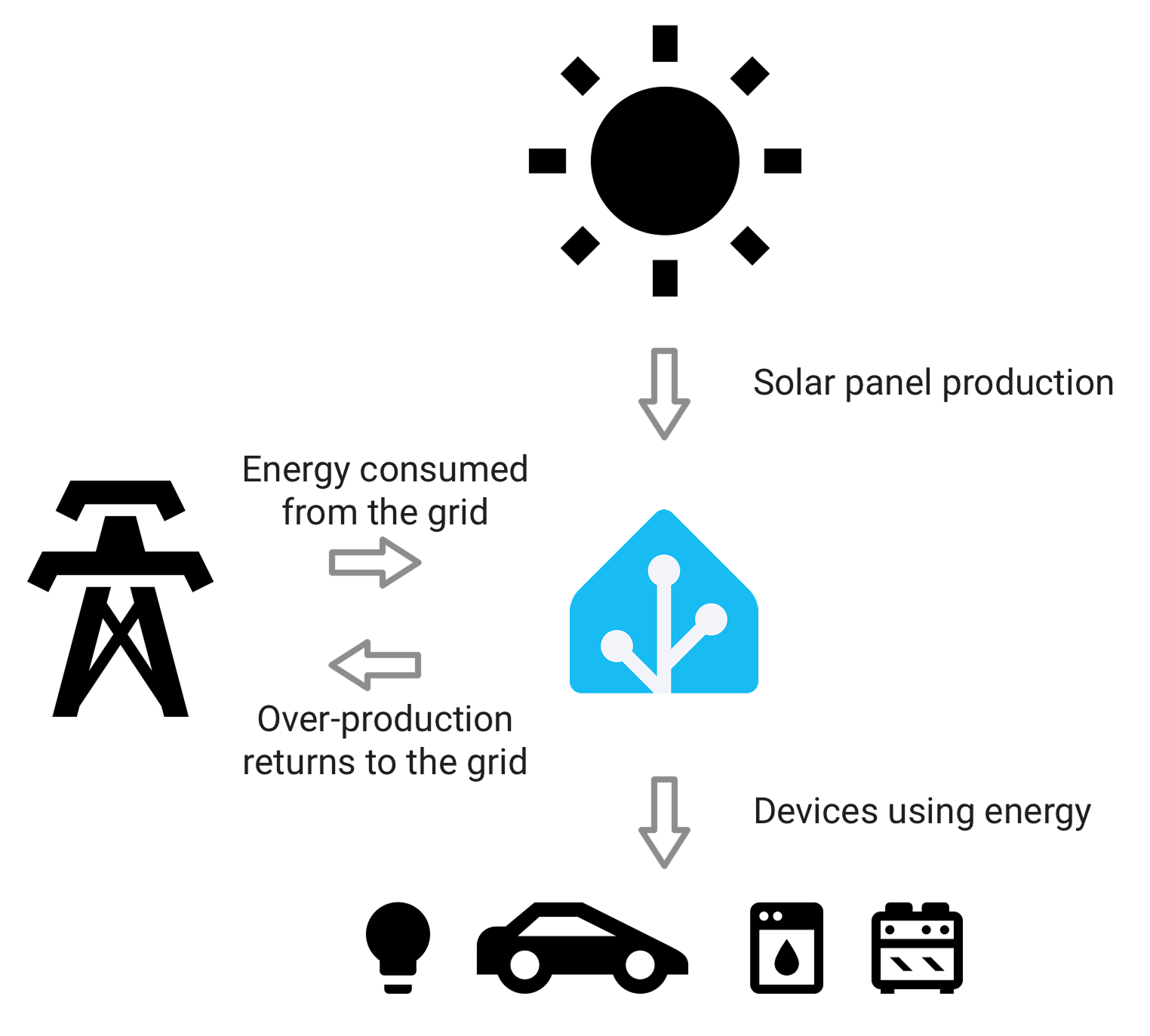
Three-phase data becomes more useful when the dashboard can organize grid, solar, battery, and major loads into one consistent model.
When a three-phase meter may not be worth it
A three-phase meter is not automatically the best next purchase.
It may be unnecessary when:
- the home is actually single-phase or split-phase and does not need a three-phase meter
- the inverter already has an accurate, supported meter installed
- the owner only needs utility-bill-level monthly data
- the main issue is a single load that would be better monitored with a circuit meter
- the chosen dashboard cannot use the extra phase-level data clearly
- installation cost is high and the decision it would support is vague
There is also a practical maintenance point. Three-phase meters create more data. More channels mean more labels, more entities, more chances for CT orientation mistakes, and more confusion if the dashboard is not designed carefully.
If the article you need to write in your head is still "I want better visibility, but I do not know what I need to see," start with the measurement question first. A three-phase meter should answer a defined question, not compensate for unclear planning.
CT-operated vs direct-connected three-phase meters
A major buying decision is whether the meter is direct-connected or CT-operated.
| Meter type | Good fit | Watch out for |
|---|---|---|
| Direct-connected DIN-rail meter | Smaller residential or light commercial circuits within the meter's current rating | Current limit, installation space, and whether all conductors must pass through the meter |
| CT-operated meter | Higher-current services or panels where running the full current through the meter is impractical | CT ratio, CT orientation, phase matching, and extra wiring complexity |
| Vendor ecosystem meter | Inverter, battery, or EV charger control where compatibility matters | May be less open for third-party dashboards |
| Open Modbus/Wi-Fi meter | Local dashboards, Home Assistant, custom monitoring, flexible data use | Requires more setup discipline and documentation |
Direct-connected meters such as Eastron SDM630 or Chint DTSU666-style devices can be a tidy fit where their current rating and wiring method match the installation. CT-operated meters such as Fronius Smart Meter IP, Victron VM-3P75CT, or higher-current WattNode-style meters make more sense when the service size or wiring layout calls for external current transformers.
Neither category is automatically better. The right choice depends on current level, installation constraints, compatibility, and data path.
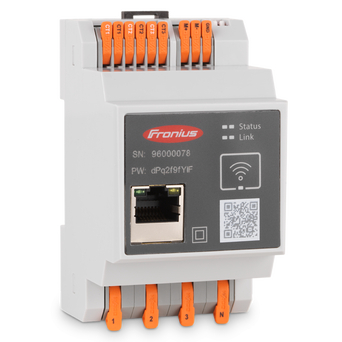
CT-operated three-phase meters are useful when the service current is too high or too awkward for a direct-connected DIN-rail meter, but CT ratio and phase matching must be handled carefully.
What to check before buying
Before choosing a three-phase meter, collect these details:
| Check | Why it matters |
|---|---|
| Supply type | Confirms whether the home is truly three-phase, split-phase, or single-phase |
| Inverter phase type | Single-phase and three-phase inverters create different monitoring needs |
| Battery topology | A battery may cover all phases, one phase, or only backup circuits |
| EV charger plan | Charger phase and load management affect the meter choice |
| Meter role | Monitoring-only and control-required meters have different compatibility requirements |
| Current rating | Determines whether direct-connected or CT-operated metering is appropriate |
| CT ratio and orientation | Wrong CT setup can make phase data misleading |
| Data access | Modbus, MQTT, local API, cloud app, or inverter bus determines dashboard options |
| Dashboard support | The platform must be able to use per-phase and cumulative energy values correctly |
Do this before installation, not after. Reworking a three-phase meter installation can be expensive and annoying, especially if CTs are hard to access or phase labels were not documented.
Practical decision paths
Choose a three-phase meter if you need the site boundary
This is the most common reason. If you need to understand import/export across all phases, especially for solar self-consumption, battery decisions, or Home Assistant, a three-phase grid-boundary meter is often the right first layer.
Choose an inverter-approved meter if control depends on it
If export limiting, battery behavior, or inverter reporting depends on meter data, official compatibility comes first. You can still add a second open meter later if the owner-facing data is not enough.
Choose a circuit meter if the real problem is one load
If the whole-home picture is already good and the question is about an EV charger, hot water system, heat pump, or workshop circuit, a targeted circuit meter may be more useful than another site-level three-phase meter.
Choose a simpler path if the decision is not clear yet
If the home only needs occasional bill comparison or a basic production dashboard, do not overbuild the metering layer. Better monitoring should reduce confusion, not create a second project to maintain.
Common mistakes to avoid
Treating total power as if it explains every phase
Total kW is useful, but it can hide one phase importing while another exports. If phase behavior matters to the decision, total-only monitoring is not enough.
Buying an open meter when the inverter needs a specific one
An open Modbus or Wi-Fi meter may be excellent for a dashboard and still wrong for inverter control. Separate monitoring and control requirements before buying.
Installing CTs without clear labels
Three-phase CT mistakes are easy to make and hard to diagnose later. Label phase, direction, channel, CT ratio, meter address, and dashboard entity names.
Assuming Home Assistant support means the energy model is done
Home Assistant can organize energy data well, but it still needs correct entities: cumulative kWh, clear import/export separation, and no double counting between parent meters and child devices.
Overbuying before knowing the future loads
If the home may add EV charging, battery storage, or electric hot water later, plan the meter path. But do not buy a high-complexity setup unless it protects a likely decision.
Bottom line
A three-phase meter is worth it for a residential solar home when phase-level data helps explain or control something important: grid import/export, inverter behavior, battery operation, EV charging, large loads, or local dashboards.
It is not worth it just because three-phase sounds more complete. If the existing system already gives trustworthy whole-home data and no phase-specific decision depends on the extra detail, a simpler meter or a targeted circuit monitor may be the better upgrade.
The practical rule is simple: buy a three-phase meter when it gives you a better source of truth. Skip it when it only gives you more numbers.
Related EnergyMeterHub pages
- Best Meter for Three-Phase Solar Homes: IAMMETER WEM3080T vs Eastron SDM630 vs Chint DTSU666
- How to Read Three-Phase Home Energy Data Without Getting Lost
- Main Meter vs Circuit Meter for Solar Homes: Which One Do You Actually Need?
- What to Check Before Adding an Energy Meter to an Existing Solar System
- Home Assistant Energy Dashboard: Complete Setup Guide for Smart Meters
- Eastron SDM630
- Chint DTSU666
- IAMMETER WEM3080T
- Fronius Smart Meter IP 5kA-3
Sources
- Home Assistant energy documentation
- Home Assistant grid integration documentation
- IAMMETER solar PV monitoring documentation
- Eastron SDM630 Modbus product page
- Chint DTSU666 official product page
- Fronius Smart Meter IP 5kA-3 product page
- Victron Energy Meter product page
- OpenEnergyMonitor CT sensors introduction