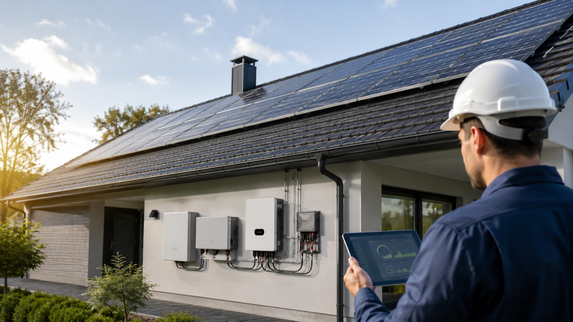
Most normal homes do not need the most complicated solar inverter architecture. They need an architecture that matches the roof, keeps monitoring understandable, leaves sensible room for future upgrades, and does not create unnecessary service risk.
For a clean, mostly unshaded roof, a good string inverter can still be the simplest and most cost-effective choice. For a roof with multiple orientations, partial shade, future expansion, or a strong need for panel-level visibility, microinverters or power optimizers can make more sense. The right answer is less about which technology is "best" and more about which trade-offs you are willing to own for the next 10 to 25 years.
The Short Answer
If your roof is simple, sunny, and easy to wire, start by considering a string inverter. It is usually cheaper, has fewer roof-level electronics, and keeps most serviceable electronics on the wall rather than under the panels.
If your roof has shade, several small roof faces, awkward panel groups, or you want panel-by-panel monitoring, microinverters become much more attractive. Each panel has its own inverter, so one panel's weaker output has less influence on the others.
If you want module-level optimization but still prefer a central inverter architecture, power optimizers sit between those two paths. They add electronics behind each panel, improve design flexibility, and usually provide panel-level monitoring, while still using a central inverter.
Quick Comparison
| Architecture | Best fit | Main advantage | Main trade-off |
|---|---|---|---|
| String inverter | Simple roof, one or two good orientations, limited shade | Lower complexity and usually lower cost | Less module-level visibility and less flexible under shade |
| Microinverters | Complex roof, shade, staged expansion, panel-level monitoring | Each panel converts power independently | More roof-level electronics and usually higher upfront cost |
| Power optimizers | Mixed roof conditions with a central inverter preference | Module-level optimization with centralized conversion | More components than a plain string system and brand ecosystem dependency |
What Each Architecture Actually Does
A string inverter connects groups of panels into DC strings and converts the combined DC power into AC power at one central inverter. Many modern string inverters include multiple MPPT inputs and shade-management algorithms, so they are not as crude as older systems. But the design still depends heavily on correct string sizing, similar panel conditions within each string, and sensible roof grouping.
A microinverter system puts a small inverter behind each panel or panel pair. The conversion from DC to AC happens at the module level. This is why microinverters are often easier to apply on roofs with shade, mixed orientations, dormers, or small panel groups. They also make panel-level monitoring a normal part of the system rather than an add-on.
A power optimizer system puts a DC optimizer behind each panel, then sends optimized DC power to a central inverter. Optimizers can reduce mismatch losses, help with panel-level monitoring, and support more flexible string design. They do not remove the central inverter from the architecture, so you still have a main inverter as a key service item.
Where a String Inverter Still Makes Sense
A string inverter is not an outdated choice. It is often the most practical architecture for a normal roof with good sun exposure and clean panel layout. If most panels face the same direction, see similar sunlight, and fit into one or two well-designed strings, the extra electronics of microinverters or optimizers may not pay back in everyday use.
String systems can also be easier to service. The inverter is usually accessible on a wall, in a garage, or near the switchboard. If it fails, the repair may not require lifting panels from the roof. For many homeowners, that is a real long-term advantage.
The main thing a plain string system gives up is panel-level detail. You may know that the system is producing less than expected, but you may not immediately know whether one panel is shaded, dirty, damaged, or underperforming. For some households that is fine. For others, especially larger or harder-to-access arrays, it can become frustrating.
Where Microinverters Become the Better Fit
Microinverters are strongest when the roof is not simple. Think of homes with several roof faces, afternoon shade from trees, panels split around vents or skylights, or staged upgrades where more panels may be added later.
Because each panel has its own conversion path, the system can be more tolerant of uneven conditions. Microinverters also make panel-level monitoring easier for homeowners and installers. If one panel is underperforming, the problem is easier to spot.
The trade-off is that there are more active electronic devices on the roof. That does not automatically mean the system is unreliable, but it does change the service model. If a roof-level unit fails, the repair may require roof access and panel removal. You should care about installer quality, product warranty, local support, and how easy it is to replace a failed unit.
Microinverters can also be a cleaner fit when expansion matters. Adding another small group of panels may be simpler than resizing a central inverter or redesigning strings, although local electrical rules and gateway capacity still matter.
Where Power Optimizers Fit
Power optimizers are a middle path. They are useful when you want module-level optimization and panel-level visibility but still want a central inverter. This can work well on roofs with moderate shade, mixed orientations, or design constraints that make a plain string system less attractive.
Optimizers can also make rapid shutdown and module-level monitoring part of the system design in markets where those features matter. The homeowner experience often feels closer to a panel-level monitoring system, while the power conversion still depends on a central inverter.
The biggest caution is ecosystem lock-in. Optimizer systems are usually designed around specific inverter platforms. That can be fine if the installer, support network, and product roadmap are strong in your region. It is less attractive if replacement parts, installer familiarity, or warranty support are uncertain.
The Roof Matters More Than the Brochure
Before choosing an architecture, look at the roof like an installer would:
- How many roof faces will hold panels?
- Do all panels face roughly the same direction?
- Is there shade from trees, chimneys, parapets, antennas, or nearby buildings?
- Will some panels be shaded in winter but not summer?
- Is there enough room for a simple string layout?
- Is future expansion likely?
- Is the roof easy or expensive to access later?
A simple north-facing Australian roof or a clean south-facing US roof may not benefit much from panel-level electronics. A roof split across east, west, and shaded afternoon sections might.
Monitoring: What Will You Actually See?
Monitoring is one of the biggest practical differences between architectures.
A string inverter usually gives system-level production, sometimes string-level detail, and often good app-based historical data. That may be enough if your goal is simply to know whether the system is working and how much energy it produced.
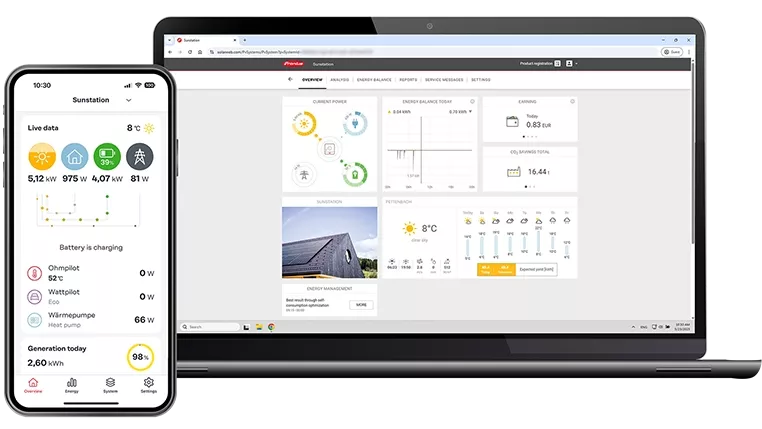
Microinverters and optimizer systems usually offer panel-level visibility. This can be valuable when diagnosing shading, soiling, panel mismatch, or an intermittent fault. But panel-level monitoring is not the same thing as full home energy monitoring. It tells you what the solar array is doing, not necessarily where the home's electricity is going.
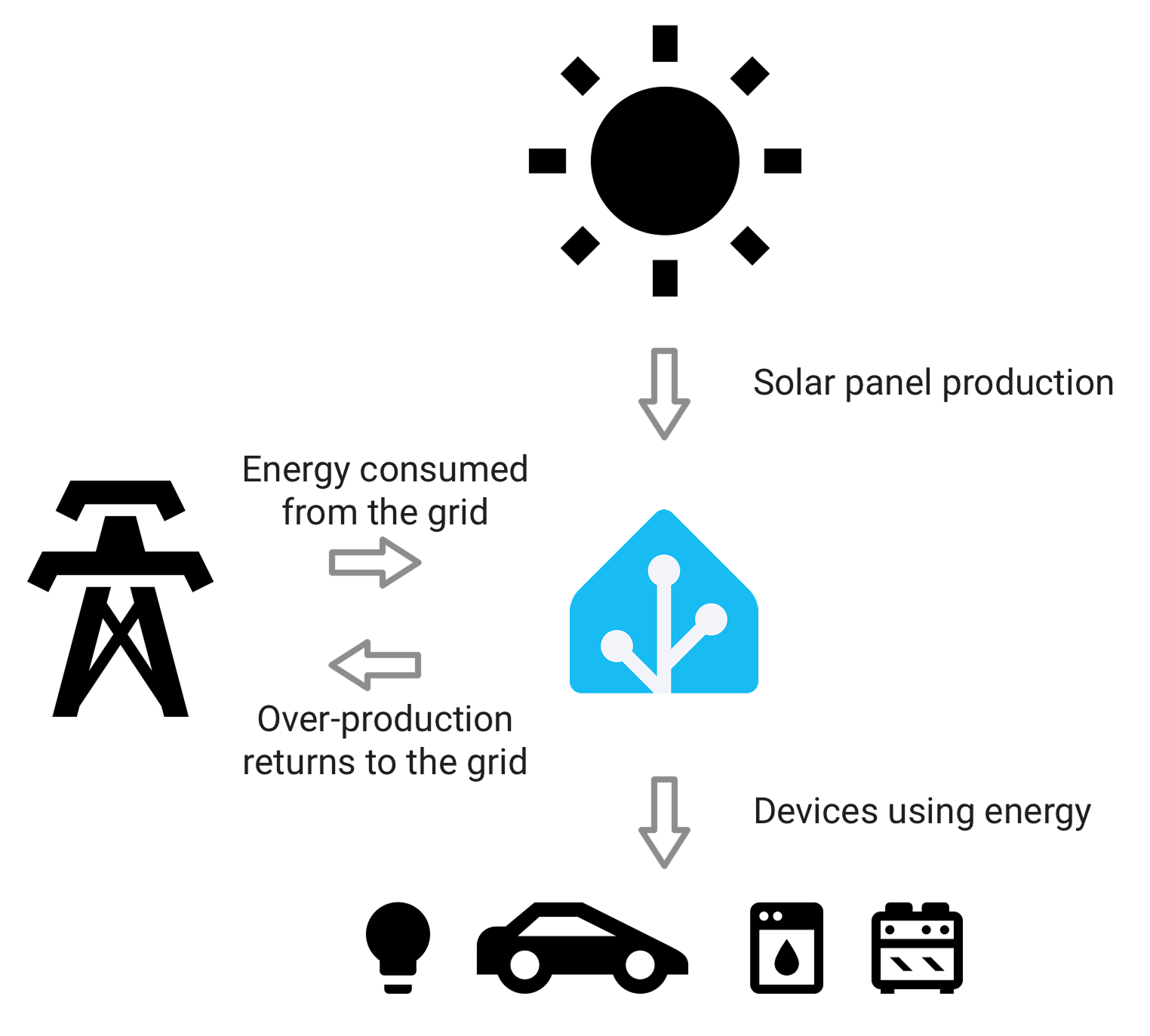
If you care about self-consumption, import/export, EV charging, batteries, or tariffs, you still need good consumption monitoring. That may come from an inverter smart meter, a whole-home energy monitor, a DIN-rail meter, or a platform such as Home Assistant.
Battery and EV Charger Planning
Do not choose an inverter architecture only for today's panels. Think about the next likely upgrade.
If a home battery is likely, ask whether you want AC-coupled storage, DC-coupled storage, or a hybrid inverter path. Microinverter systems commonly pair naturally with AC-coupled batteries. String and optimizer systems may fit either hybrid or AC-coupled paths depending on the inverter ecosystem.
If an EV charger is likely, the inverter architecture matters less than the metering and control ecosystem. The charger needs to understand surplus solar, household load, and grid import/export. That usually depends on a smart meter, CT clamps, a compatible charger, or a home energy platform. For more detail, see EnergyMeterHub's guide to the best EV charger for solar homes and the guide on dynamic load management for home EV chargers.
Reliability and Service Risk
Reliability is not just about component count. It is about where the components are, how hot they run, who can service them, and whether replacement parts will be available.
A string inverter has fewer active power-electronics units, but it is also a larger single point of failure. If it goes down, the whole solar system may stop producing until repaired.
A microinverter system has many roof-level devices, but a single failed microinverter may affect only one panel or a small group. That can reduce production impact but make physical replacement more involved.
An optimizer system has roof-level optimizers plus a central inverter. That gives module-level benefits but also means both roof electronics and the central inverter matter.
For homeowners, the practical question is simple: if something fails in year eight, who comes out, how quickly can they diagnose it, and how painful is the repair?
Cost: Where Spending More Is Worth It
Microinverters and optimizer systems often cost more upfront than a plain string inverter design. That extra spend can be worthwhile when it solves a real problem: shade, complex roof geometry, future expansion, panel-level fault finding, or code requirements.
It is less compelling when the roof is simple and the extra monitoring does not change how you will use the system. Paying for panel-level electronics just to see a prettier app can be a poor use of budget if you still lack consumption monitoring, tariff insight, or a plan for shifting loads.
If the choice is between a premium inverter architecture and better whole-home energy visibility, many households should price both options. Sometimes the bigger improvement comes from adding a reliable consumption meter rather than making every panel individually visible.
Decision Guide
Choose a string inverter if:
- The roof is simple and mostly unshaded.
- Panels can be grouped cleanly by orientation.
- You want lower upfront cost and fewer roof-level electronics.
- System-level monitoring is enough.
- The inverter will be easy to access for future service.
Choose microinverters if:
- The roof has multiple orientations or partial shade.
- You want panel-level monitoring as a normal feature.
- You may expand the system in stages.
- You prefer module-level AC conversion.
- Local installer support for that ecosystem is strong.
Choose power optimizers if:
- You want module-level optimization but still prefer a central inverter.
- The roof has moderate mismatch, shade, or design constraints.
- Panel-level visibility is useful for maintenance.
- The optimizer ecosystem has good local support.
- You are comfortable with a more brand-specific system path.
What to Ask Before Signing a Quote
Before approving a solar quote, ask the installer these questions:
- Why did you choose this architecture for my roof?
- Which panels will be grouped together, and why?
- What happens when one panel is shaded?
- What monitoring will I see: system, string, or panel level?
- How will I see household consumption, grid import, and export?
- If one roof-level component fails, how is it diagnosed and replaced?
- What battery or EV charger path does this architecture leave open?
- Which parts are tied to one brand ecosystem?
- What does the warranty cover, and who handles claims locally?
- Can you show expected production with shade and roof orientation included?
A good answer should connect the technology to your actual roof, not just repeat a brand pitch.
Final Recommendation
For a normal, clean roof, do not dismiss a good string inverter. It may be the simplest, most economical, and easiest system to live with.
For a complex roof, microinverters are often the most straightforward way to get panel-level performance and easier expansion. For a roof that sits between those extremes, power optimizers can be a sensible compromise if the ecosystem is well supported.
The best architecture is the one that makes your solar system understandable after installation. Production data, import/export monitoring, battery readiness, and serviceability matter just as much as the inverter headline. If the quote does not explain those things clearly, the architecture choice is not finished yet.