
For many residential solar buyers, the hardest part of choosing between Sungrow, GoodWe, and SAJ is not the headline inverter specification. It is what the system feels like after the installer leaves: how clear the app is, whether consumption data makes sense, how easy it is to add a battery later, whether an energy meter is supported cleanly, and whether the inverter can fit a more open monitoring stack.
The short answer is that Sungrow is usually the safer mainstream choice when installer familiarity, broad ecosystem support, and polished monitoring matter most. GoodWe is often the strongest fit when you want a flexible residential inverter family with good monitoring and a better path into Home Assistant. SAJ can be attractive when price, compact hybrid systems, and newer energy-management features are important, but buyers should check local installer experience, support depth, and data-access expectations more carefully.
This is not a lab test of one model against another. It is a practical ownership comparison for homeowners, integrators, and technically curious buyers who care about monitoring, metering, and future upgrades.
Quick Verdict
| Buyer priority | Best first look | Why |
|---|---|---|
| Lowest-risk mainstream choice | Sungrow | Broad market presence, strong installer familiarity, and iSolarCloud as a mature monitoring layer. |
| Flexible solar plus storage path | GoodWe | Strong residential inverter range, SEMS monitoring, smart-meter accessories, and a documented Home Assistant integration. |
| Value-focused hybrid ecosystem | SAJ | Competitive energy-storage positioning, elekeeper energy-management direction, and official Home Assistant support for SAJ solar inverters. |
| Best app experience alone | Sungrow or GoodWe | Both have clearly developed cloud monitoring platforms; local user experience still depends heavily on installer setup. |
| Best local monitoring path | GoodWe first, SAJ second, Sungrow with model-specific checks | Home Assistant documents GoodWe and SAJ integrations; Sungrow often depends on model, dongle, Modbus, or community routes. |
| Best choice for future battery planning | Depends on local ecosystem | Check approved battery, meter, backup, and installer support before choosing the inverter brand. |
What “Easiest to Live With” Really Means
A residential inverter is not just a box that converts DC power from panels into AC power for the home. In practice, it becomes the center of several everyday workflows:
- checking whether the solar system is producing normally
- understanding consumption, import, and export data
- diagnosing app or Wi-Fi problems
- adding a smart meter for self-consumption monitoring
- planning a future battery
- sharing system access with an installer
- feeding data into Home Assistant or another monitoring platform
That is why a slightly cheaper inverter can become frustrating if the monitoring setup is weak, and why a technically capable inverter can still disappoint if local installers rarely work with it.
If you are choosing between Sungrow, GoodWe, and SAJ, compare the whole ecosystem, not only the datasheet.
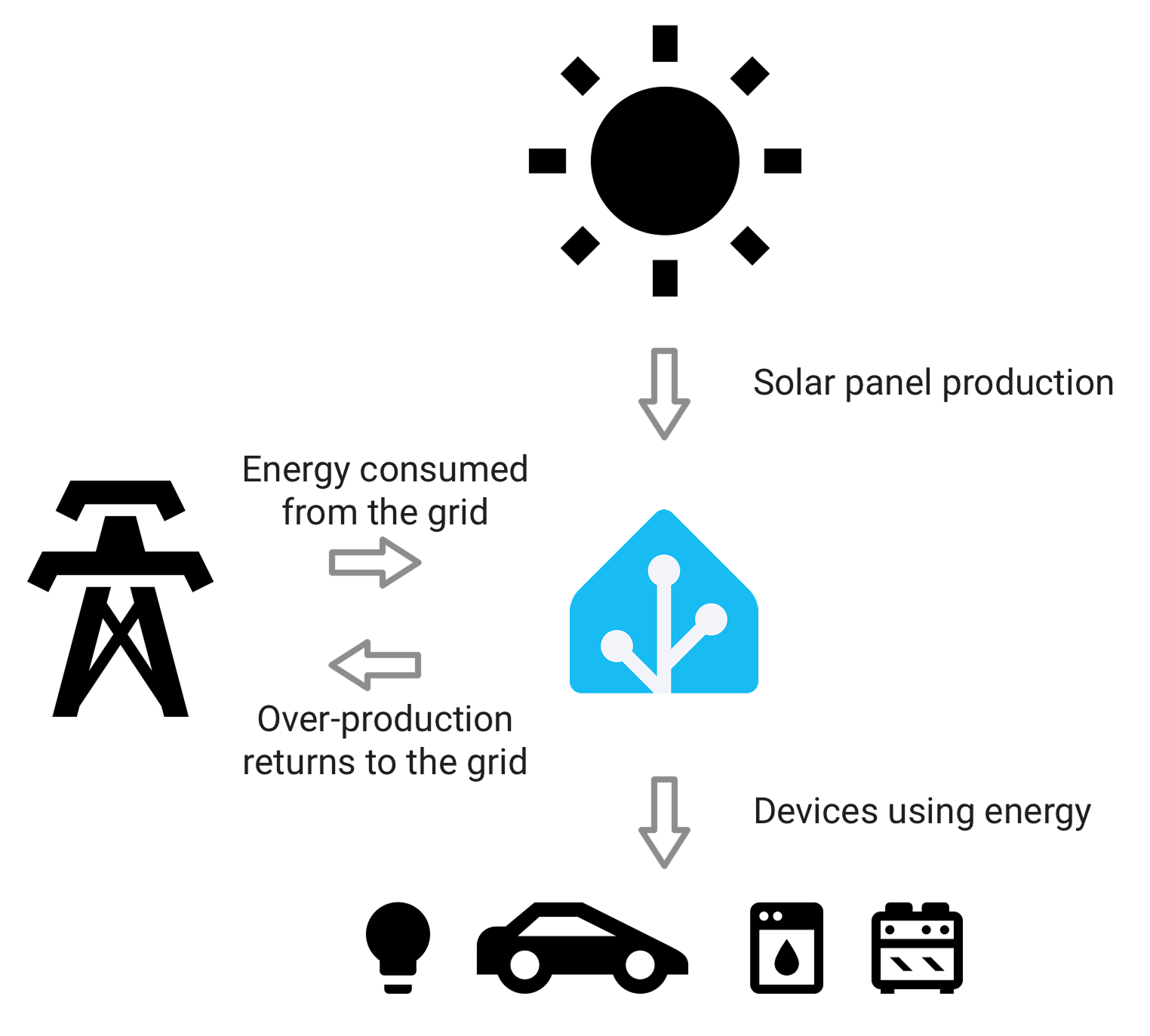
A good inverter decision should account for monitoring flows: solar production, household load, grid import/export, batteries, and future automation.
Sungrow: The Safer Mainstream Choice for Many Homes
Sungrow is often the easiest brand to recommend when the buyer wants a mainstream, widely installed system and does not want to experiment. Its iSolarCloud platform is positioned as a smart energy management platform for homeowners and business owners, with cloud onboarding, dashboards, real-time fault analysis, and PV plus storage visibility.
That matters because many households do not want to build a custom data stack. They want the app to work, the installer to know the product, and the system to have a recognizable support route.
Where Sungrow Tends to Feel Strong
Sungrow is a good fit when:
- you want a common inverter brand that many solar installers know well
- you prefer an app-first monitoring experience
- you may add a battery within the same ecosystem later
- you want the installer to remain the main support path
- you do not need the cleanest local Home Assistant path on day one
The biggest practical advantage is not one single feature. It is the combination of installer familiarity, ecosystem breadth, and a monitoring platform that is clearly central to the product story.
Where to Be Careful
Sungrow can be less straightforward if your main goal is local data control. Many owners do integrate Sungrow systems into local dashboards, but the route can depend on inverter model, communication dongle, Modbus availability, and community tooling. If Home Assistant, local polling, or advanced automation is a priority, ask your installer exactly how your chosen Sungrow model will expose data before you sign.
Sungrow is usually easiest for app-first buyers. It may be less simple for buyers who want the inverter to become part of a broader, local-first monitoring stack.
GoodWe: The Flexible Middle Ground
GoodWe often sits in a useful middle position. It has a broad residential inverter and storage lineup, a developed SEMS monitoring platform, smart-meter accessories, and a more visible route into local energy monitoring than many app-only systems.
GoodWe describes SEMS as a platform that unifies generation, grid, load, and storage into one system, with support for residential PV and residential storage. That framing matters because monitoring quality depends on whether the inverter ecosystem can see more than solar production alone.
Where GoodWe Tends to Feel Strong
GoodWe is a good fit when:
- you want a mainstream inverter brand but still care about data access
- you may add a battery or smart meter later
- you want a clear app experience without giving up all local flexibility
- Home Assistant is part of your future monitoring plan
- you want consumption, grid, and storage data to sit in one ecosystem
Home Assistant has a documented GoodWe inverter integration. It notes that if communication works through official GoodWe mobile apps such as PV Master or SolarGo, the integration is likely to work as well, subject to supported protocols and network behavior. That makes GoodWe especially interesting for buyers who want an app-first system today and a local dashboard later.
Where to Be Careful
GoodWe systems can vary by region, inverter family, firmware, communication module, and installer setup. Do not assume that every GoodWe inverter exposes the same local data or supports the same battery workflow.
The important buying question is not simply “Does GoodWe support Home Assistant?” A better question is: “Will this exact inverter, logger, meter, and firmware combination expose the data I care about, in the country where I am installing it?”
If the answer is yes, GoodWe can be one of the more balanced choices in this group.
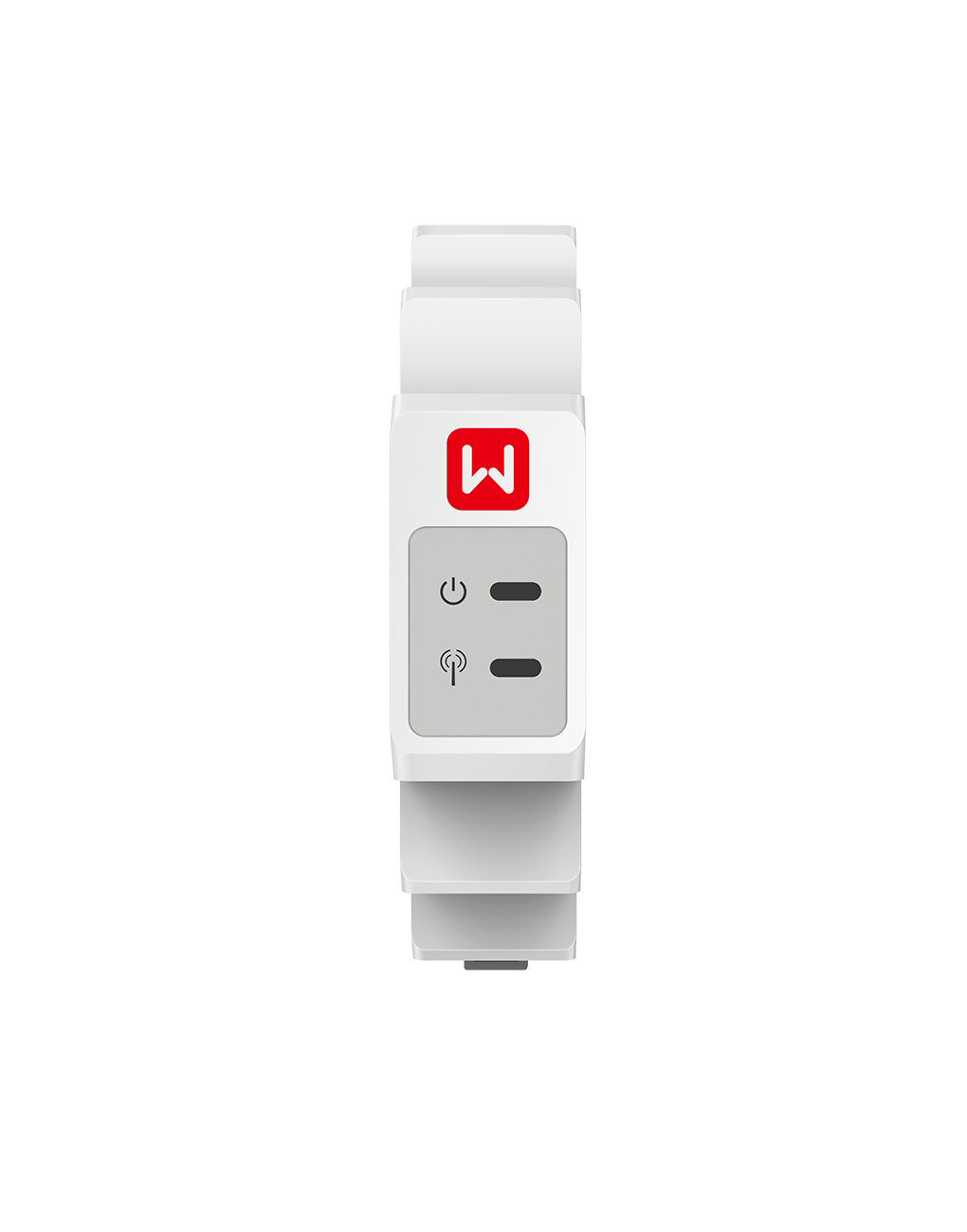
For many inverter ecosystems, the smart meter is what turns a solar-production app into a more useful energy-flow dashboard.
SAJ: Worth Considering, but Check the Support Path
SAJ is increasingly positioned around integrated energy storage and energy management. Its current messaging emphasizes full-scene energy storage, solar generation, consumption, and intelligent energy management, and its elekeeper platform is presented as an all-in-one smart EMS for energy control.
That makes SAJ more interesting than a simple “budget inverter” label suggests. For the right buyer, it may offer a compelling package, especially where local installers know the product well and the pricing is attractive.
Where SAJ Tends to Feel Strong
SAJ is a good fit when:
- the installed price is meaningfully better than alternatives
- your installer has real experience with SAJ systems
- you want a compact solar plus storage path
- elekeeper or SAJ’s energy-management layer fits your use case
- you are comfortable checking integration details before purchase
Home Assistant also documents an SAJ solar inverter integration, which is a meaningful signal for technically curious buyers. It does not remove the need to check model support, but it does make SAJ more relevant for local-dashboard users than many brands with only vendor-cloud workflows.
Where to Be Careful
The main SAJ risk is not that the product category is weak. It is confidence: regional support, installer familiarity, documentation quality, battery compatibility, and long-term app experience can matter more than the inverter price.
If you are choosing SAJ mainly because it is cheaper, make the installer prove the support story. Ask who handles warranty claims, how monitoring is configured, what meter is used for consumption data, and whether the system can still meet your monitoring goals if you later add a battery or Home Assistant.
App Monitoring: Which One Is Least Annoying?
For ordinary homeowners, app reliability and clarity may matter more than electrical nuance.
Sungrow’s iSolarCloud is a mature, central part of the Sungrow ecosystem. GoodWe’s SEMS platform is similarly positioned as the monitoring and management layer for PV, grid, load, and storage. SAJ’s elekeeper direction is promising, but buyers should spend more time checking the local version, installer workflow, and app maturity in their region.
A good monitoring app should show:
- current solar output
- daily, monthly, and lifetime production
- grid import and export
- household consumption if a meter is installed
- battery charge and discharge if storage is present
- alerts that are understandable, not just fault codes
- a way for the installer to diagnose problems without replacing the whole conversation
If the app only shows production, it is not enough for a solar home that cares about self-consumption.
Smart Meter and Consumption Monitoring Fit
A solar inverter without consumption monitoring can still leave the homeowner guessing. You may know how much the inverter produced, but not how much the home used directly, exported, or imported later.
That is why the smart meter path matters.
For Sungrow, GoodWe, and SAJ, ask these questions before choosing:
- Which smart meter is approved or commonly used with this inverter?
- Does it support import/export and live household load, or only production context?
- Is the meter wired by CT clamps, direct connection, or a brand-specific accessory?
- Will the inverter app show self-consumption clearly?
- Can the same data be exported or read locally later?
If the installer cannot explain the meter path, the system may be fine electrically but weak as a monitoring setup.
Battery Readiness and Upgrade Path
Battery readiness is another place where brand choice can age well or badly.
Sungrow is usually strong when the buyer wants to stay inside a broad solar-plus-storage ecosystem. GoodWe is attractive for buyers who want hybrid inverter options and a clearer bridge between app monitoring and local integrations. SAJ can be appealing where its all-in-one storage systems and local support are strong.
Before you buy, check:
- which battery models are actually supported in your region
- whether backup power is included, optional, or not available
- whether the switchboard needs extra hardware
- whether the smart meter is battery-control compatible
- whether time-of-use or export-control settings are homeowner-readable
- whether installers near you regularly commission that battery pairing
A battery-ready inverter is only useful if the rest of the system is ready too.
Home Assistant and Local Data
If Home Assistant is central to your energy monitoring plan, GoodWe deserves a serious look because Home Assistant documents a GoodWe inverter integration. SAJ also has a documented Home Assistant integration. Sungrow can still work in local or semi-local setups, but the path is usually more model-specific and often depends on Modbus, dongle behavior, or community integrations.
A practical ranking for local-data confidence would be:
| Local monitoring question | Sungrow | GoodWe | SAJ |
|---|---|---|---|
| Official Home Assistant docs page found | Not as a core inverter integration in this check | Yes | Yes |
| App-first cloud monitoring maturity | Strong | Strong | Improving and region-dependent |
| Local integration predictability | Model-specific | Better documented | Model-specific but documented in HA |
| Best fit for advanced users | Good if the exact model path is known | Often strong | Worth checking carefully |
Do not buy an inverter only because someone online made one model work with Home Assistant. Confirm the exact inverter family, logger, firmware, network path, and data points.
Which One Should You Choose?
Choose Sungrow if you want the lowest-risk mainstream path and your installer has a strong Sungrow track record. It is especially sensible when the vendor app and installer support are more important than local data experiments.
Choose GoodWe if you want a balanced inverter ecosystem with good monitoring, smart-meter and storage options, and a more convincing path into Home Assistant or broader energy dashboards.
Choose SAJ if the installed value is strong and your installer can demonstrate real support experience. It is most attractive when the package price, hybrid system design, and SAJ energy-management tools fit your home, but it deserves more due diligence before purchase.
Practical Buying Checklist
Before signing a quote for any of the three, ask the installer:
- Which exact inverter model is being quoted?
- Which monitoring dongle, logger, or communication module is included?
- Is consumption monitoring included, or only solar production monitoring?
- Which smart meter is used for import/export data?
- Can the app show household load and self-consumption clearly?
- What battery models are supported later?
- Is backup power possible, and what extra hardware is required?
- Can the system feed Home Assistant or a local monitoring platform?
- Who handles warranty and firmware issues after installation?
- What happens if the vendor cloud has an outage or account problem?
The best inverter is the one your installer can commission cleanly, your household can understand, and your future monitoring setup can grow around.
Bottom Line
Sungrow, GoodWe, and SAJ can all be reasonable choices for a normal residential solar installation, but they suit different buyers.
Sungrow is the safer mainstream default. GoodWe is the best balanced pick for many monitoring-aware homes. SAJ is the value-oriented contender that can make sense when the local support path is strong and the energy-management package fits your plan.
If you care about energy data, do not choose only by inverter efficiency or installed price. Choose by the whole ownership layer: app, meter, battery path, installer support, and whether the data can go where you will actually use it.
Related Reading
- Best Solar Inverters for Home Use in 2026
- What Makes a Solar Inverter Easier to Live With After Installation
- Best Battery-Ready Upgrade Path Before Buying a Home Battery
- What a Good Solar Home Monitoring Setup Should Include Beyond the Inverter App
- Home Assistant