If you are thinking about paying extra for module-level visibility, the most useful question is not whether panel-by-panel data looks impressive. It is whether that extra visibility will change a real decision you are likely to make.
For some solar homes, module-level visibility is genuinely valuable. It can make shading problems easier to diagnose, help explain uneven roof behavior, and make service visits faster and less speculative. For other homes, it is mostly an expensive way to confirm that a simple roof is behaving exactly as expected.
That is why this feature should be evaluated as a decision tool, not as a prestige feature.
The short version
Module-level visibility is usually worth paying for when:
- the roof has multiple orientations, recurring partial shade, or panel-to-panel mismatch risk
- you care about finding underperforming sections faster instead of waiting for a string-level problem to become obvious
- the system design already points naturally toward optimizers or microinverters
- roof access, service time, or troubleshooting uncertainty is expensive enough that better visibility changes the economics
Module-level visibility is usually not worth paying extra for when:
- the roof is simple, open, and predictable
- your main concern is whole-home consumption, imports, exports, or battery behavior rather than panel-by-panel output
- you are unlikely to act on per-module data even if the app shows it
- the extra cost mainly buys reassurance rather than a practical operating advantage
Quick decision table
| Situation | Module-level visibility is usually worth it | Whole-system visibility is usually enough |
|---|---|---|
| Roof layout | Multiple orientations, awkward geometry, or known shade | Simple roof with predictable sun exposure |
| Troubleshooting risk | You want faster fault isolation | You mainly want basic production confidence |
| Hardware direction | You are already considering optimizers or microinverters | A simpler string setup still fits the job well |
| Monitoring goal | You want to see where performance differs across the array | You mainly want to know whether total production is healthy |
| Service economics | Truck rolls, roof access, or diagnostic time are costly | The system is easy to inspect and maintain |
| Household question | You care about panel-level behavior | You really need home-energy or meter-boundary visibility |
What module-level visibility actually gives you
Module-level visibility means you can see performance at the panel or panel-pair level instead of only looking at total inverter production or string-level output.
That sounds automatically better, but more detail is only valuable when it helps answer a real question faster.
In practice, the extra value usually shows up in four places:
- identifying whether one roof section is behaving differently from the rest
- narrowing down likely causes when production looks lower than expected
- reducing guesswork around mismatch, shade, dirt, or hardware-specific issues
- giving installers or technically engaged owners a cleaner starting point before deciding whether a site visit is needed
That is different from whole-home visibility. If your main question is whether the house is importing too much from the grid, whether a battery is cycling properly, or whether the EV charger is colliding with evening load, panel-level solar visibility is not the missing layer. In that case, articles like How to Add Consumption Monitoring to a Solar Home That Only Has Inverter Data or Main Meter vs Circuit Meter for Solar Homes: Which One Do You Actually Need? are closer to the real problem.
When module-level visibility is genuinely worth paying for
1. The roof is not simple
This is the strongest reason.
If the array spans more than one orientation, sees partial shade during meaningful parts of the day, or includes panel groups that are likely to behave differently, string-level totals can hide useful detail.
This does not mean every east-west roof needs maximum electronics. It means the value rises when different parts of the array are likely to perform differently enough that panel-level evidence changes how you diagnose or size the system.
2. You expect troubleshooting to matter over time
Some buyers treat monitoring as a first-month feature. Others use it as an ownership tool.
Module-level visibility becomes more valuable when the household or installer wants to answer questions like:
- is the whole array down, or just one section?
- is the drop broad, or isolated?
- is this a likely shading pattern, a wiring issue, or a hardware problem?
- does this problem justify a site visit now, or should we observe it longer?
If the roof is hard to access, the site is remote, or service time is expensive, faster fault isolation has real value.
3. You are already choosing between microinverter or optimizer-style architectures
Sometimes the visibility question is not separate from the hardware question.
If you are already leaning toward module-level power electronics for other reasons, the monitoring benefit becomes easier to justify because it comes with an architecture you were already considering.
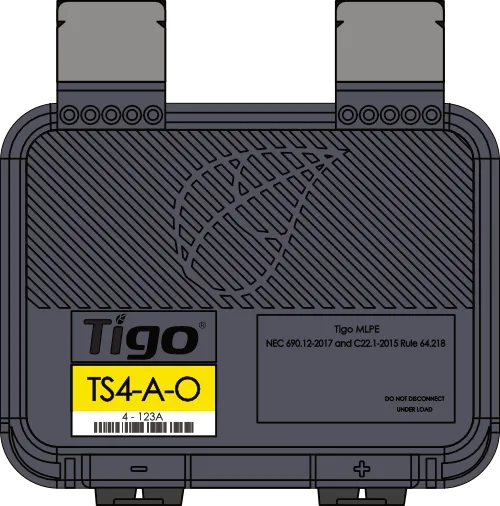
For example, Tigo TS4-A-O represents the optimizer path for roofs that need more panel-level control without replacing the whole inverter concept. Hoymiles HMS-2000-4T represents a microinverter-led route where module-level MPPT and monitoring are part of the system logic from the start.
In those cases, module-level visibility is not just an add-on dashboard feature. It is part of the system design choice.
4. You care about operational confidence, not just annual yield math
Not every buyer wants to stare at panel charts. But some buyers care a lot about confidence.
That is especially true when:
- the system is expensive relative to household budget
- installer callouts are difficult or slow
- the owner wants earlier warning before a broad underperformance problem shows up in the bill or export trend
- the household is technically engaged and will actually use the information
The key is honesty. If you will use the extra visibility to make better decisions, it may be worth paying for. If you only want the comfort of a more advanced-looking app, it usually is not.
When module-level visibility is probably not worth the premium
1. The array is straightforward and stable
A simple, largely unshaded roof with one main orientation often does not need panel-level data to prove that the system is healthy.
In that situation, strong whole-system production visibility may be enough. Paying extra for very granular monitoring can become a thin return on money that could have gone toward better panels, cleaner metering, or a more suitable inverter family.
2. Your real problem is not on the roof
This is one of the most common mistakes.
People buy more solar-side monitoring when the real question is actually one of these:
- why does the home still import so much power at night?
- why does solar production not seem to reduce the bill enough?
- should the next upgrade be a battery, better metering, or load shifting?
- is the EV charger using midday solar or evening grid power?
Those are not module-level questions. They are energy-boundary questions.
If that sounds familiar, What an Open Energy Meter Lets You Do That a Closed App Usually Does Not and How to Decide Whether a Hybrid Inverter Is Worth the Extra Complexity are likely to be more useful next reads.
3. You are unlikely to act on panel-level data
More data is not automatically more value.
If nobody involved in the system will actually interpret the per-module view, compare patterns over time, or use it to narrow service decisions, then the premium can turn into decorative complexity.
That is not a criticism. Many homeowners do not need that level of detail. The point is simply that monitoring value depends on how the information will be used.
A practical way to decide
Ask these five questions before paying extra for module-level visibility:
1. What problem am I trying to solve?
If the problem is uneven roof behavior, hard-to-diagnose performance loss, or confidence in a more complex array, module-level visibility moves up the list.
If the problem is import, export, battery timing, or household load mix, it moves down.
2. Would panel-level data change the hardware choice?
If you are already weighing optimizers, microinverters, or more flexible architectures, this visibility may be part of the answer.
If the hardware choice is already clearly a simple string inverter and a clean roof, the value is weaker.
3. Would panel-level data change the service workflow?
If better visibility could reduce uncertainty before a roof visit or help isolate a fault faster, it may be worth the money.
4. Am I paying for useful granularity or for emotional comfort?
This is the uncomfortable but important question.
Useful granularity helps you act. Emotional comfort only helps you feel that the system is advanced.
5. What would I buy instead if I skipped this premium?
Sometimes the better next spend is not more array-side granularity. It is better whole-home monitoring, cleaner meter placement, or a device stack that you will actually keep using.
Common mistakes
Confusing module-level visibility with home-energy visibility
These are different layers of the system.
Paying for panel-level data on a roof that does not need it
A simple roof often does not produce enough diagnostic ambiguity to justify the premium.
Ignoring the service and support workflow
Granular monitoring matters more when someone will actually use it to diagnose, compare, and act.
Thinking the most detailed dashboard is automatically the best investment
The best dashboard is the one that answers your next real question, not the one with the most tiles.
Bottom line
Module-level visibility is actually worth paying for when it helps a real solar-home decision that would otherwise stay fuzzy: diagnosing uneven roof behavior, isolating underperformance faster, or supporting an architecture that already benefits from panel-level control.
It is usually not worth paying extra when the roof is simple, the real problem sits at the home-energy boundary, and the extra detail is unlikely to change what you buy, monitor, or do next.
The best monitoring investment is not the most granular one. It is the one that gives you the clearest next action.
Related reading
- How to Decide Whether a Hybrid Inverter Is Worth the Extra Complexity
- Best Solar Inverters for Home Use in 2026
- How to Add Consumption Monitoring to a Solar Home That Only Has Inverter Data
- What an Open Energy Meter Lets You Do That a Closed App Usually Does Not
- Tigo TS4-A-O
- Hoymiles HMS-2000-4T
- Home Assistant