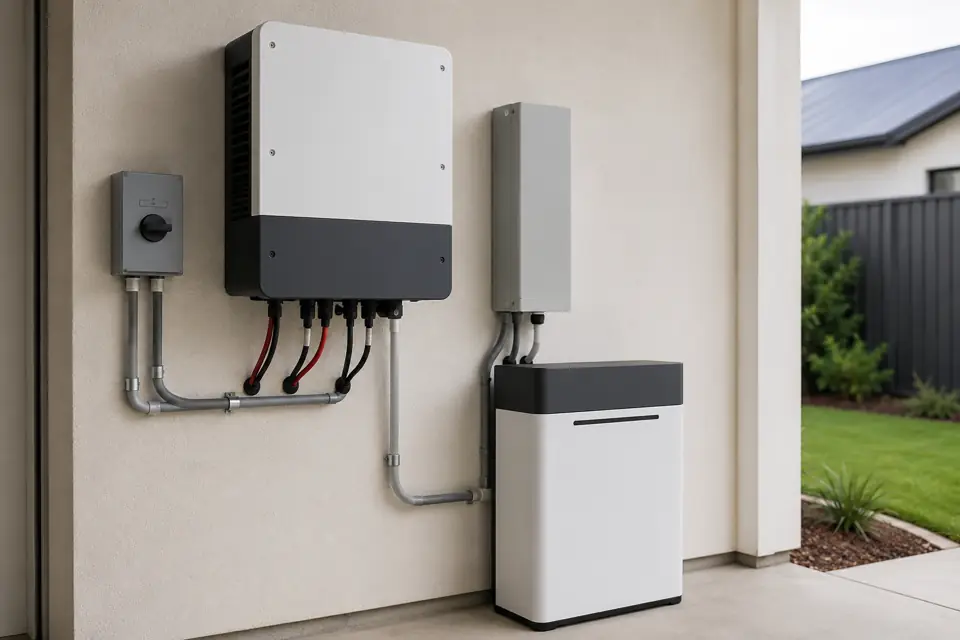
If you are asking whether a hybrid inverter is worth the extra complexity, the short answer is simple: it is only worth it when you are likely to use that extra capability on a real timeline, not when it is just a vague maybe.
A hybrid inverter can be the right center of a solar home when battery add-on plans are real, backup power matters, or self-consumption control is part of the ownership plan. But it can also become an expensive layer of complexity if the household mainly wants straightforward solar generation and is nowhere near buying a battery.
That is the key distinction. A hybrid inverter is not automatically “more future-proof” in a useful way. Sometimes it is. Sometimes it is just more system to pay for, configure, and support.
The short version
Choose a hybrid inverter sooner when:
- you expect to add a battery within a believable next step, not a distant someday
- backup power is part of the buying reason, not an afterthought
- you want one inverter platform to coordinate solar, battery, and household energy behavior
- your installer is already comfortable with that exact hybrid family and its battery ecosystem
Choose a simpler inverter sooner when:
- you mainly want good solar production and app visibility now
- the battery plan is still uncertain on budget, timing, or brand
- you do not yet need backup behavior, load shifting, or deeper self-consumption control
- a PV-only model with a later upgrade path already exists in the product family you prefer
Quick decision table
| Situation | Hybrid inverter is usually worth it | Simpler inverter is usually better |
|---|---|---|
| Battery timing | You expect to add one fairly soon | No clear battery timeline |
| Backup expectations | You care about outage behavior and critical loads | Backup is not an important requirement |
| System goals | You want tighter solar-plus-battery control | You mainly want reliable solar generation |
| Installation appetite | You are comfortable with a more involved design | You want lower setup complexity |
| Metering and monitoring | You will invest in whole-home visibility too | You are happy with simpler monitoring for now |
| Budget discipline | Paying extra now avoids a likely later redo | Paying extra now mainly buys hypothetical flexibility |
What the extra complexity actually is
People often hear “hybrid inverter” and think only about battery compatibility. In practice, the complexity usually comes from a bundle of things:
- battery compatibility rules and approved battery families
- backup-power design choices instead of just standard grid-tied behavior
- more commissioning decisions around loads, switching, and system modes
- more decisions about metering, control logic, and what the app should show
- a stronger dependence on getting the exact product family and install design right
That does not make hybrid bad. It just means the decision should be tied to a real use case.
For example, Fronius positions the GEN24 Plus around battery connection and expanded backup options, while also making clear that fuller backup behavior can require additional hardware and that some backup options depend on the exact model. GoodWe positions its EH family around battery-ready expansion and fast backup switching, but again the value only appears if the household actually intends to use that path. Sungrow makes a similar self-consumption and emergency-backup argument for its residential hybrid line.
In other words, hybrid capability is only valuable when the rest of the system plan exists around it.
When a hybrid inverter is genuinely worth it
1. Your battery plan is real, not theoretical
This is the biggest test.
If you are already shaping the solar purchase around a likely battery add-on, a hybrid inverter can make sense because it reduces the chance of building a solar-only setup that later feels awkward or incomplete.
That is especially true when:
- you already know daytime exports are likely to be high
- you expect time-of-use shifting to matter later
- you already see a battery as part of the medium-term plan
- the chosen inverter family has a clean, supported battery path
A believable plan beats a vague one. “Maybe one day” is usually not enough.
2. Backup power matters to your household
Some buyers talk about backup as if it is a nice bonus. Others actually care whether critical loads keep running in an outage.
Those are very different buyers.
If outage support is part of the reason you are spending the money, then hybrid complexity may be justified. But check the real conditions carefully. Some systems offer only limited backup behavior unless the right battery, changeover gear, and load design are included.
That is why backup should never be treated as a checkbox feature. It is a system design question.
3. You want one platform for solar, battery, and home-energy decisions
A hybrid inverter is more attractive when the household wants the inverter to sit at the center of a broader energy strategy:
- use more solar on site
- reduce evening imports
- prepare for battery charging and discharge logic
- support EV charging or other controlled loads later
- keep the app and control path inside one ecosystem
That can be a good fit for households that want one coordinated platform instead of stitching together separate layers later.
When a hybrid inverter is probably not worth it
1. You mainly want solid solar generation now
If the real job is “install solar, watch production, and lower the bill without overcomplicating the house,” then a normal grid-tied string inverter can still be the better answer.
This is often the smarter path when:
- the solar-only project already fits the budget tightly
- battery pricing still feels too uncertain
- the household does not care much about backup
- future expansion may happen, but not soon enough to justify paying today
2. Your battery plan is still fuzzy
A fuzzy battery plan creates bad hybrid decisions.
If you do not yet know:
- whether you want a battery at all
- what capacity would make sense
- whether backup is really needed
- which brand ecosystem you trust
- whether your import pattern justifies storage
then paying extra for hybrid capability can become a future-proofing story that never turns into value.
3. You still do not have the right monitoring story
A hybrid inverter does not automatically solve household visibility.
If you want to understand imports, exports, battery behavior, and major loads clearly, you still need the right metering boundary and data structure. That is one reason many solar homes still need a proper main meter or panel-level monitoring design even when the inverter platform is advanced.
If you later send that data into a broader platform such as Home Assistant, hierarchy still matters. The official Home Assistant documentation explicitly supports upstream device relationships because detailed device views can otherwise double-count energy and confuse the total picture.
So if the household has not even decided how it will measure the whole system properly, hybrid capability alone is not the missing answer.
Four questions to ask before paying for hybrid
1. What would I add first after the solar install?
If the honest answer is “a battery within a reasonable next phase,” hybrid moves up the list.
If the honest answer is “probably nothing for years,” hybrid moves down.
2. Is backup power a real requirement or just a nice phrase?
If you are not planning critical-load design, battery support, and the related hardware path, do not price hybrid as if full backup is automatically included.
3. Am I buying the inverter family or just the brochure promise?
A product family matters more than a slogan. Some families support later activation or upgrade paths more cleanly than others. Fronius and GoodWe both describe battery-ready or upgradeable paths in parts of their current lineup, but the details are model-specific and should be checked before buying.
4. Will I still need separate metering anyway?
Often yes.
If your real goal is to understand the whole home instead of only the inverter, read Main Meter vs Circuit Meter for Solar Homes: Which One Do You Actually Need? and How to Add Consumption Monitoring to a Solar Home That Only Has Inverter Data. Those questions still matter even with a more capable inverter.
Common mistakes
Buying hybrid because it sounds more advanced
More advanced is not automatically more suitable.
Treating backup as a default feature
Backup quality depends on system design, not just the word “hybrid” on the product page.
Paying for battery-readiness without a realistic battery plan
If the battery never arrives, the premium may never pay back in practical value.
Ignoring installer familiarity
A slightly simpler inverter your installer knows well can be the better long-term decision than a more ambitious system nobody wants to support properly.
Expecting the inverter app to replace full-system monitoring
It often helps, but it does not automatically explain the entire house.
A practical rule that avoids most regret
Use this rule:
- choose hybrid when it changes a likely next step you are already planning
- choose simpler when hybrid mainly protects against a hypothetical future you may never fund
That rule will prevent a lot of expensive “future-proofing” that never becomes real.
Bottom line
A hybrid inverter is worth the extra complexity when the household has a believable path into battery use, backup behavior, or tighter energy control that will actually be used.
It is usually not worth it when the home mainly needs reliable solar generation, the battery plan is still vague, and the extra cost mostly buys a story about flexibility rather than a concrete next stage.
The best decision is not the most expandable one on paper. It is the one that matches what your home is realistically going to do next.
Related reading
- Best Solar Inverters for Home Use in 2026
- Will a Home Battery Save You Money With Solar?
- Main Meter vs Circuit Meter for Solar Homes: Which One Do You Actually Need?
- How to Add Consumption Monitoring to a Solar Home That Only Has Inverter Data
- Battery Size Estimator
Sources
- Fronius GEN24 Plus product overview
- Fronius Symo GEN24 Plus technical product page
- Fronius energy storage system overview
- GoodWe EH Series hybrid inverter page
- Sungrow residential hybrid inverter page
- Home Assistant: Integrating individual device energy usage
- Home Assistant integration page on EnergyMeterHub