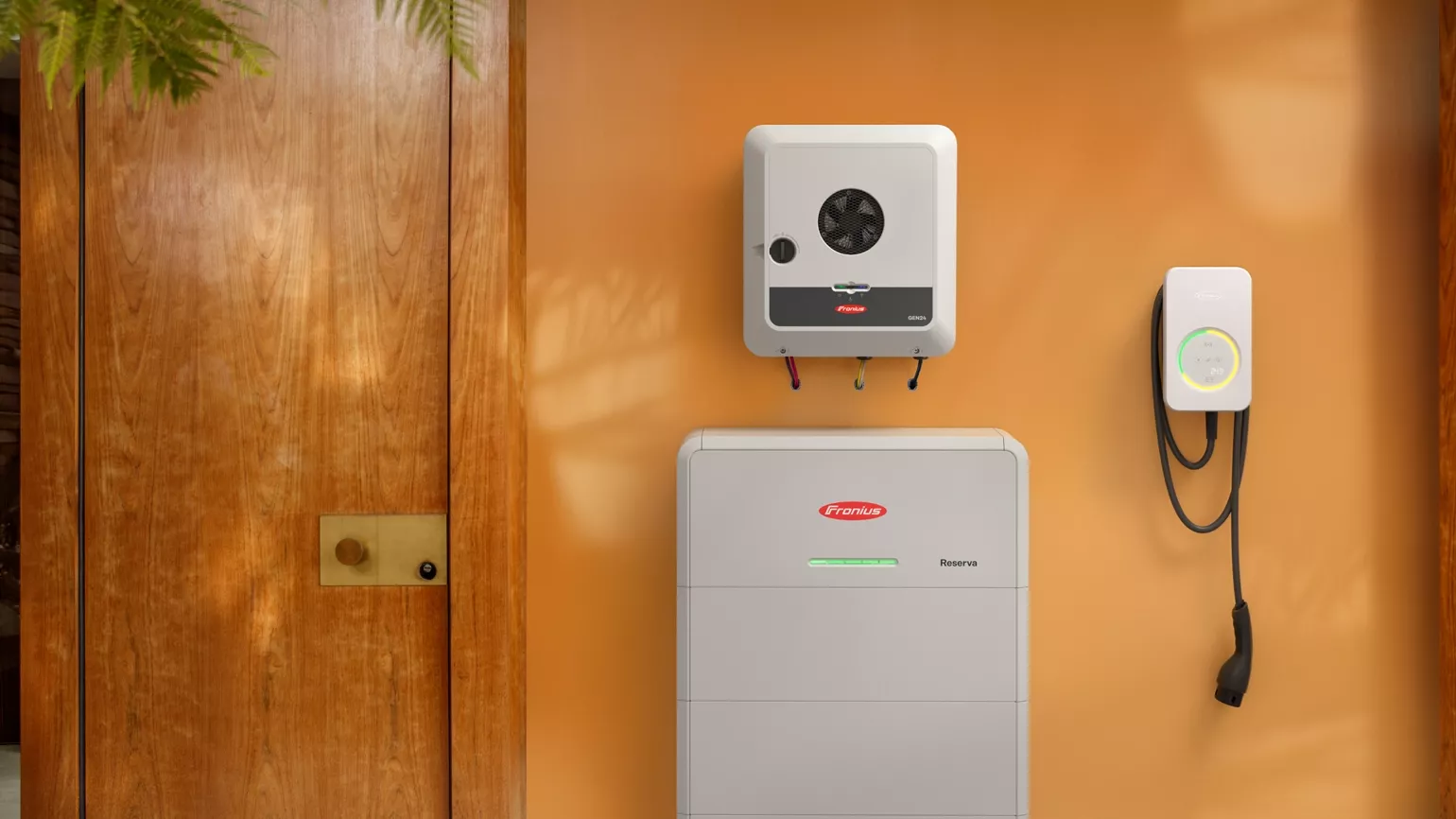
If you are comparing Enphase IQ8 with Fronius GEN24, you are not really choosing between two single products. You are choosing between two solar upgrade paths.
Enphase IQ8 is a module-level microinverter path. Each panel gets its own inverter, the system leans heavily on panel-level visibility, and expansion can be easier when a roof has mixed directions, shade, or staged growth.
Fronius GEN24 is a string or hybrid inverter path. The inverter is centralized, the architecture is usually simpler at roof level, and the upgrade story often centers on battery readiness, backup options, open interfaces, and a cleaner equipment wall.
Neither path is automatically better. The better choice depends on roof layout, failure tolerance, battery plans, backup expectations, monitoring needs, local installer skill, and whether you want a distributed or centralized system architecture.
The Short Answer
Choose Enphase IQ8 if your priority is panel-level control, panel-level monitoring, roof flexibility, module-level rapid shutdown, and a system that can keep one panel's problem from pulling down a whole string.
Choose Fronius GEN24 if your priority is a high-quality centralized inverter, a simpler string architecture, a clear battery-ready path, strong local integration options, and backup features built around the inverter and compatible storage.
For a shaded, multi-orientation, or awkward roof, Enphase often makes more sense. For a clean roof with good string design and a strong battery or backup roadmap, Fronius GEN24 is often the cleaner system choice.
| Buyer priority | Enphase IQ8 usually fits better | Fronius GEN24 usually fits better |
|---|---|---|
| Complex roof layout | Yes | Sometimes, with careful string design |
| Panel-level production visibility | Yes | No, unless paired with extra module-level hardware |
| Simpler equipment at the panel level | No | Yes |
| Centralized service access | No | Yes |
| Battery-ready string inverter path | Not the main architecture | Yes |
| Basic daytime backup without a battery | Not the normal path | Yes, via PV Point on supported GEN24 setups |
| Full backup with battery | Possible within Enphase ecosystem | Possible with GEN24 Plus and compatible battery setup |
| Home Assistant and local data path | Possible through Envoy integration, with caveats | Strong fit through Fronius integration and Solar API |
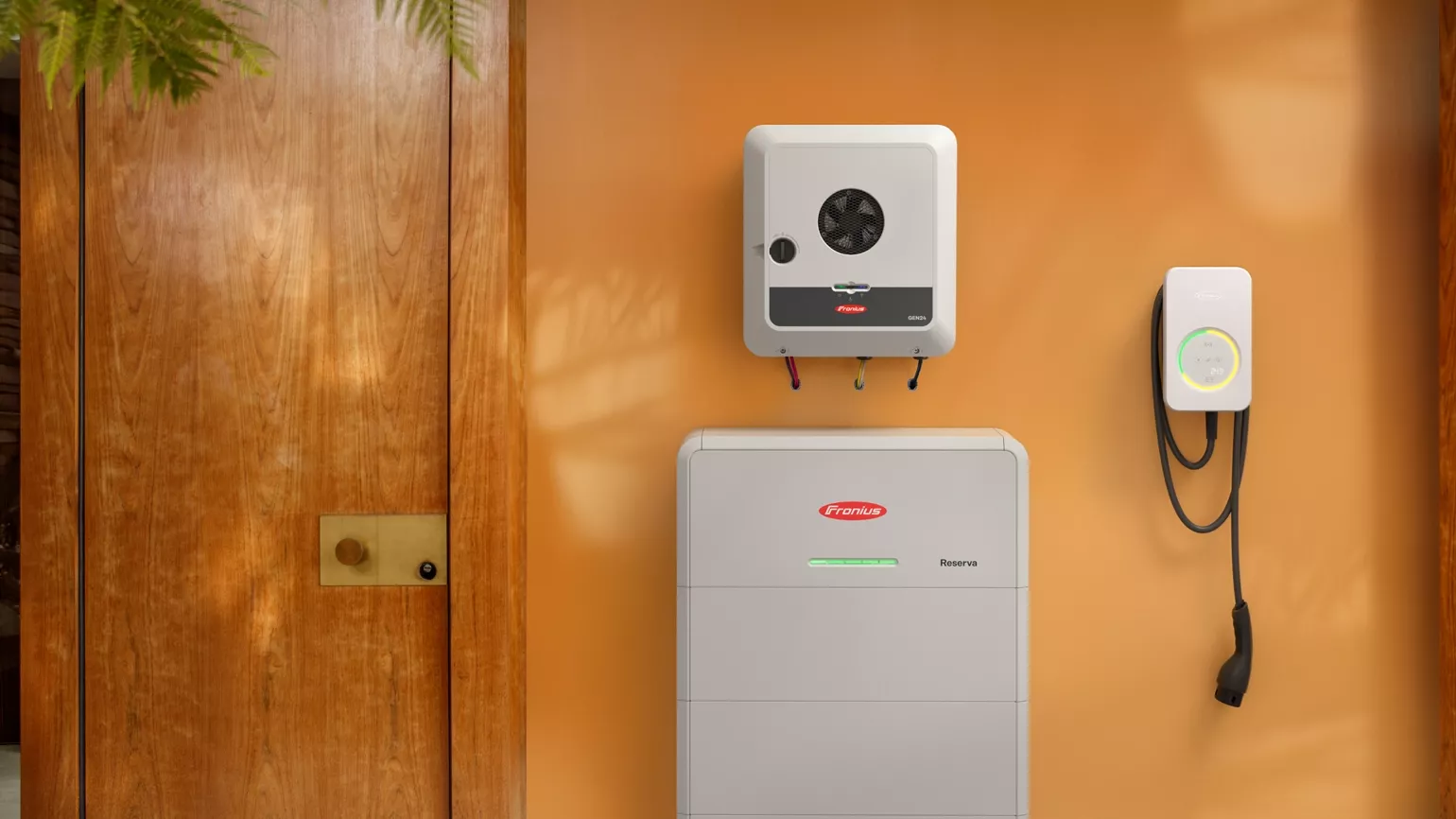
Fronius GEN24 is best understood as a centralized energy-system path: inverter, battery, smart meter, backup, EV charging, and software can become one coordinated stack.
What You Are Really Comparing
A fair comparison starts with architecture.
With Enphase IQ8, each panel has its own microinverter. DC from the panel is converted to AC at the module. This makes the system naturally granular. One panel's output, shade, orientation, or fault can be handled more independently.
With Fronius GEN24, panels are grouped into strings and connected to a centralized inverter. The inverter handles conversion, maximum power point tracking, grid interaction, battery connection where supported, and system control from one main unit.
That difference affects almost every downstream decision:
- how shading is handled;
- how much roof complexity the system tolerates;
- where failures are serviced;
- how monitoring is displayed;
- how batteries are added;
- how backup is configured;
- how much equipment sits on the roof versus near the switchboard.
The mistake is treating this as a brand popularity contest. It is a system-design decision.
Roof Layout and Shading
Enphase IQ8 becomes especially attractive when the roof is not simple.
Examples include:
- panels split across several roof faces;
- partial morning or afternoon shading;
- chimneys, vents, dormers, trees, or neighboring buildings;
- different panel counts on different roof sections;
- future expansion where new panels may not match the original array neatly.
Because each module has its own microinverter, the system can handle panel-level variation more gracefully. That does not mean shade becomes harmless. It means the penalty can be more localized.
Fronius GEN24 can still perform very well on a good roof. Fronius highlights Dynamic Peak Manager as a way to support yields even with shading. But a string system still depends on correct string design, compatible panel layout, and thoughtful handling of mismatch. For many ordinary roofs, that is completely fine. For awkward roofs, the design margin becomes more important.
A simple rule is this: if the roof is clean, string design is likely to be efficient and elegant. If the roof is complicated, module-level electronics become easier to justify.
Panel-Level Monitoring Versus System-Level Monitoring
Monitoring is one of the biggest practical differences.
Enphase is strong when the homeowner or installer wants panel-level visibility. The Enphase App page describes system health and performance views, panel-level production detail, grid import and export tracking, and energy insights inside the Enphase ecosystem. That level of granularity can be useful for diagnosing a weak panel, a shaded section, or a module-level fault.
Fronius GEN24 is usually more system-level by default. It can show inverter production, grid interaction, smart meter data, battery behavior, and Solar.web data, but it does not become a panel-level monitoring platform unless extra module-level hardware is added.
That makes Enphase more granular and Fronius more centralized. Which is better depends on what the reader wants to see.
Panel-level data helps when:
- roof sections vary heavily;
- the owner wants to inspect individual module behavior;
- installers need quick module-level fault isolation;
- one failed or shaded module should be easy to identify.
System-level data is often enough when:
- the roof is simple;
- total production and consumption are the main questions;
- the homeowner cares more about bills, batteries, and grid import/export than individual panel charts;
- the installer has already designed strong strings.
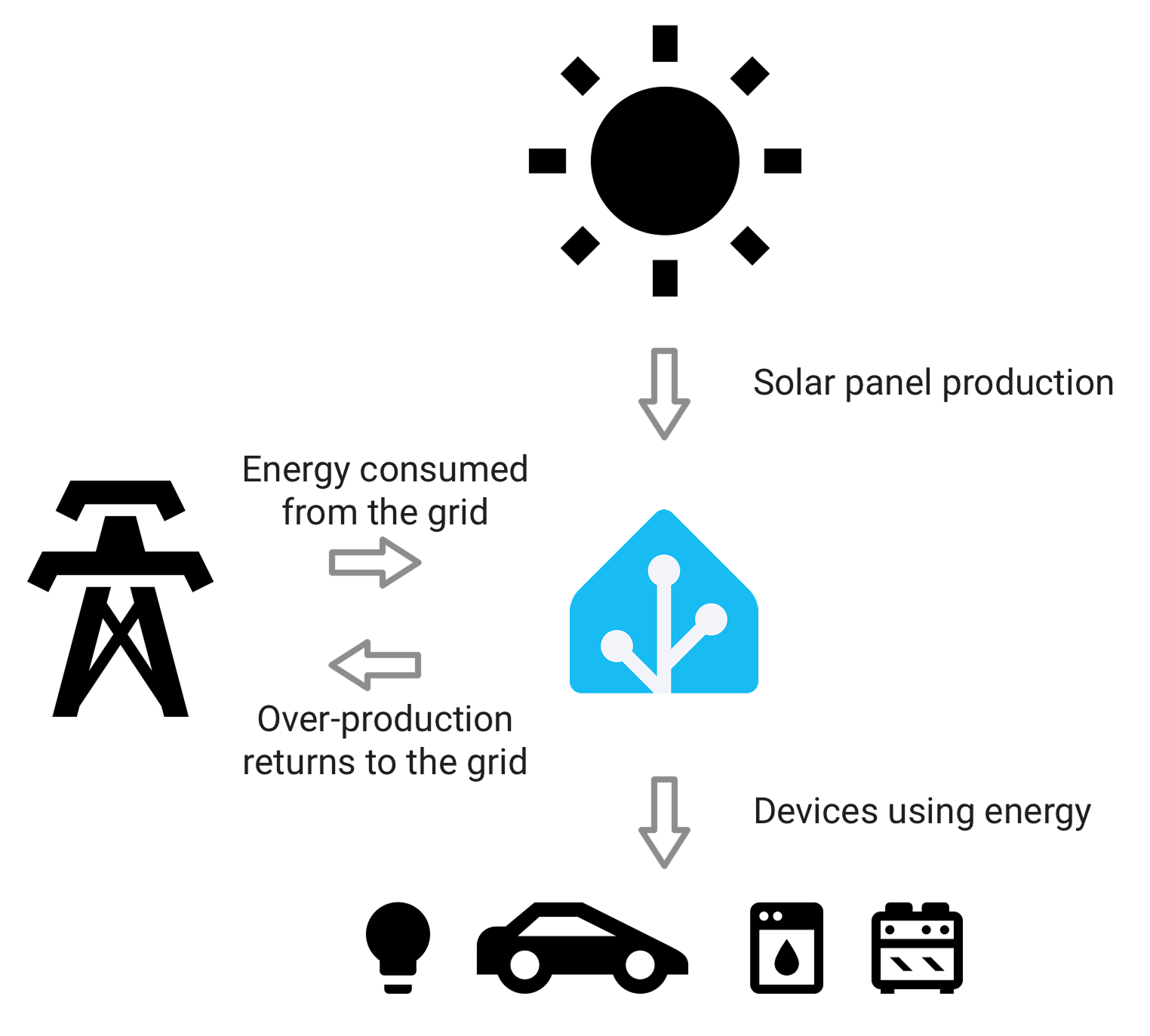
For EnergyMeterHub readers, the best monitoring setup is not only about solar production. It should also explain grid import, export, household load, battery behavior, and major controllable loads.
Battery Readiness
Battery planning changes the comparison.
Fronius GEN24 Plus is clearly positioned around a hybrid inverter path. Fronius describes battery connection, full backup possibilities with compatible storage, and retrofit options through its GEN24 and GEN24 Plus ecosystem. If the buyer expects a DC-coupled battery path and wants the inverter to be the center of that plan, Fronius deserves serious attention.
Enphase takes a different route. IQ8 microinverters are part of the Enphase Energy System and integrate with IQ Battery, IQ Gateway, and the Enphase App. The system architecture remains distributed on the solar side, with storage and control handled through the broader Enphase ecosystem.
This creates a practical buyer distinction:
- Choose Fronius GEN24 when you want a classic high-quality hybrid inverter roadmap.
- Choose Enphase IQ8 when you want a module-level solar system that can later connect into a matched Enphase storage and control ecosystem.
Both paths can become battery-ready. They simply get there through different architectures.
Backup Power Expectations
Backup is another area where buyers often compare the wrong things.
Fronius states that GEN24 can provide basic backup through PV Point, up to 3 kW in sunshine, and that GEN24 Plus can provide full backup for the household when combined with a battery storage system. That gives Fronius a useful middle ground: some daytime backup capability can exist before a full battery-backed system is installed, depending on region, model, installation, and supported configuration.
Enphase IQ8 is often discussed around grid-forming microinverter behavior, but the official product page is careful: producing power when the grid is down depends on installation with the required Enphase system components. In the Enphase IQ8MC store page, Enphase notes that grid-down power is tied to installation with IQ System Controller 2 in the stated context. So buyers should not assume that IQ8 alone creates a complete backup system.
The practical lesson is simple: backup is not a single checkbox.
Ask these questions before choosing either path:
- Do you want daytime emergency power only, or full battery-backed operation?
- Which loads need backup?
- Is the battery optional now or definitely part of the plan?
- What gateway, transfer, or backup interface hardware is required?
- Does local code, utility approval, or installer support limit the setup?
If backup matters, compare the full installed system, not just inverter names.
Service and Failure Tradeoffs
A centralized string inverter and a distributed microinverter system fail differently.
With Fronius GEN24, most inverter electronics are in one accessible location. If the inverter fails, more of the system may be offline, but service access is usually straightforward because the main inverter is on the wall rather than under panels.
With Enphase IQ8, electronics are distributed across the roof. If one microinverter fails, the rest of the system can often continue producing. But replacing that failed unit usually means roof access, which may be more labor-intensive.
There is no universally superior answer. The tradeoff is:
- Centralized inverter: one larger service point, easier physical access, larger single point of production impact.
- Microinverters: distributed failure impact, more rooftop components, service may require panel access.
The right answer depends on roof access, installer availability, local warranty support, and how much the homeowner values continued partial production during a component issue.
Monitoring Integrations and Local Data
EnergyMeterHub readers often care about more than the vendor app. They want to know whether the system can feed Home Assistant, local dashboards, energy automation, or long-term data exports.
Both ecosystems can work, but the feel is different.
Home Assistant has an Enphase Envoy integration. Its documentation notes that the Envoy must be configured and commissioned, must be reachable on the local network, and for firmware 7 or greater requires an Enlighten cloud username and password for token handling. It also notes that multi-factor authentication is not currently supported by that integration.
Home Assistant also has a Fronius integration. Its documentation points out that for GEN24 devices delivered with firmware 1.14.1 or newer, Solar API must be activated in the inverter web interface. Fronius also documents Solar API as a way for third parties to obtain data from Fronius devices in a defined format.
For many local-data users, Fronius feels more straightforward because of the Solar API and long-standing local integration culture. Enphase can still be integrated, but buyers should understand the Envoy, firmware, token, and account requirements before assuming it will behave like a simple open local meter.
Cost and Value Logic
Enphase IQ8 systems often cost more up front than a clean string inverter design, especially on simple roofs. That extra cost can be worth it when the roof complexity, panel-level monitoring, or module-level independence has real value.
Fronius GEN24 can deliver a strong premium string or hybrid experience without putting electronics behind every panel. It can be the higher-value choice when the roof is straightforward and the buyer wants a robust inverter, battery-ready path, and serviceable centralized hardware.
The value question is not "which brand is premium?" Both are premium paths. The value question is "which architecture solves a problem I actually have?"
Pay extra for Enphase when:
- roof complexity is real;
- module-level monitoring will be used;
- shade or panel mismatch is meaningful;
- distributed production resilience matters;
- future expansion may be uneven.
Pay extra for Fronius GEN24 when:
- battery readiness and backup planning matter;
- the roof is suitable for a strong string design;
- local data and integration options are important;
- centralized service access is preferred;
- you want a high-quality inverter foundation rather than module-level electronics everywhere.
Which Buyer Fits Enphase IQ8?
Enphase IQ8 usually fits the buyer who says:
- My roof has several orientations or shading issues.
- I want to see panel-level production detail.
- I prefer a system where one panel issue does not drag down an entire string.
- I may expand the system later in uneven stages.
- I am comfortable staying inside the Enphase ecosystem for gateway, app, storage, and backup components.
It is less compelling when the roof is simple, budget is tight, and the owner will never use panel-level visibility beyond casual curiosity.
Which Buyer Fits Fronius GEN24?
Fronius GEN24 usually fits the buyer who says:
- My roof is clean enough for good string design.
- I want a strong central inverter with a serious battery path.
- I care about backup options and future storage.
- I want local integration or Solar API access to matter later.
- I prefer equipment that is serviceable from a wall location rather than under every panel.
It is less compelling when the roof is heavily fragmented, shade changes across individual panels, or the owner strongly values module-level diagnostics.
Common Buying Mistakes
Mistake 1: Comparing only peak efficiency
Peak efficiency matters, but architecture usually matters more. A perfectly efficient inverter path can still be a poor fit for a complicated roof or the wrong battery plan.
Mistake 2: Assuming panel-level monitoring is always worth paying for
Panel-level data is useful when it changes decisions. If the roof is simple and the owner only checks monthly production, the value may be limited.
Mistake 3: Assuming a hybrid inverter automatically solves backup
A hybrid inverter is not the same thing as a finished backup system. Backup still depends on battery choice, backup interface, wiring, load selection, settings, and local rules.
Mistake 4: Ignoring the monitoring path
Solar production is only part of the story. If you care about self-consumption, EV charging, battery behavior, or tariff optimization, check how the system will show grid import/export and household load.
Mistake 5: Choosing the architecture your installer likes without checking your own roof and upgrade plan
Installer experience matters. But the best installer preference is the one that matches the site, not the one that treats every roof as the same job.
A Practical Decision Checklist
Before choosing Enphase IQ8 or Fronius GEN24, answer these questions:
- Is the roof simple enough for clean string design?
- Will shade or panel mismatch affect several modules differently?
- Do you need panel-level monitoring, or is system-level monitoring enough?
- Is a battery likely within the next few years?
- Do you need daytime backup, full battery backup, or no backup at all?
- Do you want Home Assistant, local dashboards, or data exports?
- Is roof access easy enough for future microinverter service?
- Which local installers can support the chosen ecosystem well?
- What does the complete installed system cost, including gateway, meter, battery, backup hardware, and monitoring accessories?
If the answers point toward roof complexity and panel-level detail, Enphase IQ8 is usually the stronger fit. If they point toward a clean roof, centralized inverter quality, storage readiness, and local integration, Fronius GEN24 is usually the stronger fit.
Bottom Line
Enphase IQ8 and Fronius GEN24 are both strong residential solar upgrade paths, but they optimize for different realities.
Enphase IQ8 is the better fit for roofs and owners that benefit from module-level electronics, granular visibility, and distributed production behavior. Fronius GEN24 is the better fit for clean string designs, battery-ready planning, backup options, and centralized inverter architecture with useful integration paths.
The best choice is the one that matches the roof, the monitoring plan, and the next upgrade after solar. A good solar system should not only produce power on day one. It should still make sense when the home adds batteries, EV charging, smarter monitoring, and more complex energy decisions later.
Related EnergyMeterHub Pages
- Microinverter vs String Inverter vs Optimizer: Which Architecture Fits a Normal Roof?
- Sungrow vs GoodWe vs SAJ: Which Mainstream String Inverter Is Easiest to Live With?
- Best Battery-Ready Upgrade Path for Homes That Are Not Ready to Buy a Battery Yet
- Best Way to Monitor a Home Battery, Solar, and Grid in One Place
- Home Assistant Energy Dashboard: Complete Setup Guide for Smart Meters