Microinverters all promise a similar headline: each solar module gets more independence than it would in a traditional string-inverter design. But the buying decision is not just "microinverter or not." Hoymiles and Enphase represent two different stories about how a residential microinverter system should be built.
Hoymiles is often attractive when the buyer wants a lower hardware cost, strong module-level behavior, and a compact multi-input design such as a 4-in-1 microinverter. Enphase is usually stronger when the buyer wants a mature one-module-per-microinverter ecosystem with polished monitoring, a clearer battery and backup path, and broader installer familiarity in many markets.
Neither answer is automatically better. The right choice depends on roof layout, local code, installer skill, monitoring expectations, future battery plans, and how much the homeowner values ecosystem simplicity over lowest upfront cost.

Short Answer
Choose Hoymiles when the project is cost-sensitive, the installer is comfortable with the brand, a multi-module microinverter design fits the roof layout, and the homeowner mainly wants solid module-level production visibility without paying for the fullest premium ecosystem.
Choose Enphase when long-term platform confidence matters more than lowest hardware cost: one microinverter per module, strong app and gateway integration, widely documented monitoring, battery and backup expansion, and a more established homeowner-facing ecosystem.
| Decision factor | Hoymiles | Enphase |
|---|---|---|
| Typical residential architecture | Often 2-in-1 or 4-in-1 microinverters depending on model and region | Usually one IQ microinverter per solar module |
| Cost story | Often positioned as a value-oriented microinverter path | Usually a premium ecosystem path |
| Monitoring path | Hoymiles DTU gateway plus S-Miles Cloud | IQ Gateway plus Enphase App and Enlighten platform |
| Module-level data | Supported, model and gateway dependent | Strong native ecosystem support |
| Home Assistant fit | Possible through non-official or gateway-dependent routes; verify before buying | Official Home Assistant Enphase Envoy integration exists |
| Battery and backup path | Depends on the wider Hoymiles or third-party system design | Stronger Enphase Energy System path with IQ Battery and system components |
| Best buyer | Value-focused buyer with a capable installer | Ecosystem-focused buyer who wants a mature long-term platform |
Why This Comparison Matters
A simple microinverter comparison can become misleading if it only looks at peak watts or price per panel. Residential solar buyers live with the system for many years. That means the real questions are broader:
- Can the installer design and commission the system cleanly?
- Will panel-level monitoring be useful, accessible, and reliable?
- Does the system expose enough data for troubleshooting and energy dashboards?
- Can the homeowner add a battery, backup, or EV charger later without rethinking the whole architecture?
- Will support still be understandable when something fails in five years?
Hoymiles and Enphase can both make sense, but they optimize for different tradeoffs.
The Hardware Difference: Multi-Input vs One-Per-Panel
Hoymiles' current HMS 1600/1800/2000 4T family is a useful example of the brand's value story. Hoymiles says the HMS-2000 series can connect up to four panels, uses independent MPPT and monitoring, and reaches up to 2000 VA output power in the 4-in-1 series. The North American HMS-1600/1800/2000-4T-NA page similarly describes four-panel connection, independent MPPT, module-level monitoring, and rapid-shutdown compliance for relevant markets.
The practical advantage is installation density. One rooftop unit can serve multiple panels. That can reduce device count, cabling complexity, and hardware cost compared with installing one separate microinverter behind every module.
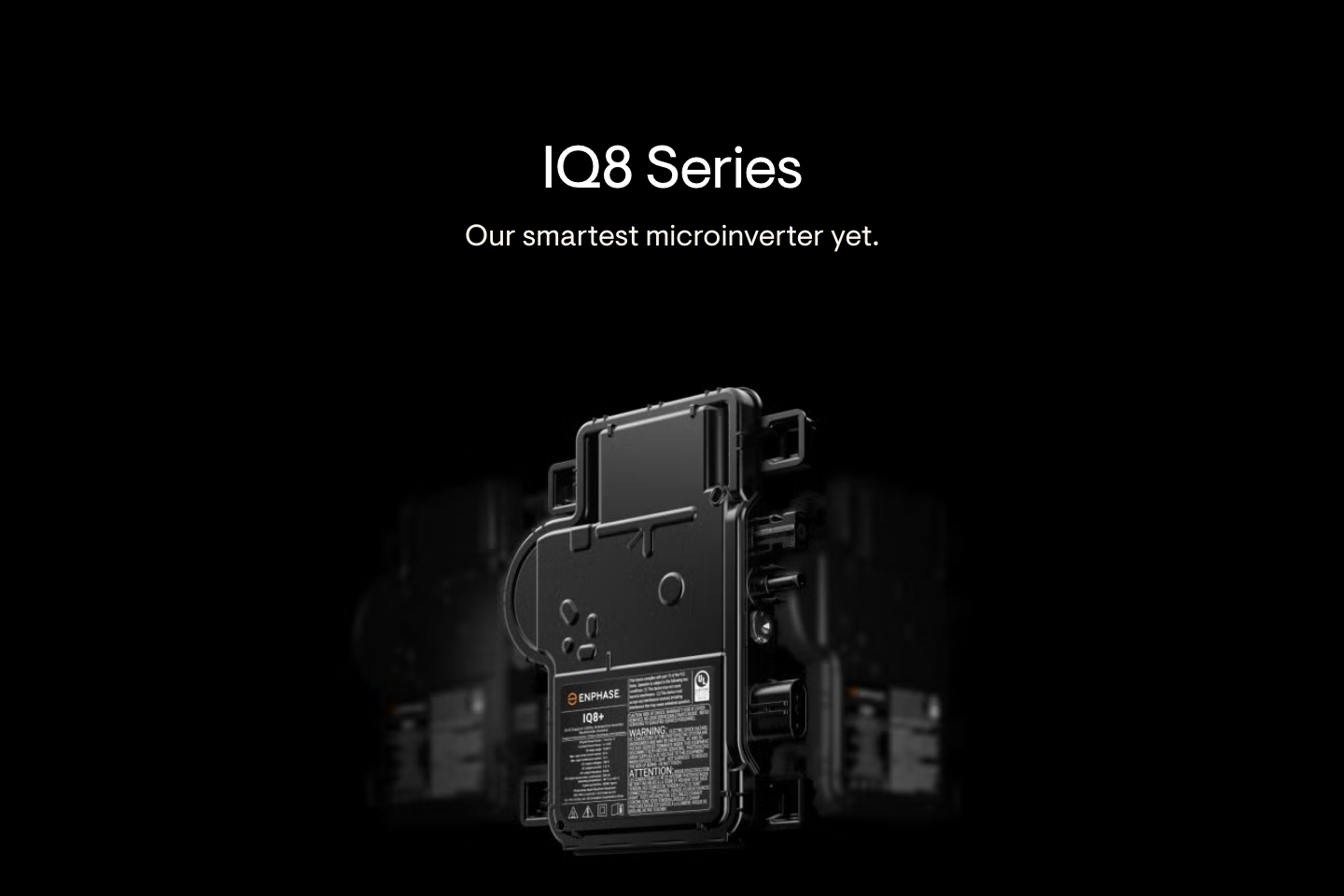
Enphase takes the more familiar one-module-per-microinverter approach in the IQ8 family. The base IQ8 product page lists one IQ8 microinverter as a compact unit paired to a PV module, with power-line communication, rapid-shutdown listing, IQ Gateway integration, and up to 25-year limited warranty coverage depending on model and market terms.
The Enphase approach usually costs more, but the design is easier to explain: one panel, one microinverter, one platform. For homeowners and installers who value service clarity, that simplicity can matter.
Roof Fit: Where Hoymiles Can Be the Smarter Buy
Hoymiles can be especially compelling when the roof layout is regular enough that a multi-input microinverter maps neatly to the array.
Good-fit scenarios include:
- a simple residential roof with groups of panels facing the same direction
- a cost-sensitive project where full microinverter independence is desired but premium pricing is hard to justify
- a small commercial or larger residential system where lower device count helps installation economics
- a market where the local installer already has strong Hoymiles experience and reliable supply
- a homeowner who wants module-level monitoring but does not need a deeply integrated battery and backup ecosystem on day one
The important detail is layout. A 4-in-1 microinverter can still provide independent MPPT channels, but the physical grouping of panels matters. The installer should be able to show which panels connect to which unit, how shading affects each input, and where the gateway will be placed.
If the roof is split across many small faces, with only one or two panels per roof section, the economics can change. At that point, the one-per-panel simplicity of Enphase may become easier to justify.
Where Enphase Usually Wins
Enphase usually looks stronger when the homeowner is buying not just microinverters, but a long-term residential energy platform.
Its strengths are clearest in these cases:
- complex roofs where a one-module-per-microinverter architecture is easier to design
- homeowners who care about a polished app and clear installer support workflow
- buyers planning Enphase IQ Battery, backup modes, or a broader Enphase Energy System
- installations where local electricians and solar companies have deep Enphase experience
- data-focused homes that want a documented Home Assistant path through the Enphase Envoy / IQ Gateway integration
- owners who want straightforward panel-level fault diagnosis over the life of the system
Enphase's official IQ8 page emphasizes integration with IQ Battery, IQ Gateway, and Enphase App monitoring software. That ecosystem story is the main reason many buyers accept the higher price.
Monitoring: Do Not Stop at the App Screenshot
Both brands can support module-level monitoring, but the monitoring path differs.
Hoymiles uses gateway devices such as DTU-Pro-S to collect microinverter data over a Sub-1G wireless link and send it to S-Miles Cloud through Ethernet, Wi-Fi, or 4G options. Hoymiles describes S-Miles Cloud as a platform for real-time PV generation, storage, and consumption visualization, with module-level monitoring including voltage, current, power, and temperature.
That is useful, but the buyer should confirm exactly which gateway, app, and regional cloud service will be installed. Hoymiles systems can be very capable, but the data path is less universally documented for smart-home users than Enphase.
Enphase also relies on a gateway, but its Home Assistant story is clearer. The Home Assistant Enphase Envoy integration documents production data and individual microinverter device production entities, with typical inverter-to-Envoy update timing around 5 to 15 minutes. That does not mean every Enphase install is automatically perfect in Home Assistant, but it gives technical buyers a known starting point.
For EnergyMeterHub readers, this matters because solar production is only one layer of the energy picture. To understand bills and self-consumption, you still need grid import/export, household load, battery flow, and tariff context. A good microinverter app cannot replace a correctly placed energy meter.
Rapid Shutdown and Electrical Safety
Both Hoymiles and Enphase can fit rapid-shutdown requirements when installed with the correct products for the local market.
Hoymiles' North American HMS-1600/1800/2000-4T-NA page says the microinverter is PV Rapid Shutdown Equipment with 65 V maximum DC voltage and references NEC and CEC rapid-shutdown contexts. The global HMS-1600/1800/2000-4T page also highlights rapid-shutdown compliance and an isolated transformer.
Enphase says IQ8 microinverters are UL Listed as PV Rapid Shutdown equipment when installed according to the manufacturer's instructions.
The buyer takeaway is simple: do not accept a generic "rapid shutdown included" line without checking the exact model, gateway, grid profile, local certification, and commissioning process. Rapid shutdown is a system-level result, not a marketing adjective.
Battery and Backup Planning
Battery planning is one of the biggest differences between the two stories.
Enphase is usually easier to understand if the homeowner wants to stay inside one brand ecosystem. IQ8 microinverters integrate with the Enphase IQ Battery, IQ Gateway, and Enphase app. That does not make Enphase automatically cheaper or more flexible, but it does make the upgrade path easier to explain to a homeowner: solar, monitoring, storage, and backup live inside one platform.
Hoymiles also has broader storage and monitoring products, but many residential buyers encounter Hoymiles first as a microinverter brand rather than as a full home-energy ecosystem. If a future battery is likely, ask the installer what battery architecture they recommend and whether it depends on Hoymiles equipment, a separate hybrid inverter, an AC-coupled battery, or another gateway.
The key question is not "which microinverter is better?" It is "which future system will this microinverter choice make easier?"
Cost and Value
Hoymiles often wins on value when the quote is well designed. A 4-in-1 microinverter can reduce hardware count, and the brand is commonly considered a cost-effective alternative in markets where installers support it well.
But a lower quote is only valuable if the system remains easy to service. Before choosing Hoymiles mainly for price, check:
- whether your installer has installed the exact model family before
- which DTU gateway is included
- whether module-level monitoring is included in the quoted price
- who owns the monitoring account
- how warranty claims are handled locally
- whether spare parts and replacement units are easy to source in your region
Enphase tends to cost more, but the premium may buy a stronger support ecosystem, easier homeowner handover, and a clearer route into batteries and backup. For a small roof, a complex roof, or a homeowner who values support confidence, that premium can be rational.
Home Assistant and Local Data Buyers Should Be Careful
If you are a Home Assistant user, do not choose purely from a solar installer's app demo.
For Enphase, the Home Assistant Envoy integration gives a documented route to production and inverter-level data when the correct gateway and access conditions are present. Many users still need extra configuration to build a full energy dashboard, especially for import/export and consumption sensors, but the integration path is known.
For Hoymiles, smart-home options can depend more heavily on gateway choice, regional setup, cloud access, and unofficial community tooling. That may be fine for a technically confident owner, but it should be verified before purchase, not discovered after installation.
Ask these questions before signing:
- Can I access production data without relying only on the vendor mobile app?
- Can the gateway expose local or near-local data, or is cloud access required?
- Can I get per-panel or per-input production values?
- How often does the data update?
- Can I combine solar data with grid import/export in Home Assistant?
- Will the installer leave me with owner-level access to the monitoring account?
This is where a separate energy meter can still be valuable. It gives the home a neutral view of grid import/export and load, even if the inverter platform changes later.
Which Buyer Should Choose Hoymiles?
Hoymiles is a good candidate for buyers who want microinverter benefits without automatically paying the highest ecosystem premium.
It is especially worth considering when:
- your installer is experienced with Hoymiles and can show similar completed projects
- the roof layout supports neat multi-input grouping
- the quote includes the correct DTU gateway and monitoring setup
- you want module-level visibility but do not require a fully integrated battery/backup platform immediately
- the local market has good Hoymiles availability and support
- the money saved can fund more panels, a better energy meter, switchboard preparation, or future battery readiness
Do not choose Hoymiles just because it is cheaper. Choose it when the lower-cost architecture still fits the physical roof, data needs, and service plan.
Which Buyer Should Choose Enphase?
Enphase is the stronger default for buyers who value a mature system story.
It is especially worth considering when:
- the roof has multiple orientations, small faces, or changing shade
- the homeowner wants the cleanest one-panel-one-inverter explanation
- future Enphase battery, backup, or system controller features are likely
- local installers have strong Enphase commissioning and service experience
- Home Assistant integration is part of the decision
- long-term support confidence matters more than minimizing first cost
Enphase is not the cheapest route. But for many residential buyers, it reduces uncertainty in design, monitoring, handover, and future expansion.
Practical Quote Checklist
Use this checklist when comparing Hoymiles and Enphase quotes.
| Question | Why it matters |
|---|---|
| Which exact microinverter model is quoted? | Model family changes power rating, panel compatibility, gateway needs, and certification. |
| How many panels connect to each microinverter? | Hoymiles grouping can be economical, but layout must make sense. |
| Which gateway is included? | Monitoring quality depends on the DTU or IQ Gateway, not only the rooftop unit. |
| Is module-level monitoring included? | Some quotes understate gateway or monitoring costs. |
| What data can the homeowner export or integrate? | Important for Home Assistant, tariffs, troubleshooting, and long-term ownership. |
| Is rapid shutdown certified for this exact configuration? | Safety compliance is system-specific. |
| What is the battery or backup path? | A cheap solar-only design can become expensive if storage is added later. |
| Who supports warranty and replacement locally? | Brand quality matters less if service is weak in your region. |
Bottom Line
Hoymiles is the better fit when you want a cost-effective microinverter system, the roof layout works well with multi-input units, and the installer has a credible monitoring and service plan.
Enphase is the better fit when you want the most mature residential microinverter ecosystem, a cleaner one-module-per-inverter architecture, strong app and gateway integration, and a clearer path into batteries, backup, and Home Assistant.
For a straightforward roof with a strong Hoymiles installer, paying the Enphase premium may not always be necessary. For a complex roof, data-heavy homeowner, or long-term solar-plus-battery plan, Enphase can be worth the extra cost.
The smartest decision is not the brand with the louder brochure. It is the system your installer can design, commission, monitor, and service well for the specific roof in front of them.
Related EnergyMeterHub Guides
- Microinverter vs String Inverter vs Optimizer: Which Architecture Fits a Normal Roof?
- Tigo TS4-A-O vs Full Microinverters: When Is the Cheaper Fix Good Enough?
- Enphase IQ8 vs Fronius GEN24: Which Solar Upgrade Path Is Better?
- How to Plan a Home Energy Monitoring Setup That You Will Not Outgrow in a Year
Sources
- Hoymiles HMS-1600/1800/2000-4T official product page
- Hoymiles HMS-1600/1800/2000-4T-NA official product page
- Hoymiles S-Miles Cloud official monitoring page
- Hoymiles DTU-Pro-S official gateway page
- Enphase IQ8 Microinverter official product page
- Home Assistant Enphase Envoy integration documentation