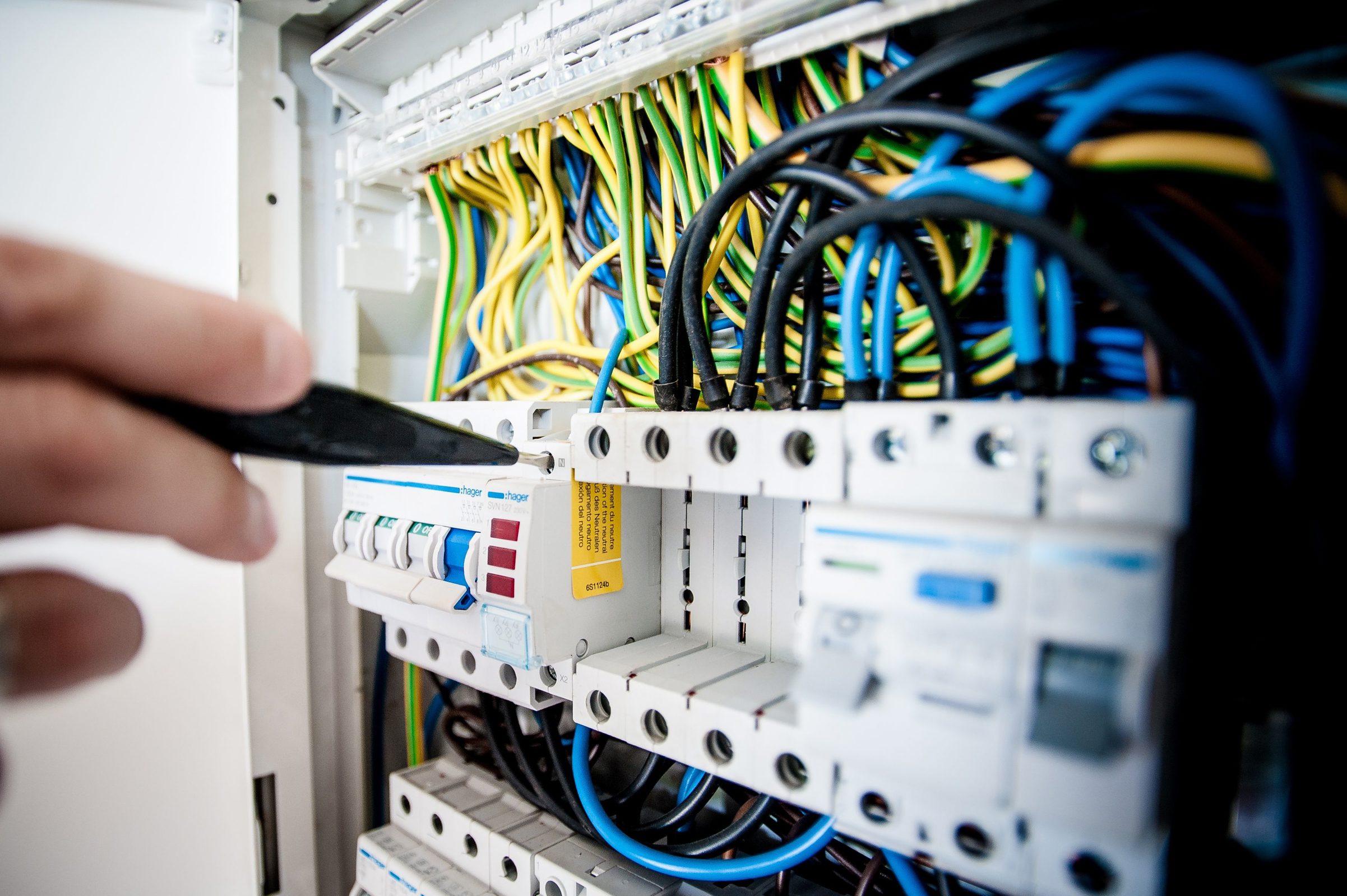
A three-phase supply is useful when a home has several large electrical loads, needs faster three-phase EV charging, or is planning equipment that specifically benefits from three-phase power. But it is not an automatic upgrade for every solar, battery, heat-pump or EV household.
For many normal homes, a well-designed single-phase supply remains entirely adequate. The right question is not "Is three-phase better?" It is: Will three-phase solve a capacity, equipment-compatibility or phase-balancing problem that your current supply cannot solve economically?
This guide explains the decision in practical terms. Voltage, connection rules and permitted equipment vary by country and network, so treat the examples as planning tools and have a licensed electrician and your electricity distributor confirm the final design.
The short answer
Stay with single-phase when:
- your present maximum demand fits comfortably within the approved supply;
- large loads can be scheduled, controlled or dynamically limited;
- the EV charging speed you actually need is available on single-phase;
- your preferred solar, battery and backup hardware is compatible; and
- there is no recurring voltage, nuisance-tripping or capacity problem that an electrician has traced to the supply arrangement.
Ask for a three-phase assessment when:
- several high-power loads may run together, such as EV charging, electric cooking, hot water, heating or cooling;
- you want charging above the practical single-phase limit and both the vehicle and local network support it;
- a large solar or battery system faces single-phase inverter, export or phase-imbalance limits;
- the property has a workshop, pump, lift, large heat pump or other equipment designed for three-phase power;
- a renovation or electrification project is already triggering service, switchboard or consumer-mains work; or
- measured demand shows that load management cannot deliver the required outcome.
Three-phase gives a designer more ways to distribute power. It does not, by itself, reduce the energy used by an appliance or guarantee a lower bill.
Single-phase and three-phase in plain language
A typical single-phase residential connection supplies one alternating-voltage phase plus a neutral conductor. A three-phase connection supplies three alternating phases, spaced electrically from one another, usually with a neutral in residential installations.
In many 230 V markets, a single-phase load uses roughly 230 V phase-to-neutral. A three-phase installation may provide roughly 400 V phase-to-phase while still supplying ordinary 230 V phase-to-neutral circuits. Exact nominal voltages and wiring arrangements vary by jurisdiction. North American split-phase service is a different architecture and should not be treated as either European/Australasian single-phase or three-phase without checking the actual service.
The practical difference is distribution:
- Single-phase: the home's supply capacity and major loads share one phase.
- Three-phase: circuits and compatible equipment can be distributed across three phases.
- Three-phase equipment: some devices use all three phases simultaneously.
- Single-phase equipment in a three-phase home: most normal lighting, socket and appliance circuits still use only one phase and neutral.
A three-phase home is therefore not a house where every appliance becomes three-phase. It is a house where the electrical designer has three phase conductors available and must allocate loads sensibly among them.
Compare the two before you request an upgrade
| Decision factor | Single-phase supply | Three-phase supply |
|---|---|---|
| Ordinary household circuits | Well suited | Still normally supplied phase-to-neutral |
| Available site capacity | Depends on approved service current | Can be substantially higher at the same per-phase current |
| Large loads | May require scheduling or dynamic control | More scope to distribute loads; some equipment can use all phases |
| EV charging | Commonly supports useful overnight charging | Can support higher AC charging where the car, charger and network allow it |
| Solar and batteries | Broad product choice, subject to network limits | More design flexibility, but phase behavior and supported meters matter |
| Monitoring | One main phase is simpler to measure | All relevant phases and voltage references must be measured correctly |
| Installation complexity | Usually lower | More conductors, protection, metering and design checks |
| Upgrade cost | No conversion cost if adequate | Site-specific service, meter, switchboard and network work may be required |
| Energy bill | Based on energy, tariffs and demand rules | Three-phase alone does not reduce kWh |
Capacity math: useful for screening, not approval
For a simple single-phase estimate:
apparent power (kVA) ≈ voltage (V) × current (A) ÷ 1,000
For a balanced three-phase estimate:
apparent power (kVA) ≈ √3 × line-to-line voltage (V) × current per phase (A) ÷ 1,000
At 230 V, a 32 A single-phase circuit is about 7.4 kVA. At 400 V, a balanced 32 A three-phase circuit is about 22.2 kVA. These are electrical capacity illustrations, not promises of usable charging or appliance power. Real output also depends on power factor, efficiency, circuit design, continuous-load rules, network approval and the equipment's own limit.
Do not add every nameplate rating and assume all loads run at full power together. Electricians assess maximum demand, diversity, duty cycles and controlled loads. Conversely, do not assume a monthly bill proves spare capacity: a short overlap between an EV charger, cooktop, hot-water heater and air conditioner can matter even when monthly kWh is modest.
EV charging is the clearest reason to ask the question
EV charging makes the phase decision visible because charger power is continuous for long periods.
Official home-charging guidance in Australia describes dedicated AC chargers from 7 to 22 kW and notes that installation may require switchboard and supply-connection upgrades. Product examples show the architecture clearly: myenergi lists zappi configurations around 7 kW on single-phase and up to 22 kW on three-phase, while Tesla documents up to 22 kW / 32 A for compatible three-phase installations.
That does not mean every EV owner needs 22 kW. Check four limits:
- Daily distance: the energy that must be replaced overnight matters more than the charger's headline rating.
- Vehicle onboard charger: many cars accept less AC power than a 22 kW wallbox can supply.
- Site capacity: the charger must coexist with the rest of the home.
- Network and tariff rules: approval, export/import limits or demand charges may change the economics.
A managed 7 kW single-phase charger can be enough for a large share of households. Dynamic load management can reduce charger current when the house is busy and restore it later. Three-phase becomes more compelling when the vehicle can accept it, charging windows are short, driving demand is high, or the home is already near its single-phase capacity.
Read our related guide: Do you need dynamic load management for a home EV charger?
Solar: match the supply, inverter and network rules
Solar does not automatically require three-phase power. Single-phase inverter ranges cover many common residential system sizes, while manufacturers also offer three-phase families for larger or more complex installations. For example, Fronius lists Primo GEN24 models as single-phase and Symo GEN24 models as three-phase.
The important questions are:
- What inverter capacity is permitted on each phase?
- Is export limited per phase or for the site as a whole?
- Can the proposed system export on one phase while the home imports on another?
- Does the inverter or export controller require a supported meter?
- Will a future battery or EV charger change the preferred architecture?
- Can the monitoring platform show both per-phase and net site power?
Three-phase can allow a larger or better-distributed system, but it also makes commissioning and data interpretation more demanding. A three-phase inverter is not interchangeable with three separate single-phase decisions, and a network may impose limits on imbalance or export.
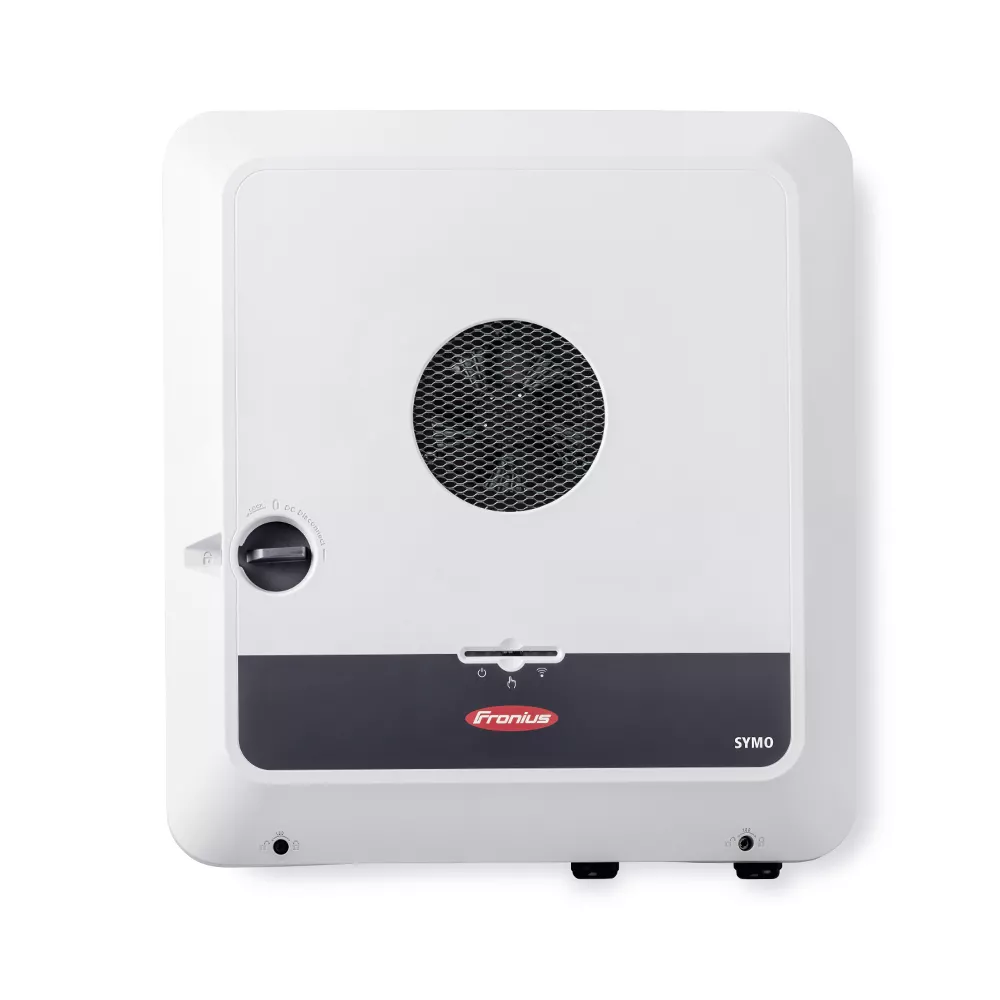
Fronius is one example of a residential inverter family offered in single-phase Primo and three-phase Symo variants. The correct model depends on the actual supply and approved system design.
Explore the Fronius GEN24 Plus device profile.
Batteries and backup: phase behavior matters more than the label
A home can have three-phase grid supply and still use a single-phase battery inverter, depending on local rules and product design. That arrangement may reduce net grid imports but does not necessarily keep every phase or every three-phase appliance operating during an outage.
Before buying a battery, ask:
- Is the battery inverter single-phase or three-phase?
- During normal operation, how does it respond to loads on the other phases?
- During an outage, which circuits and phases are backed up?
- Can it start motors, pumps or heat pumps with high surge demand?
- Is whole-home backup genuinely supported, or only a protected-load sub-board?
- What meter or current-transformer arrangement is required?
- Does the system still measure import and export correctly across all phases?
This distinction prevents an expensive misunderstanding: a battery can have enough stored energy in kWh but still lack the power, phase configuration or switching arrangement needed for a particular load.
Heat pumps, cooking and other large loads
Large household loads do not all justify a three-phase conversion.
An induction cooktop may have configurable power limits. A heat-pump water heater often has a moderate compressor load but may include a larger resistive backup element. Air-conditioning demand depends on the system type and diversity. Pool pumps, workshop machines, bore pumps and large ducted heat pumps can create a stronger three-phase case, especially when motors or simultaneous loads are involved.
For each proposed load, record:
- rated input power and current;
- starting or surge current where relevant;
- whether the device is single-phase or three-phase;
- expected operating hours;
- whether operation can be scheduled;
- whether it supports external control or demand response; and
- which other loads are likely to run at the same time.
The result is more useful than a generic statement that the home is "all electric."
Load balancing: three phases still need design
A three-phase supply can carry more total load, but an installation can still overload one phase if most large single-phase circuits are placed on it.
A sound design considers:
- the expected current on each phase;
- which loads are continuous;
- which circuits are likely to overlap;
- whether solar generation is balanced or phase-specific;
- how an EV charger or battery controller measures the site;
- and how future loads could be allocated.
Phase balance is not only about the total. One phase can approach its limit while the other two remain lightly loaded. That is why a quote based only on "three-phase available" is incomplete.
Monitoring a three-phase home correctly
Three-phase monitoring normally requires all relevant phases to be measured, with each current sensor matched to the correct voltage reference. A monitor that supports one wiring system may not support another: three-phase four-wire Wye/Star and three-phase three-wire Delta are not interchangeable.
For example, EnergyMeterHub's verified device data shows that the Emporia Vue 3 three-phase model is intended for single-phase, split-phase or three-phase four-wire Wye systems, not three-wire Delta. The IAMMETER WEM3080T supports common Wye/Star arrangements, while IAMMETER uses a separate WEM3080TD family for three-wire Delta installations.
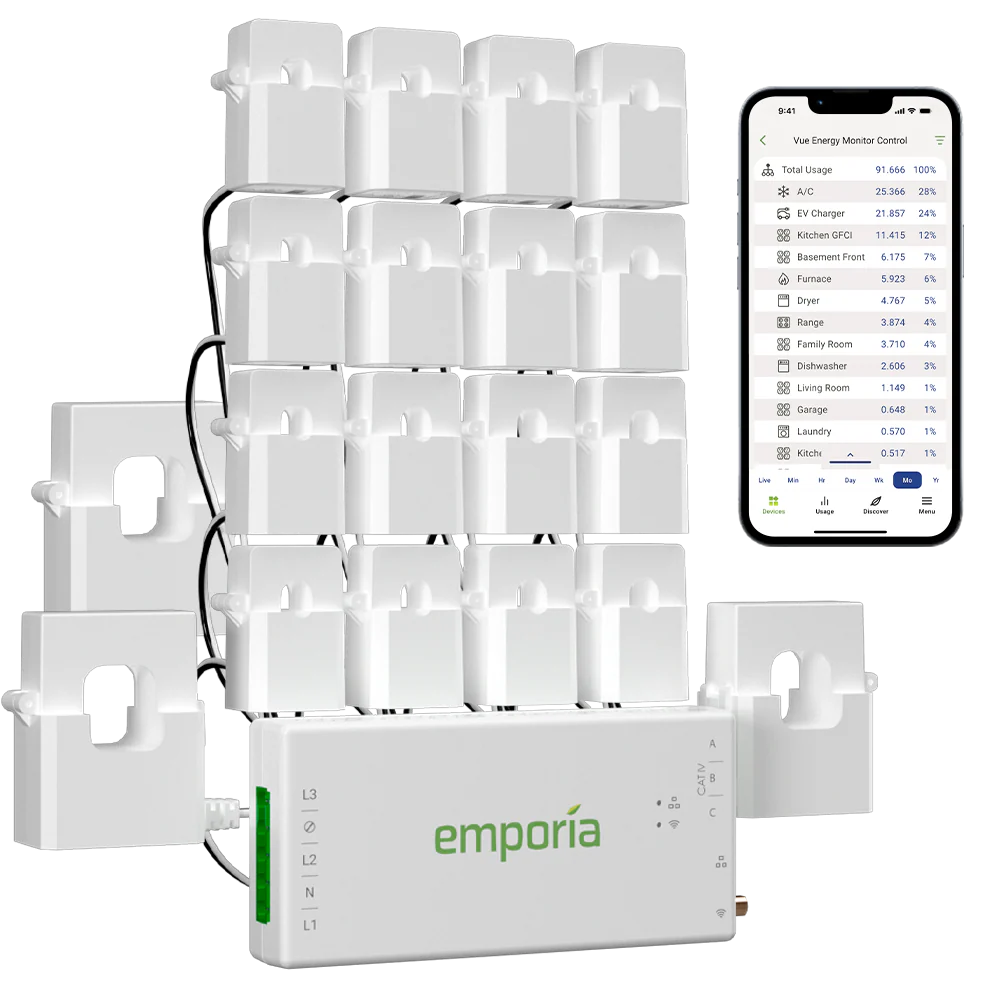
Three-phase whole-home monitors need the correct number of sensors and the correct wiring-system support. Product names alone are not enough.
A DIN-rail meter can provide more formal phase-level electrical data and local protocols such as Modbus, but installation method, current range, certifications and communications vary.
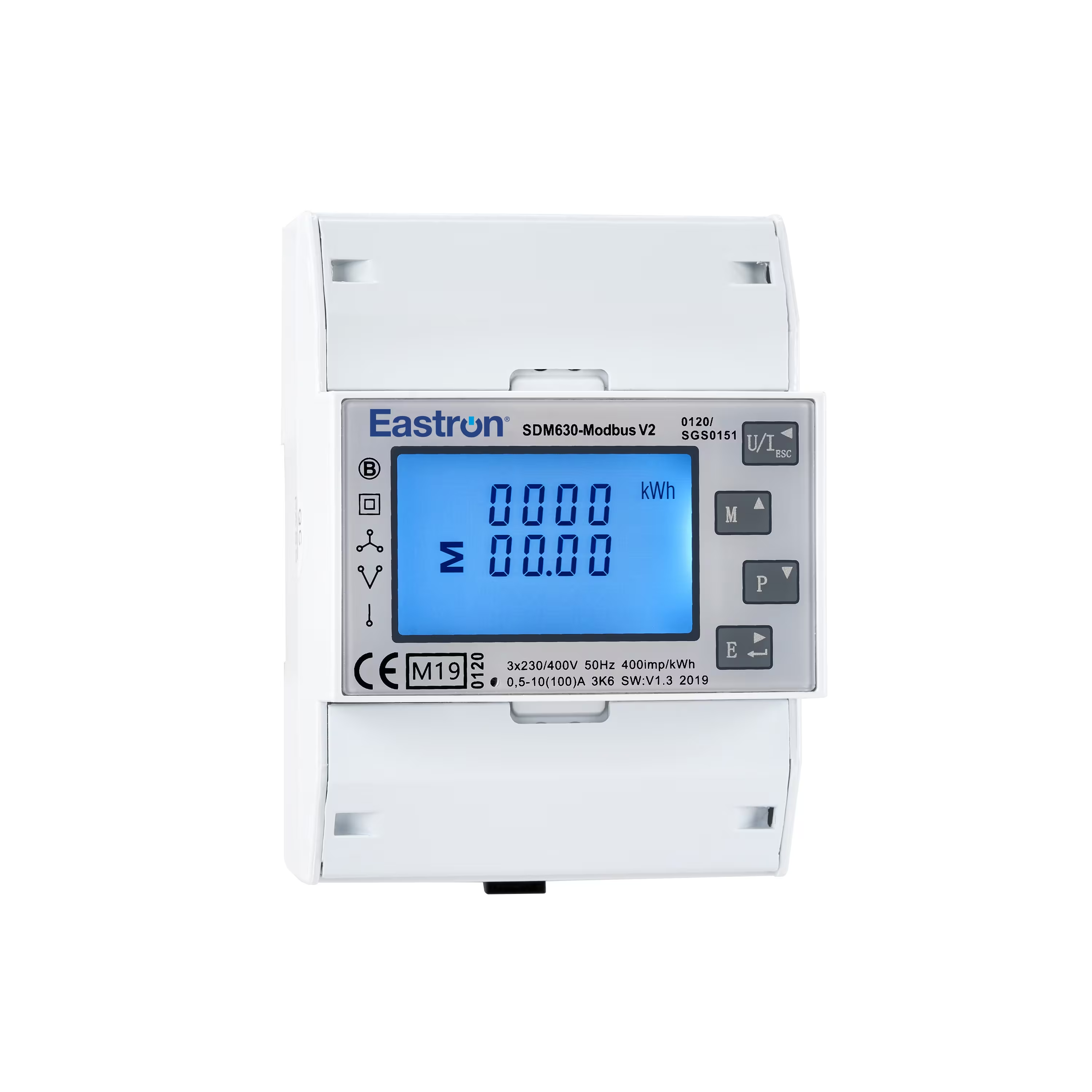
The Eastron SDM630 is an example of a three-phase DIN-rail meter. Confirm the exact variant, direct-current or CT arrangement, protocol and approvals before specifying it.
Useful next reads:
- When is a three-phase meter worth it for a solar home?
- How to avoid common CT clamp mistakes
- Eastron SDM630 device profile
- IAMMETER WEM3080T device profile
How to tell what supply you have
Do not identify the supply from wire colours or by opening a switchboard.
Safer clues include:
- the electricity retailer or distributor account;
- meter labels and the number of phase registers;
- the main-switch arrangement visible without removing covers;
- an electrical inspection report;
- solar or battery commissioning documents; and
- confirmation from a licensed electrician or the network operator.
A three-pole main switch often suggests three-phase supply, but labels and historical alterations can mislead. The authoritative answer comes from the actual service and metering records, verified by a qualified person.
When three-phase is probably unnecessary
A conversion is often hard to justify when the main objective can be met with:
- scheduled EV charging overnight;
- dynamic charger load management;
- a power-limited cooktop or controlled hot-water circuit;
- better separation of simultaneous loads;
- a compatible single-phase solar or battery design;
- a targeted switchboard upgrade without changing the service; or
- better measurement before committing to new infrastructure.
This is why monitoring belongs early in the process. A week or month of interval and circuit data can show whether the real issue is sustained site demand, one short peak, poor scheduling or simply an assumption.
When a three-phase assessment is worth paying for
Request a formal assessment if two or more of these apply:
- a 22 kW-class EV charger is a genuine requirement;
- the property will have multiple EVs or restricted charging windows;
- a large ducted heat pump, pump, lift or workshop machine needs three-phase;
- the planned solar or battery system is constrained by phase or export rules;
- electrification will add several fixed high-power loads;
- nuisance tripping or voltage problems persist after faults are ruled out;
- consumer mains, metering or switchboard work is already planned;
- future expansion is important and trenching or building work is happening now.
The assessment should compare at least two designs: a managed single-phase option and a three-phase option. Otherwise, the quote cannot show whether conversion is solving a real constraint or simply adding capacity.
What to ask for in a quote
Give the electrician or designer a one-page load schedule and ask them to document:
- Existing service type and approved current.
- Measured maximum demand or the method used to estimate it.
- Switchboard condition, spare ways, protection and consumer-mains capacity.
- Proposed load allocation by phase.
- EV charger power, vehicle limit and load-management method.
- Solar inverter phase, capacity and export-control requirements.
- Battery inverter phase, meter requirements and backup scope.
- Whether the utility meter, service cable or network connection must change.
- Distributor application, inspection and certification responsibilities.
- Commissioning tests and monitoring handover.
- Total cost for both the managed single-phase and three-phase options.
- What future upgrade the design is reserving capacity for.
Read the companion guide: Do you need a switchboard upgrade before solar, a battery or an EV charger?
A practical decision workflow
Step 1: Define the outcome
State the problem in operational terms: "replace 45 kWh overnight," "run a 12 kW heat pump," "install a 10 kW inverter," or "avoid tripping when cooking and charging." Do not begin with a preferred phase count.
Step 2: Build a load schedule
List fixed loads, rated power, expected overlap, duty cycle and controllability. Include future equipment that is reasonably likely within five years.
Step 3: Measure the existing home
Use utility interval data, a suitable whole-home monitor or professionally installed circuit metering. Capture normal days and high-demand conditions. Energy in kWh and peak power in kW answer different questions.
Step 4: Check equipment limits
Confirm the EV's AC charger, inverter model, battery architecture, backup phases, meter compatibility and local certifications. A three-phase supply cannot make single-phase equipment behave as three-phase equipment.
Step 5: Compare control with construction
Price load management, scheduling and power limiting alongside the supply conversion. Controls may be the better answer when high loads are flexible; a supply upgrade may be better when large simultaneous demand is essential.
Step 6: Get network confirmation
The distributor must confirm what service is available, what applications are required and which export or imbalance rules apply. Street infrastructure and connection cost can change the decision.
Step 7: Commission the monitoring
After the work, verify phase mapping, import/export direction, charger response, solar production, battery behavior and peak demand. Keep the final circuit schedule and commissioning records.
Bottom line
Three-phase power is not an efficiency upgrade. It is an electrical-capacity and system-design option.
A normal home should move to three-phase when the additional phases solve a verified problem: higher required charging power, compatible large equipment, constrained solar or battery design, unavoidable simultaneous demand, or a clearly documented expansion plan. If the same outcome can be achieved with a well-designed single-phase installation, dynamic load management and accurate monitoring, conversion may add cost without adding much everyday value.
Start with the loads, the data and the equipment requirements. Let the supply decision come last.
Sources and further reading
- Fronius: Why three-phase? Overview of single-phase and three-phase networks
- Fronius GEN24 and GEN24 Plus: single-phase Primo and three-phase Symo models
- Australian Government: charging options for houses and strata buildings
- myenergi zappi multiphase datasheet
- Tesla Wall Connector power-supply options
- Ausgrid NS110: residential subdivision service-cable requirements
- Energy Safe Victoria: electrical workers and certificates of electrical safety
- Pexels cover photo: electrician working on an opened switchboard