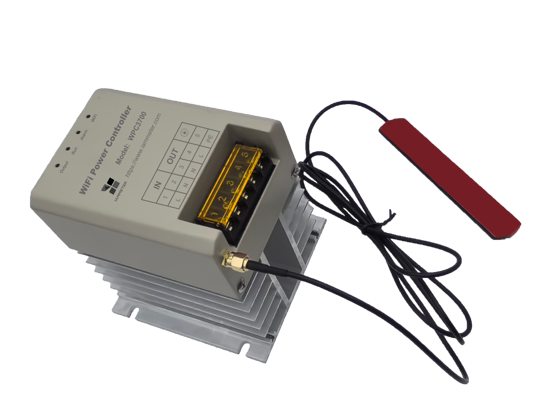
A smart power controller becomes useful in a solar home when it helps turn repeatable daytime surplus into a controllable load without forcing the household straight into battery-level complexity or cost.
That usually means three things are true at the same time:
- the home regularly exports meaningful solar in the middle of the day
- there is a suitable load that can absorb that energy usefully
- the control logic can react to real conditions instead of guessing from a fixed schedule
If those pieces are missing, a controller is often just another box in the switchboard. If they are present, it can be one of the most practical ways to improve self-consumption with relatively modest hardware.
The short version
A smart power controller is usually worth considering when:
- you already have regular midday export and low feed-in value
- the target load is flexible and electrically suitable, especially electric water heating or another resistive load
- you want better self-consumption before committing to a battery
- you already have, or are willing to add, clear import/export visibility
- you want control that can respond to changing surplus instead of simple on-off timing
It is usually the wrong first move when:
- the home barely exports any solar
- the real problem is poor monitoring rather than poor control
- the target load is not a good fit for this kind of controller
- the household actually wants evening backup or broader load shifting, which points more toward a battery or a wider energy-management design
Quick comparison table
| What you are trying to do | Usually best first option | Why it often wins |
|---|---|---|
| Push one predictable load into a rough solar window | Timer | Cheapest and simplest when precision does not matter much |
| Turn a load on or off based on one condition | Smart relay or contactor | Better than a timer when you need simple automation rather than proportional control |
| Match a resistive load to changing surplus through the day | Smart power controller | Better when surplus rises and falls and you want finer control than pure on-off switching |
| Shift large amounts of energy into the evening or add backup | Battery system | Better when the real goal is storage, resilience, or broader household load shifting |
Start with the load, not the gadget
The most useful question is not "Which controller should I buy?" It is "Which load am I trying to control, and why?"
A smart power controller is strongest when the target load is:
- electrically suitable for the controller design
- flexible enough that shifting it into solar hours is actually useful
- large enough to matter to self-consumption
- regular enough that the control system gets repeated opportunities to help
That is why electric water heating is the classic fit. It is a sizeable load, it can often absorb daytime energy as stored heat, and it usually does not need to run at one exact moment.
By contrast, a controller is often a poor answer when the target is:
- a load with no practical shifting value
- a device whose own built-in control already solves the real problem
- a motor or compressor load that does not suit this kind of proportional power control
- a household trying to fix missing data rather than improve control
If the home still cannot answer where imports, exports, and major loads are coming from, start with Solar Monitoring Planner, Smart Meter Selector, or How to Add Consumption Monitoring to a Solar Home That Only Has Inverter Data before buying more control hardware.
Why better control matters more than another app
A timer can already move a load into the middle of the day. That is enough for some homes.
But timers have an obvious limit: they do not know whether the home has 300 W of spare solar or 2.5 kW. They only know the clock.
A relay improves things slightly because it can turn a load on or off from a condition such as export being above a threshold. But on-off control can still be clumsy. If the load is large, it may drag the home from export to import the moment it switches on.
This is where a smart power controller starts to make sense. Its value is not that it sounds more advanced. Its value is that it can follow changing surplus more smoothly and make a useful load behave more like a controllable sink rather than an all-or-nothing demand spike.
For the right home, that means:
- less wasted midday export
- fewer situations where a heater load immediately pulls from the grid
- more useful automation than a fixed schedule can provide
- a better bridge between monitoring and action
The controller still needs a good measurement boundary
A smart power controller is not a replacement for metering. It is the part that acts on the data, not the part that proves the data is right.
That matters because many disappointing control setups fail for a simple reason: the home is controlling against a vague or incomplete picture.
A controller becomes far more useful when the site can already see:
- whether the home is importing or exporting
- how much surplus is really available
- whether the target load is large enough to matter
- whether another load or appliance is changing the result at the same time
This is where a cleaner meter-plus-platform path matters. A controller paired with trustworthy import/export monitoring and a platform that can organize device-level energy properly is far more useful than a controller added to a half-blind setup.
That is also why this topic sits naturally beside Main Meter vs Circuit Meter for Solar Homes: Which One Do You Actually Need?, How to Use Energy Data to Spot Solar Self-Consumption Opportunities You Are Missing, and What an Open Energy Meter Lets You Do That a Closed App Usually Does Not.
When a smart power controller usually earns its place
A controller is often a strong fit when most of these are true:
1. The home has regular daytime export
If there is not much surplus to work with, better control has very little to control.
2. The export value is weak enough that self-consumption matters more
If exporting solar pays poorly compared with imported energy cost, shifting more solar into a useful load becomes easier to justify.
3. The load is thermally or operationally flexible
Hot water is the clearest example. The household usually cares about having hot water available, not about heating the tank at one exact minute.
4. The buyer is not ready for a battery yet
A smart power controller is not a battery substitute, but it can be a practical intermediate step for homes that want a cheaper way to use more of their own solar first.
5. The site already has a usable automation or monitoring path
That could be a vendor ecosystem, an energy meter plus cloud logic, or a local path through platforms such as Home Assistant or IAMMETER Local.
When it usually disappoints
A smart power controller often disappoints when buyers expect it to solve a bigger problem than it actually can.
Very little solar surplus
If the house is already using most of its solar locally, there may not be enough spare generation to justify more control hardware.
No suitable controllable load
A controller needs a load that can absorb energy usefully and safely. If the home does not have one, the economics usually get weak quickly.
Missing visibility
If the household still does not know whether the real issue is EV charging, hot water, HVAC demand, tariff timing, or plain old base load, control is arriving before diagnosis.
Wrong end goal
If the real goal is evening resilience, overnight load shifting, or whole-home backup, the better answer is usually not a controller. It is a battery, tariff strategy, or broader system redesign.
Buying for novelty
A controller is a practical piece of control hardware, not a magic solar optimizer. It needs the right load, the right measurement layer, and the right economic reason.
Timer, relay, controller, or battery?
A useful way to decide is to ask what kind of mismatch the household is trying to solve.
If the mismatch is simple:
- "I just want the hot-water load moved into daytime"
then a timer may be enough.
If the mismatch is conditional:
- "I want the load to switch only when surplus reaches a usable threshold"
then a relay or similar on-off control path may be enough.
If the mismatch is continuous:
- "My surplus moves up and down through the day, and I want the load to follow it more gracefully"
then a smart power controller is much more compelling.
If the mismatch is broader:
- "I want to store daytime energy for later, reduce evening imports, and keep some backup value"
then a battery or broader energy-management stack is usually the right category.
That is why Excess Solar Priority Calculator is such a useful companion tool. It helps answer whether hot water, EV charging, battery storage, or another daytime sink should come first instead of assuming controller hardware is automatically the next step.
Where current EnergyMeterHub pages help most
For readers trying to turn this into a concrete shortlist, the most relevant paths on EnergyMeterHub right now are:
- IAMMETER WPC3700: What It Does, How It Works, and When It Makes Sense
- IAMMETER WPC3700 device page
- Shelly EM
- Shelly Pro 3EM
- Home Assistant integration page
- Solar Monitoring Planner
- Excess Solar Priority Calculator
These pages matter because a controller decision is rarely only about the controller. It usually depends on the meter, the platform, the load, and the control logic together.
What to check before buying
Before adding a smart power controller to a solar home, check these six things:
- Is there enough regular midday export to justify better control?
- Is the target load actually a strong fit for this controller category?
- Do you already have trustworthy import/export visibility?
- Are you solving a control problem or a measurement problem?
- Would a timer or simpler relay solve most of the value for less money?
- Is the real end goal self-consumption, or is it actually backup and evening shifting?
Those questions prevent the most common mistake: buying an elegant control device for a problem that still has not been framed properly.
Bottom line
A smart power controller is useful in a solar home when the site already has real daytime surplus, a genuinely suitable load, and enough visibility to control against the right signal.
Its sweet spot is not "any solar home that wants more tech." Its sweet spot is the home that wants to turn flexible daytime loads into a cleaner self-consumption strategy without jumping straight to battery cost and complexity.
For many households, the right first step is still better metering, a timer, or a simpler relay path. But when the load is right and the control problem is real, a smart power controller can be one of the most practical ways to make solar surplus more useful instead of just more visible.
Related reading
- How to Use Energy Data to Spot Solar Self-Consumption Opportunities You Are Missing
- Main Meter vs Circuit Meter for Solar Homes: Which One Do You Actually Need?
- How to Add Consumption Monitoring to a Solar Home That Only Has Inverter Data
- What an Open Energy Meter Lets You Do That a Closed App Usually Does Not
- IAMMETER WPC3700: What It Does, How It Works, and When It Makes Sense
- Solar Monitoring Planner
- Excess Solar Priority Calculator