If you want to know what your EV charger really costs to run, the best metering option is not always a new utility meter or a full panel replacement.
For most homes, the practical path is to start with the data the charger already provides, then add a dedicated circuit measurement only if you need better accuracy, solar-aware charging, tenant reimbursement, tax reporting, or load-management confidence.
The key question is simple: are you trying to understand charging cost, control charging behavior, or create a defensible billable record? Those are different jobs, and they need different metering choices.
The short answer
For most home EV charger setups:
| Goal | Best metering path | Why it works |
|---|---|---|
| Basic personal cost tracking | EV charger app or vehicle app | Usually enough for rough monthly cost estimates |
| Better household energy visibility | Whole-home monitor with an EV circuit CT | Shows EV charging in context with the rest of the house |
| Solar surplus charging or dynamic load management | Charger plus main-panel CTs or a compatible home energy monitor | The charger needs to know grid import/export or whole-home load |
| Tenant, employee, or business reimbursement | Dedicated circuit meter or approved sub-meter | Easier to defend than app-only estimates |
| High-confidence billing or formal allocation | Revenue-grade or utility-approved metering path | App and CT data may not be enough for audited billing |
If you are only curious about cost, the charger app may be enough. If the EV charger is affecting solar self-consumption, peak demand, or panel capacity, add measurement at the circuit or main-panel boundary.

Start with the charger app, but know its limits
Many smart EV chargers report session energy, charging time, charging rate, and sometimes estimated cost. That is useful because the charger is already measuring the load it controls.
This is usually good enough when:
- you own the home,
- the charger is used by one household,
- you only need approximate cost tracking,
- you charge mostly on a fixed tariff,
- and you do not need the number for reimbursement or formal billing.
The limitation is that charger app data usually lives inside one brand ecosystem. It may not line up perfectly with your utility bill, solar monitoring, or whole-home energy dashboard. It also may not separate grid energy from solar energy unless the charger is paired with a compatible home energy monitor or main-grid CTs.
That matters because a charger can consume 20 kWh in a session, but the cost of that session depends on when it charged and where the energy came from.
Use a circuit CT when you want EV charging in the whole-home picture
A CT clamp on the EV charger circuit is often the cleanest retrofit option when you want to see EV charging separately without rebuilding the panel.
A CT-based setup can show:
- how much energy the EV charger used,
- when charging created demand peaks,
- whether charging overlapped with solar production,
- how the EV compares with HVAC, hot water, or other major loads,
- and whether load-shifting would meaningfully reduce costs.
This is the most practical answer for many EnergyMeterHub readers because it creates useful visibility without needing a utility-meter change.
It is especially helpful if you already use a whole-home monitor such as Emporia Vue, Shelly Pro 3EM, IAMMETER, IoTaWatt, Home Assistant, or another monitoring stack that can break out one large load as its own circuit.
The trade-off is accuracy and installation quality. CT clamps are only as good as their placement, orientation, voltage assumptions, phase mapping, and calibration. A misconfigured CT can make EV charging look doubled, reversed, or assigned to the wrong phase.
Choose a DIN-rail or dedicated sub-meter when the number must be defensible
A dedicated DIN-rail kWh meter or approved sub-meter makes more sense when the EV number needs to stand on its own.
Typical cases include:
- a rental property where the tenant pays for EV charging separately,
- a home office or business vehicle reimbursement setup,
- a shared charger used by multiple households,
- a strata or apartment garage arrangement,
- or an employer that requires a cleaner charging record.
In these cases, an app screenshot may be too weak, and a CT clamp may be considered too dependent on configuration. A dedicated meter on the EV charger circuit gives you a clearer measurement boundary: electricity that passed through this meter went to the charger circuit.
That still does not automatically make the setup utility-grade or legally valid for every billing use. Local rules matter. But it is usually a much stronger record than relying only on a consumer charger app.
Do not confuse charger metering with load management
Separately metering an EV charger tells you what it used. Load management tells the charger how much it is allowed to use right now.
Those are related, but not the same.
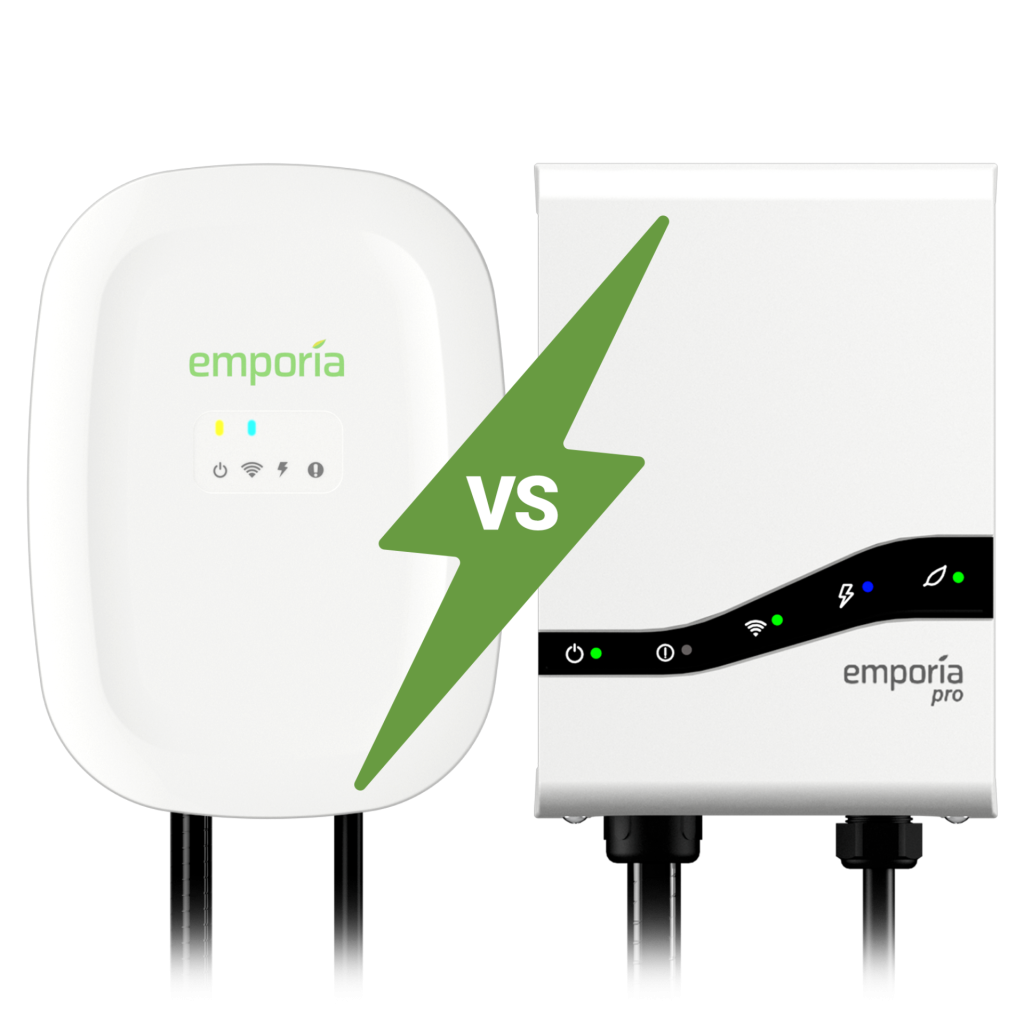
Emporia's PowerSmart documentation describes a setup where the EV charger works with a Vue energy monitor to watch whole-home usage in real time and adjust charging output so the panel stays within safe limits. myenergi's zappi ecosystem similarly relies on CT clamps for grid import/export monitoring, with additional CTs used when users want PV generation shown in the app.
The lesson is broader than any one brand: if the charger needs to react to whole-home load or solar surplus, it usually needs a measurement point at the mains, not just a measurement of its own circuit.
A charger-only meter can tell you, "the EV used 18 kWh last night." It cannot by itself tell the charger, "the house is already near its service limit" or "there is 3 kW of surplus solar available right now."
Solar homes need a grid-boundary view, not just EV circuit data
If your goal is solar-aware charging, the EV circuit number is only half the story.
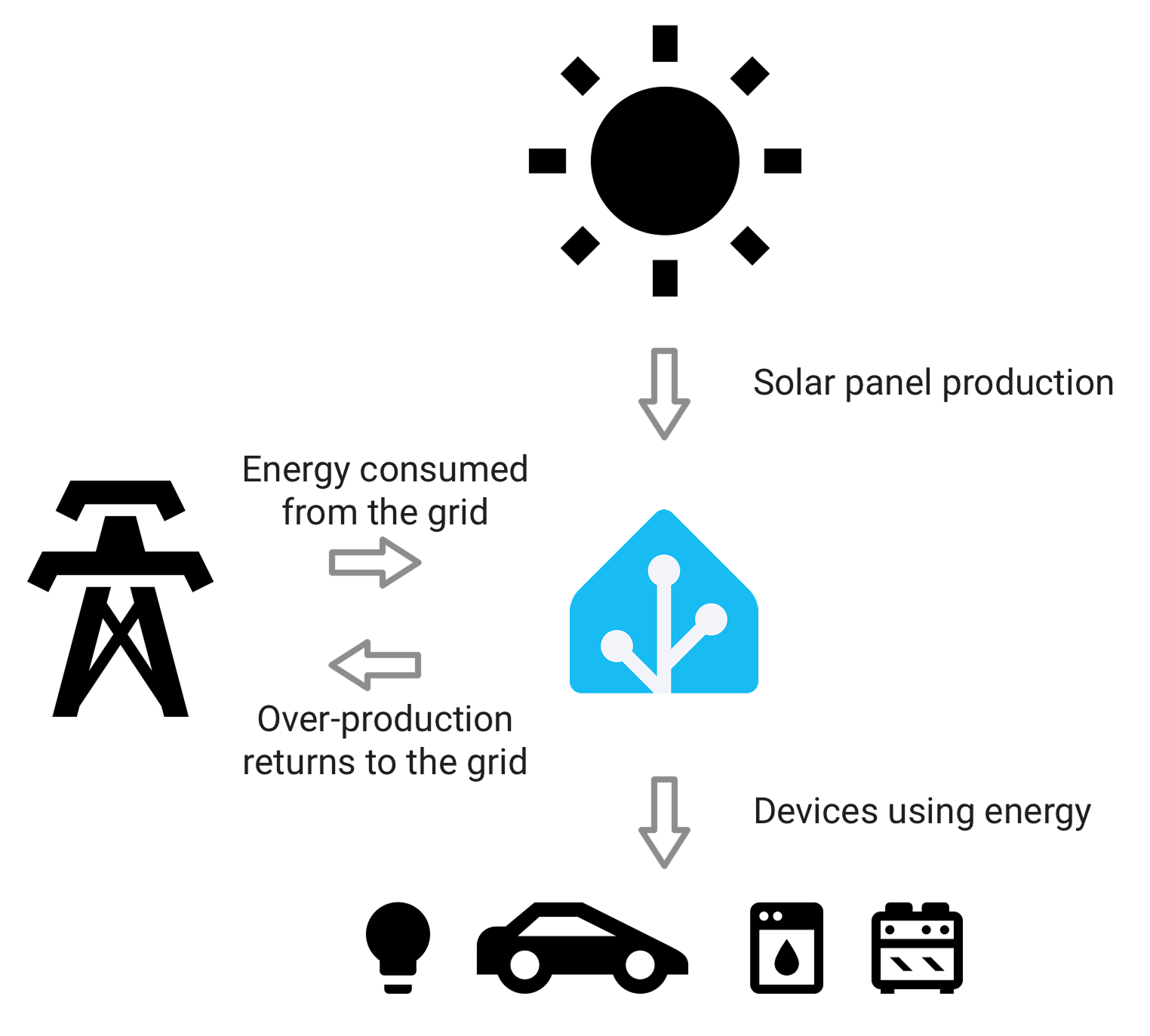
You also need to know whether the home is importing or exporting at the grid boundary. Otherwise, the charger cannot reliably distinguish between:
- solar-covered charging,
- grid-powered charging,
- battery-supported charging,
- and charging that is accidentally increasing peak import.
This is why solar EV charging systems often use main CTs, grid meters, or whole-home energy monitors. The EV charger must understand the flow at the home boundary, not just the current on its own cable.
For a wider view of solar-aware charger choices, see Best EV Chargers for Solar Homes in 2026. If you are still planning the system order, Best Upgrade Path for Homes That Want Solar First and an EV Charger Later in 2026 is a better starting point.
When app-only metering is enough
App-only metering is usually acceptable when the EV charger is a normal household appliance and you just want a reasonable estimate.
It works best when:
- only one car uses the charger,
- the charger app exports or stores session history,
- the tariff is simple,
- you do not need formal reimbursement,
- and you can tolerate a small mismatch against the utility bill.
This is the lowest-friction option. It is also the easiest to outgrow once you start asking more detailed questions about solar, tariffs, demand, or household capacity.
When a circuit CT is the best upgrade
A circuit CT is often the best next step when the EV charger is a major part of the household load but you do not need formal billing-grade measurement.
It fits homes that want to know:
- whether the EV is the biggest new load,
- whether charging should move from evening to midday,
- whether a time-of-use tariff changes the real cost,
- whether charging is causing demand peaks,
- and whether solar surplus charging is actually working.
If your whole-home monitor has spare CT channels, this is usually the best value upgrade. It turns the EV charger from a mystery load into a named circuit in your energy data.
When a dedicated meter is worth the extra cost
A dedicated meter is worth considering when the EV charger has a financial relationship attached to it.
That includes:
- rental reimbursement,
- employee reimbursement,
- business vehicle accounting,
- shared-family or shared-property charging,
- or any situation where someone may challenge the number later.
For these use cases, the installation should be planned by an electrician, and the meter choice should match the reporting standard you need. A cheap DIN-rail meter may be useful for transparency, but it may not satisfy every legal, tax, landlord, workplace, or utility requirement.
What about replacing the main panel?
You usually do not replace the main panel just to meter the EV charger separately.
A panel upgrade may be needed for capacity, safety, space, code compliance, or service-limit reasons. But separate EV metering is normally solved with one of these approaches:
- charger session data,
- a CT on the EV charger circuit,
- a whole-home monitor with circuit-level inputs,
- a DIN-rail meter on the charger branch,
- or a charger/load-management ecosystem with main-panel sensing.
Panel replacement is a bigger electrical project. It should be justified by the actual capacity and compliance problem, not by the desire to see a cleaner EV number.
A practical decision path
Use this order before buying hardware.
1. Define the job
Are you tracking cost, managing panel load, using solar surplus, or creating a reimbursement record?
2. Check what the charger already reports
If the charger gives clean session kWh and you only need personal tracking, stop there.
3. Add circuit-level monitoring if the EV is part of home energy planning
This is the best fit for tariff decisions, demand peaks, and household comparisons.
4. Add main-boundary sensing if solar or load management matters
Solar-aware charging and dynamic load management need a view of the home, not just the charger.
5. Use a dedicated meter when the number has to be defensible
For reimbursement or shared charging, design around the reporting requirement first.
Common mistakes to avoid
Measuring the charger but not the home
This gives you a charging total, but not whether the charger caused a peak or used surplus solar.
Expecting the EV circuit number to match the bill exactly
Bills include the whole home, tariffs, fixed charges, taxes, and date ranges. The EV circuit is only one load.
Using solar surplus features without grid import/export measurement
Without a grid-boundary signal, the charger may not know whether energy is truly surplus.
Treating CT data as formal billing data
CT monitoring is excellent for insight, but reimbursement and tenant billing may require a more defensible meter.
Forgetting split-phase or three-phase details
An EV charger may sit across two legs or three phases. Measurement has to match the electrical reality.
Bottom line
The best way to meter an EV charger separately is to match the metering method to the decision you need to make.
Use the charger app for simple personal cost tracking. Use a circuit CT when you want the EV charger inside a whole-home energy picture. Add main-panel or grid-boundary sensing when solar charging or dynamic load management matters. Use a dedicated meter when the number must support reimbursement, shared use, or formal reporting.
You usually do not need to replace the main panel just to get a separate EV charging number. You need the right measurement boundary.
Related reading
- What to Check Before Buying an EV Charger for a House With Limited Electrical Headroom
- Best EV Chargers for Solar Homes in 2026
- Build a Practical Device Stack for a Solar Home Without Overbuying
- Best Whole-Home Energy Monitor in 2026: Emporia Vue 3 vs Shelly EM vs Schneider Energy Monitor
- EV Charger Selector
- Solar Monitoring Planner