
If your house has limited electrical headroom, the right EV charger decision usually starts with capacity planning, not with the biggest amperage number on the box.
In many homes, the best answer is not a 48A charger plus a stressful install. It is a more realistic mix of charging speed, circuit design, and load management. In other homes, a lower-amperage charger is enough. In a smaller group, the honest answer is that the panel or service really does need an upgrade before high-rate charging will feel easy.
This guide walks through the checks that matter most before you buy.
What “limited electrical headroom” really means
A house has limited electrical headroom when the spare capacity in the panel or service is already tight relative to the extra continuous load an EV charger would add. That can happen in older 100A homes, houses with electric cooking and hot water, homes adding heat pumps, or households where several large loads already overlap in the evening.
The practical mistake is assuming the charger's headline power is the starting point. It usually is not. A charger is a continuous load, so the better question is whether the home can support that charging rate cleanly, repeatedly, and safely without forcing constant compromises elsewhere.
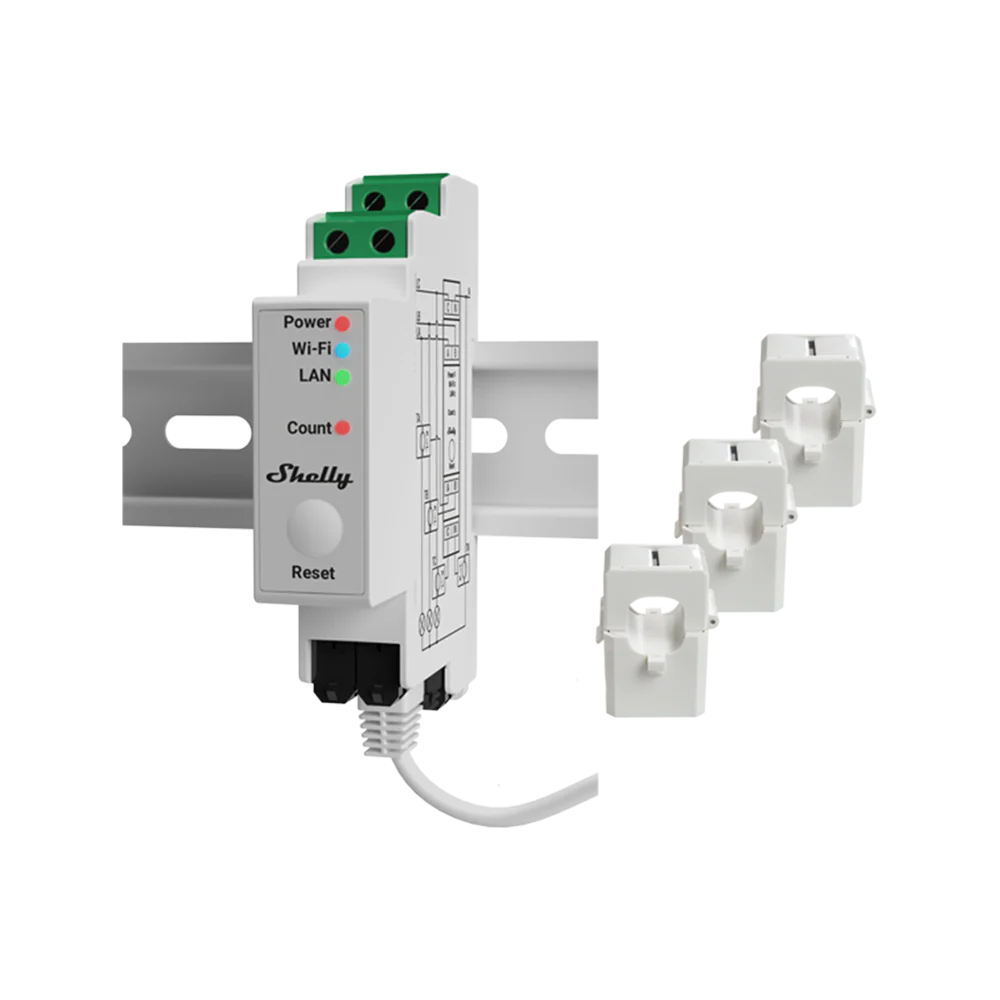
In panel-constrained homes, the electrical picture matters before the charger spec sheet does.
Check 1: How much charging speed you actually need
A lot of buyers overestimate the charging rate they really need.
If your daily driving is moderate and the car is parked for a long overnight window, a lower charging rate can still be completely practical. That matters because stepping down from a higher-power setup to a more modest one can reduce both installation cost and electrical stress.
As ChargePoint notes in its Home Flex installation guidance, 32A and 40A settings work well for most drivers, while 48A and 50A are faster but may require panel upgrades. That is the right way to frame the decision: start from actual daily energy need, then see whether the house can support it comfortably.
If your real need is modest, paying for the highest-power setup can become pure installation overhead.
Check 2: Whether the panel can support a dedicated circuit without awkward compromises
Before buying, ask a licensed electrician to judge three things together:
- service size or main breaker size
- major existing loads that overlap with evening charging
- whether there is room for the charger circuit you want without pushing the panel into a fragile setup
This is where buyers often confuse “technically possible” with “good long-term fit.” A charger can sometimes be squeezed into a house in a way that works on paper but leaves very little room for heat pump operation, cooking peaks, or future electrification.
If the install only works by assuming that several large loads never overlap in real life, you probably do not have enough comfortable headroom for the setup you are considering.
Check 3: Whether a lower-amperage charger solves the problem more cleanly
Sometimes the smartest answer is not a premium smart charger feature set. It is simply choosing a lower configured charge rate.
That can be a strong fit when:
- your daily mileage is not high
- the EV is parked for many hours
- the car itself does not benefit much from higher AC charging power
- you want to avoid a service upgrade that brings little real lifestyle benefit
This is especially important because the car's onboard AC charging limit can be the real bottleneck. Buying a charger that can deliver more than the car can meaningfully use does not fix a tight panel.
Check 4: Whether dynamic load management is the real feature worth paying for
In tighter homes, dynamic load management can matter more than charger headline power.
Wallbox says Pulsar Plus can use dynamic load management with a Wallbox power meter so charging speed drops when overall household consumption is high and rises again when more capacity is available. Emporia describes the same idea from another angle: its PowerSmart feature works with an Emporia Vue monitor to watch whole-home usage and automatically reduce EV charging output so the house stays within safe capacity limits.
That is often the real buying decision for limited-headroom homes. Not “Which wallbox is fastest?” but “Which setup can safely flex around the rest of the house?”
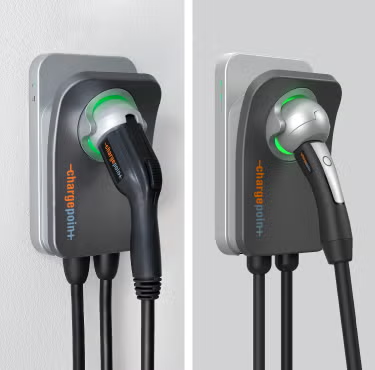
In a tight panel, flexible charging behavior often matters more than peak charger output.
Dynamic load management is usually most valuable when:
- the home already has several meaningful electric loads
- you want to avoid nuisance trips or overly conservative manual charging limits
- the EV will often charge during busy household hours
- you want flexibility for future electrification without immediately upgrading service
Check 5: What extra hardware the smart features depend on
This is where many buyer guides stay too vague.
Not every charger can do smart current adjustment on its own. Some features depend on an extra meter, a CT-based monitor, or a specific ecosystem.
Wallbox ties energy-management features to its power meter. Emporia ties PowerSmart to an Emporia EV charger plus a Vue monitor. myenergi's zappi manual explains that its ECO modes adjust charging current in response to household consumption and on-site generation using a supplied grid current sensor.
That means you should not only ask whether a charger supports load management. Ask what extra hardware it needs, whether that hardware must live in the same brand ecosystem, and whether the install path still looks attractive once the full system cost is included.
Check 6: Whether you should prioritize hardwired flexibility over plug convenience
In limited-headroom houses, hardwiring can create more configuration flexibility than a plug-in install.
ChargePoint's installation guidance makes this concrete: lower and midrange amperage choices can fit different circuit sizes, while the highest settings need hardwiring and more panel capacity. If your house is tight, a hardwired setup at a right-sized amperage can be more future-proof than chasing the biggest plug-compatible option.
That does not mean hardwired is always better. It means panel-constrained homes should think about circuit fit first and convenience second.
Check 7: Whether future solar plans change the answer
If you may add solar later, the charger choice should not be isolated from that future plan.
Some buyers make the mistake of solving today's panel problem with the cheapest basic charger, then later discover that solar-aware charging or smarter household coordination would require changing hardware again.
If future solar integration matters, read How to Choose an EV Charger If Future Solar Integration Matters to You. If your main concern is seeing charger use clearly after installation, How to Monitor a Home EV Charger Properly Without Rebuilding Everything is the better companion read.
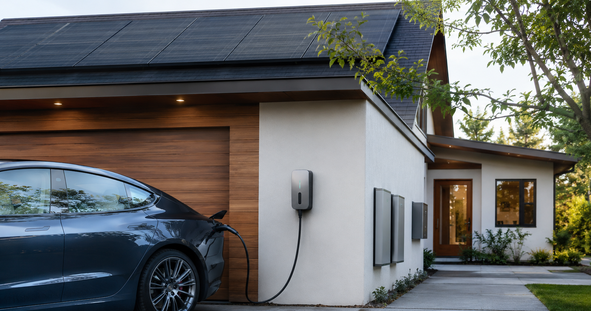
Future solar plans can make meter-aware or ecosystem-aware charging worth considering earlier.
A simple way to choose the right direction
| Home situation | Usually better direction | Why |
|---|---|---|
| Moderate daily driving, long overnight parking, tight panel | Lower-amperage charger | Often enough in real life, with less electrical pressure |
| Tight panel, heavy household overlap, no immediate service upgrade planned | Charger plus dynamic load management | Lets the charger flex around the house instead of forcing a fixed high draw |
| Tight panel today, solar likely later | Meter-aware or ecosystem-aware smart charger | Avoids buying into a dead end if solar-aware charging matters later |
| Frequent high daily charging demand and little spare panel capacity | Consider service or panel upgrade | Sometimes the clean answer is infrastructure, not more software tricks |
When a panel upgrade is still the better answer
Load management is useful, but it is not magic.
If your home already feels electrically tight before the EV arrives, and you expect more electrification soon, a charger workaround may only delay the bigger infrastructure decision. A panel or service upgrade can still be the better answer when:
- you need reliably high charging power
- multiple major electric loads will become normal
- you want simpler operation with fewer system dependencies
- the house is already near the limit even before EV charging starts
Bottom line
In a limited-headroom house, the best EV charger is usually the one that fits the electrical reality of the property, not the one with the biggest headline output.
Start with real daily charging need, then look at panel capacity, then decide whether lower amperage, smarter load management, or a genuine electrical upgrade is the cleaner long-term path. That order prevents a lot of expensive buying mistakes.
If you want a faster first-pass direction, the EV Charger Selector is a good next step.
Sources
- Emporia Help Center, PowerSmart: https://help.emporiaenergy.com/en/articles/14832214-powersmart
- Emporia Help Center, PowerSmart Settings and Configuration: https://help.emporiaenergy.com/en/articles/13704626-powersmart-settings-and-configuration
- ChargePoint Home Flex Installation FAQ: https://www.chargepoint.com/drivers/home/installation/flex
- Wallbox Pulsar Plus product page: https://wallbox.com/en_us/pulsar-plus-ev-charger
- myenergi zappi Operation & Installation Manual: https://www.myenergi.com/wp-content/uploads/2023/06/D3404-zappi-Full-Manual-V2_2-T-November-2023-English-Version-Source-File.pdf