
If you expect to install rooftop solar first and add a home EV charger later, the best path is usually not to fully build the future system on day one. It is to make a small number of early decisions that preserve charging, metering, and switchboard flexibility so the second upgrade does not become a partial rebuild.
In practice, that means treating the solar install as the foundation of a later electrified home, not as a sealed project that ends at the inverter app.
For most households, the best order looks like this:
- size and place the solar system for the home's likely medium-term load, not only today's bill
- choose an inverter and meter path that can grow into better visibility or charger coordination later
- review panel headroom and charger-circuit options early, even if the EV charger will wait
- add the charger later with the right level of load management, rather than buying it too early and guessing
The short answer
If solar comes first and the EV charger comes later, a strong upgrade path usually has five traits:
- the solar install does not use up switchboard or circuit flexibility carelessly
- the inverter choice leaves a believable path into better metering, battery readiness, or smart-load coordination
- the household understands whether charger load management will likely matter later
- prewiring is done only where it has a clear chance of preventing expensive rework
- the monitoring path does not trap the home inside a shallow app once import, export, charging, and home load all need to be seen together
The mistake is not waiting on the charger. The mistake is installing solar in a way that makes the later charger harder, messier, or more expensive than it needed to be.
Why this is a different question from simply choosing solar or choosing a charger
A normal solar buying guide focuses on panel yield, inverter type, shading, payback, and maybe battery readiness.
A normal EV charger buying guide focuses on amperage, plug versus hardwire, app quality, and maybe solar charging modes.
This topic sits in the middle. It is about upgrade sequence.
That changes the advice.
The right question is not only "What is the best solar system?" or "What is the best EV charger?" It is this:
What should the first project include so the second project lands cleanly?
That usually matters more than squeezing every possible feature into the first installation.
A simple upgrade map
| Stage | What to do | Why it matters later |
|---|---|---|
| Solar planning | Check future EV charging likelihood, service size, and heavy-load overlap before locking the design | Prevents a solar-only design from ignoring the home's next major electrical load |
| Solar installation | Choose an inverter and meter path that can later support better visibility or charger coordination | Reduces the chance of a visibility or control dead end |
| Optional prep work | Prewire or reserve space only where access will become painful later | Avoids paying twice for walls, conduit runs, or switchboard changes |
| EV charger install | Decide later between simple charging, solar-aware charging, or load-managed charging based on the real household | Keeps the second spend aligned with reality rather than guesswork |
Step 1: Plan the solar install around the home's next likely load, not just today's load
Many solar projects are designed around current daytime usage and export economics. That is sensible, but once an EV is likely within the next one to three years, the house's future electrical profile changes.
A future EV charger may become one of the home's biggest controllable loads. That does not automatically mean you should oversize everything now. It does mean the installer should understand:
- whether the household is likely to charge mostly overnight or also during solar hours
- whether the service or panel already feels tight
- whether the home is also likely to add a battery, heat pump, or electric hot water
- whether the owner will want true surplus-solar charging later or only ordinary home charging
A solar-first project becomes much stronger when those questions are asked before hardware is chosen.

The key question is not whether the EV charger exists yet. It is whether the first solar-system boundary leaves room for it later.
Step 2: Do not confuse battery-ready with EV-ready
This is one of the easiest planning mistakes to make.
A battery-ready inverter can be a very good decision for households that expect storage later. GoodWe's battery-ready application materials are a good example of this kind of path. But battery-ready does not automatically mean the home is also well prepared for a later EV charger.
The charger question often depends on a different set of issues:
- spare electrical headroom
- dedicated-circuit options
- whether dynamic load management will be needed
- whether solar-aware charging depends on an extra meter or ecosystem-specific control path
- whether the owner wants the charger visible inside a broader monitoring setup
So if someone says, "We chose a future-ready inverter, so the EV part is covered," that is often only partly true.
A good solar-first path treats battery readiness and EV-charging readiness as related but separate planning tracks.
Step 3: Choose a meter and monitoring path that can grow with the house
This is where many seemingly fine solar installs age badly.
If the home later wants to see solar generation, total household load, grid import and export, and EV charging behavior together, a production-only inverter view will often feel too shallow.
That does not mean every solar install needs a complex monitoring stack immediately. It does mean you should avoid a setup that leaves no believable path into better visibility later.
A practical approach is:
- use the inverter's native monitoring when it already covers normal homeowner needs well
- add or preserve a smart-meter path when the household is likely to care about import, export, or coordinated charging later
- avoid assuming that the charger app alone will explain the whole energy system once more hardware arrives
Fronius positions its Smart Meter WR as a bidirectional meter for feed-in management and consumption monitoring. SolarEdge positions the Home Hub ecosystem around integrated battery, backup, and smart-energy coordination. Those are different architectures, but both illustrate the same point: the long-term experience is often shaped by the metering layer, not just the inverter spec sheet.
If the owner's real priority is visibility, not only solar production, that should be reflected in the first project.
Step 4: Review charger-circuit fit early, even if you postpone the charger
Waiting to install the charger can be the right financial choice. Waiting to think about the charger usually is not.
Before the solar project is finalized, it is worth checking:
- the service size or main-breaker size
- likely charger location
- whether a clean future circuit route exists
- whether a hardwired charger is the more realistic long-term path
- whether limited panel headroom could push the home toward dynamic load management later
This is especially useful in homes that already have electric cooking, electric hot water, ducted HVAC, or plans for more electrification.
You do not need to buy the charger yet. You just need to know whether the eventual charger is likely to be a simple add-on or a capacity-planning exercise.
That early review can be the difference between a straightforward later install and an awkward second project with extra panel work, extra wall work, or avoidable compromises.
Step 5: Prewire selectively, not automatically
Prewiring can be smart, but it is not automatically smart.
The best reason to prewire during the solar job is not abstract future-proofing. It is avoiding a later access problem that will clearly cost more to reopen.
Selective prewiring tends to make sense when:
- the future charger location is already highly likely
- the cable route will be difficult or ugly to retrofit later
- the wall, driveway, garage, or distribution path is already open now
- the switchboard work is already happening and reserving space is easy
It makes less sense when:
- the EV timing is very uncertain
- the future parking arrangement may change
- the likely charger type and amperage are still unclear
- the prep cost starts to resemble paying for the charger path twice
The right goal is not "do everything now." It is "do the low-regret prep now."
Step 6: Add the charger later based on the real household, not the imagined one
By the time the EV charger is actually installed, the household usually knows much more:
- how often the car is home during solar hours
- whether off-peak charging is already enough
- whether the panel feels tight in real life
- whether the owner now wants a battery too
- whether true surplus-solar charging is worth paying for
That is why delaying the charger purchase can be healthy. It lets the second decision be made against reality instead of optimism.
Some homes will discover that a simple hardwired charger with scheduling is enough. Others will benefit from a meter-aware ecosystem or dynamic load management. A smaller group will realize the home really needs infrastructure upgrades before high-rate charging feels comfortable.
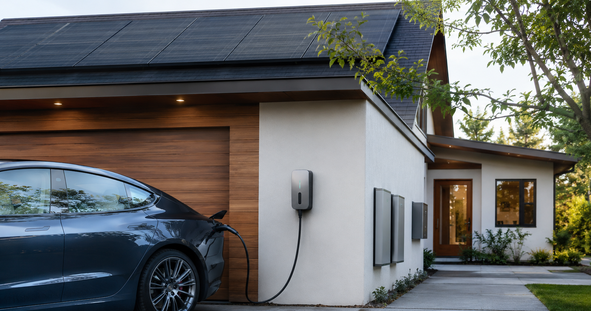
The charger decision gets easier when the first project preserved a clean path into load management or solar-aware charging instead of forcing a guess too early.
When it is worth paying more in the solar phase
You do not need to max out the first project. But there are cases where spending a bit more during the solar phase is justified.
That usually happens when one or more of these are true:
- the future EV is very likely and the charger location is already known
- the home has tight access for a later cable run
- the owner already wants better whole-home visibility, not just solar production
- the chosen inverter ecosystem has a clear benefit once charger coordination or battery growth arrives
- the home is on an obvious path toward broader electrification
In those homes, a cleaner inverter, meter, or prewiring decision today can be cheaper than retrofit friction tomorrow.
When a simpler solar-first path is still the right answer
It is also important not to overcorrect.
A simpler solar-first path is often still best when:
- the EV timing is unclear
- the service and panel are comfortable enough that later charging should be straightforward
- the owner mainly wants reliable solar economics now
- the charger will probably be ordinary overnight charging rather than a highly coordinated solar-load system
- there is no obvious need yet for battery storage or deeper monitoring
In this kind of home, the right move is often a clean solar install plus a short list of future checks, rather than paying for a more integrated architecture too early.
The most common upgrade-path mistakes
Mistake 1: Treating the solar install as a closed project
If the household already expects an EV later, the solar job should at least acknowledge that next load.
Mistake 2: Believing that battery-ready automatically solves charger planning
It helps in some homes, but it does not replace capacity, circuit, and charger-control planning.
Mistake 3: Ignoring the metering layer
Many upgrade frustrations come from realizing too late that the house can produce power but still cannot explain import, export, charging, and home load clearly.
Mistake 4: Prewiring without enough certainty
Future-proofing can become wasted spend when the likely charger location or charging pattern is still too vague.
Mistake 5: Buying the charger too early to feel prepared
That often locks the home into assumptions about amperage, ecosystem, or solar coordination before the real needs are known.
A practical decision table
| If this sounds like your house | Usually better direction |
|---|---|
| Solar is happening now, EV is likely within 12-24 months, charger location is known | Solar now plus selective charger prep |
| Solar is happening now, EV timing is uncertain, panel capacity looks comfortable | Solar now, charger later, no heavy overbuild |
| Solar is happening now, panel is already tight, more electrification is coming | Solar now plus early headroom and load-management planning |
| Solar is happening now, owner cares a lot about whole-home visibility and future coordination | Preserve or add a stronger meter and monitoring path during the first phase |
Bottom line
The best upgrade path for homes that want solar first and an EV charger later is usually a disciplined two-step plan.
Do the solar project now, but make a few early choices that keep the next project clean: understand future charging likelihood, avoid careless switchboard constraints, leave a believable metering path, and prep only the parts that are expensive to reopen.
That approach usually beats both extremes: overbuilding the first project for a future that may change, or underplanning it so badly that the later charger turns into a partial redesign.
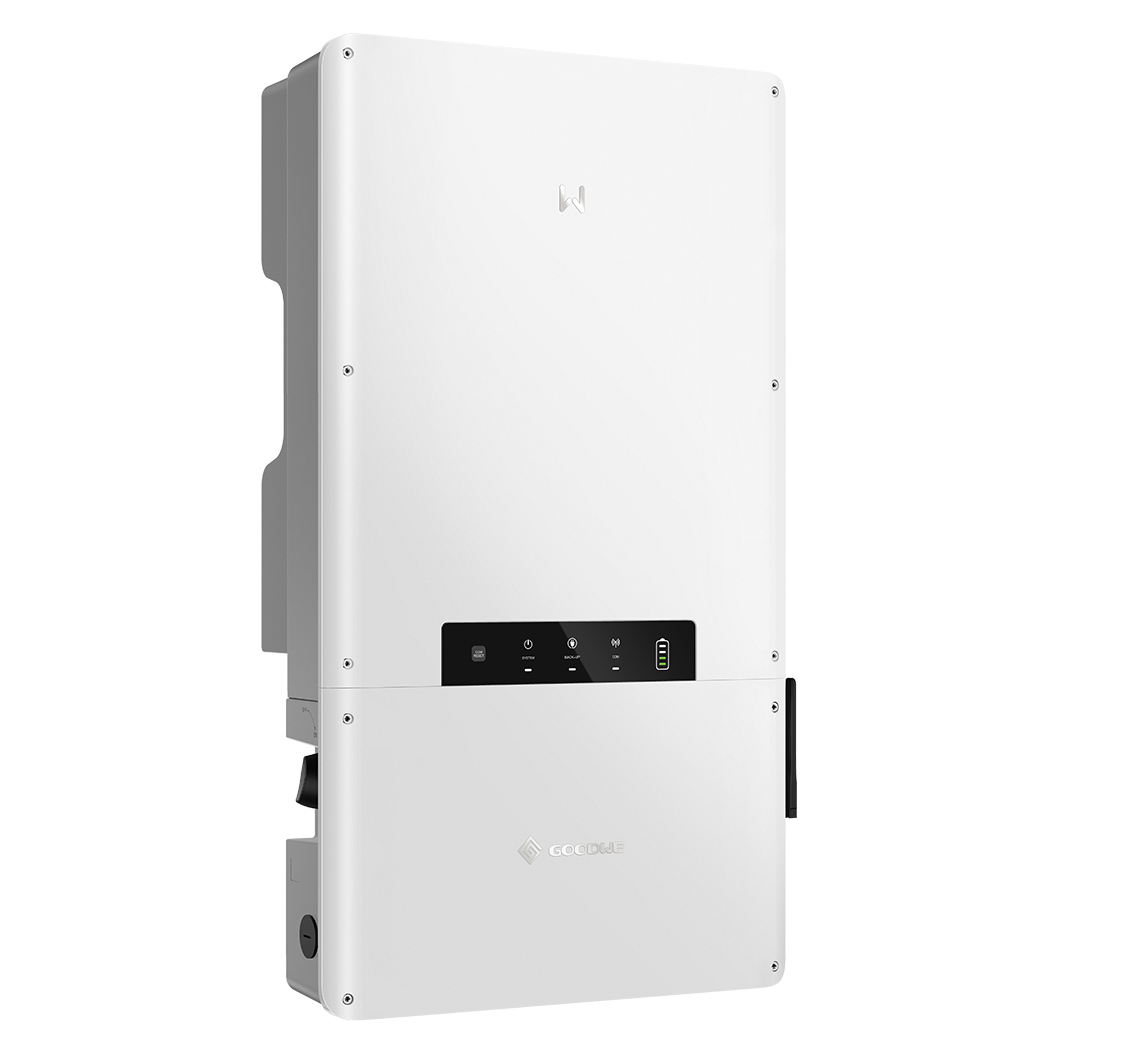
The smoothest upgrade path usually comes from getting the system boundary right early, then adding the charger when the household can choose against real usage rather than guesswork.
Related reading
- How to Choose an EV Charger If Future Solar Integration Matters to You
- What to Check Before Buying an EV Charger for a House With Limited Electrical Headroom
- How to Choose Between a Simpler String Inverter Setup and a More Flexible Solar System in 2026
- Best Meter Setup for a Hybrid Inverter and Battery Home in 2026
- EV Charger Selector