If you are choosing between the Chint DTSU666 and the Eastron SDM630 for a solar monitoring or energy-management project, the practical answer is this: choose the Chint DTSU666 when you need a compact, inverter-friendly, direct-connected 3-phase 4-wire meter that fits common solar export-control workflows. Choose the Eastron SDM630 when you want a more flexible single/three-phase Modbus meter, a 100 A direct-fed rating, and a broader DIY or platform-integration path.
Both meters can work well in the right electrical panel. Both expose local RS485 Modbus RTU data. Both can measure import and export energy, which is essential for solar homes, small commercial solar, and energy dashboards that need to separate grid import from solar export. The difference is not that one is universally better. The difference is which installation pattern you are trying to solve.
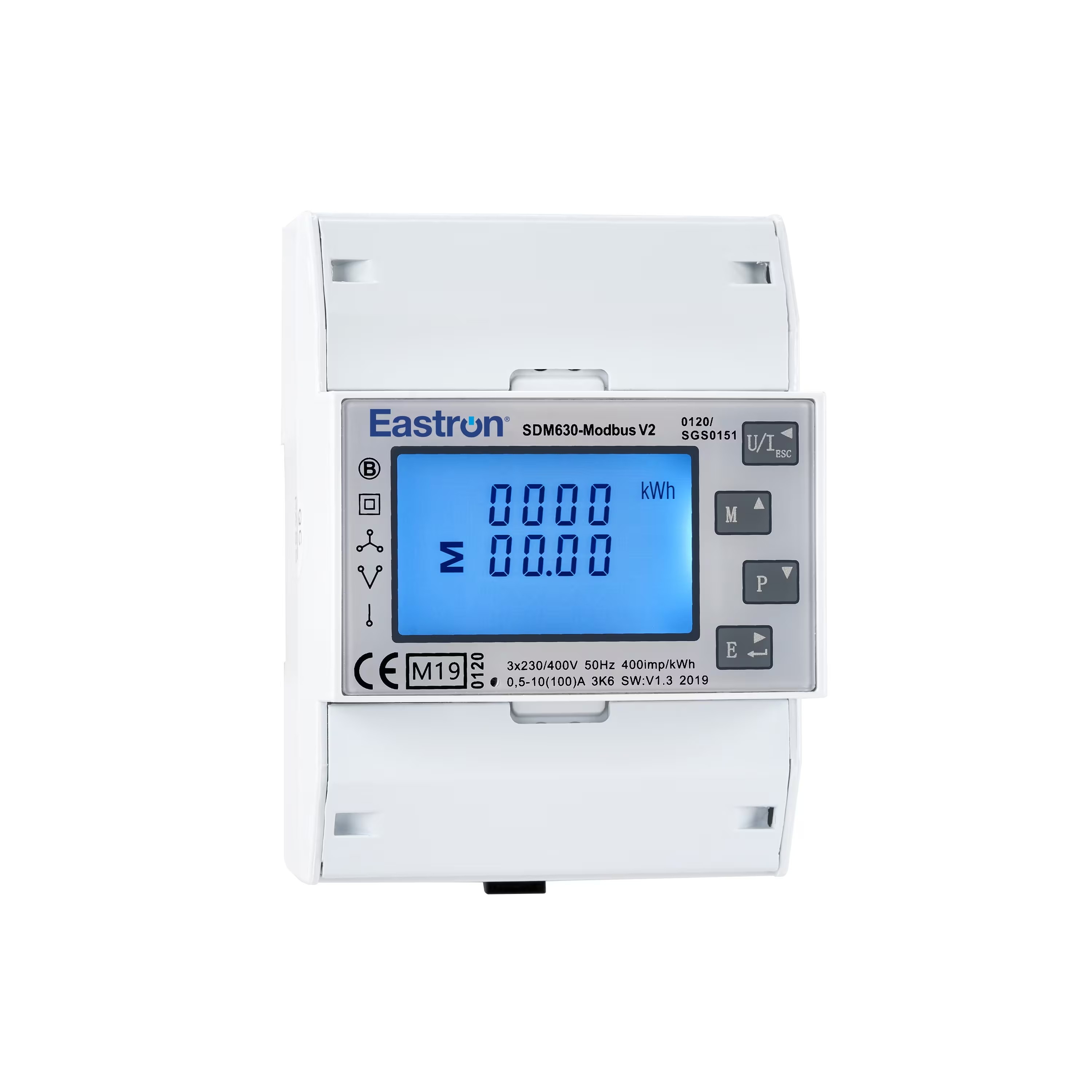
The Eastron SDM630 is a direct-fed DIN-rail Modbus meter with a broad phase-mode fit, often useful when the monitoring system is not locked to one inverter brand.
Quick recommendation
For inverter-led solar installs where the meter is mainly there to give a compatible inverter, hybrid inverter, EMS, or export-control controller a trusted grid reading, the Chint DTSU666 is often the cleaner choice. It is compact, purpose-fit for 3-phase 4-wire installations, and commonly appears in solar-inverter ecosystems because it gives the system the import/export and live electrical parameters it needs.
For open monitoring projects, mixed metering projects, retrofit panels, and Home Assistant or Modbus gateway builds, the Eastron SDM630 often feels more flexible. Its support for 1P2W, 3P3W, and 3P4W networks gives installers more room to reuse the same meter family across different site types, and its 100 A direct-fed format gives extra headroom compared with an 80 A direct-connected meter.
Side-by-side comparison
| Decision point | Chint DTSU666 | Eastron SDM630 | Practical meaning |
|---|---|---|---|
| Best fit | Inverter-led solar, export control, compact 3-phase metering | Open Modbus monitoring, mixed phase modes, direct-fed sub-metering | Start with the system that will read the meter |
| Phase support | 3P4W | 1P2W, 3P3W, 3P4W | Eastron is more flexible if the same design may be reused elsewhere |
| Direct current rating | 0.25-5(80) A | Up to 100 A direct-fed | Eastron has more direct-connected current headroom |
| Communication | RS485 Modbus RTU | RS485 Modbus RTU on the Modbus variant | Both are local-data friendly |
| Solar import/export | Yes | Yes | Both can support bidirectional solar monitoring |
| Home Assistant path | Generic Modbus polling | Generic Modbus polling | Neither is a native plug-and-play Home Assistant device |
| Panel fit | Compact IP20 DIN-rail unit | Larger direct-fed DIN-rail meter | Chint may be easier where panel space is tight |
| Buyer profile | Installer selecting a meter for a compatible inverter or EMS | Installer or technical owner building a more open monitoring stack | The upstream software matters as much as the meter |
Where the Chint DTSU666 makes more sense
The DTSU666 is a strong choice when the meter is part of a defined solar-control architecture. CHINT describes it as a compact 3-phase 4-wire smart energy meter with EN 50470-1/-3 MID Class B / 1.0 accuracy, direct 0.25-5(80) A connection, RS485 Modbus RTU, and measurement of import/export energy and live electrical parameters. That combination is exactly what many inverter-led solar systems need: a clear view of grid flow so the inverter, controller, or EMS can decide whether the site is importing, exporting, or approaching an export limit.
The key advantage is focus. If the project is a 3-phase 4-wire solar installation and the inverter vendor or installer already expects a DTSU666-type meter, using it reduces integration risk. You are not buying it because the app is beautiful. You are buying it because the solar system needs a local Modbus meter that the controller knows how to interpret.
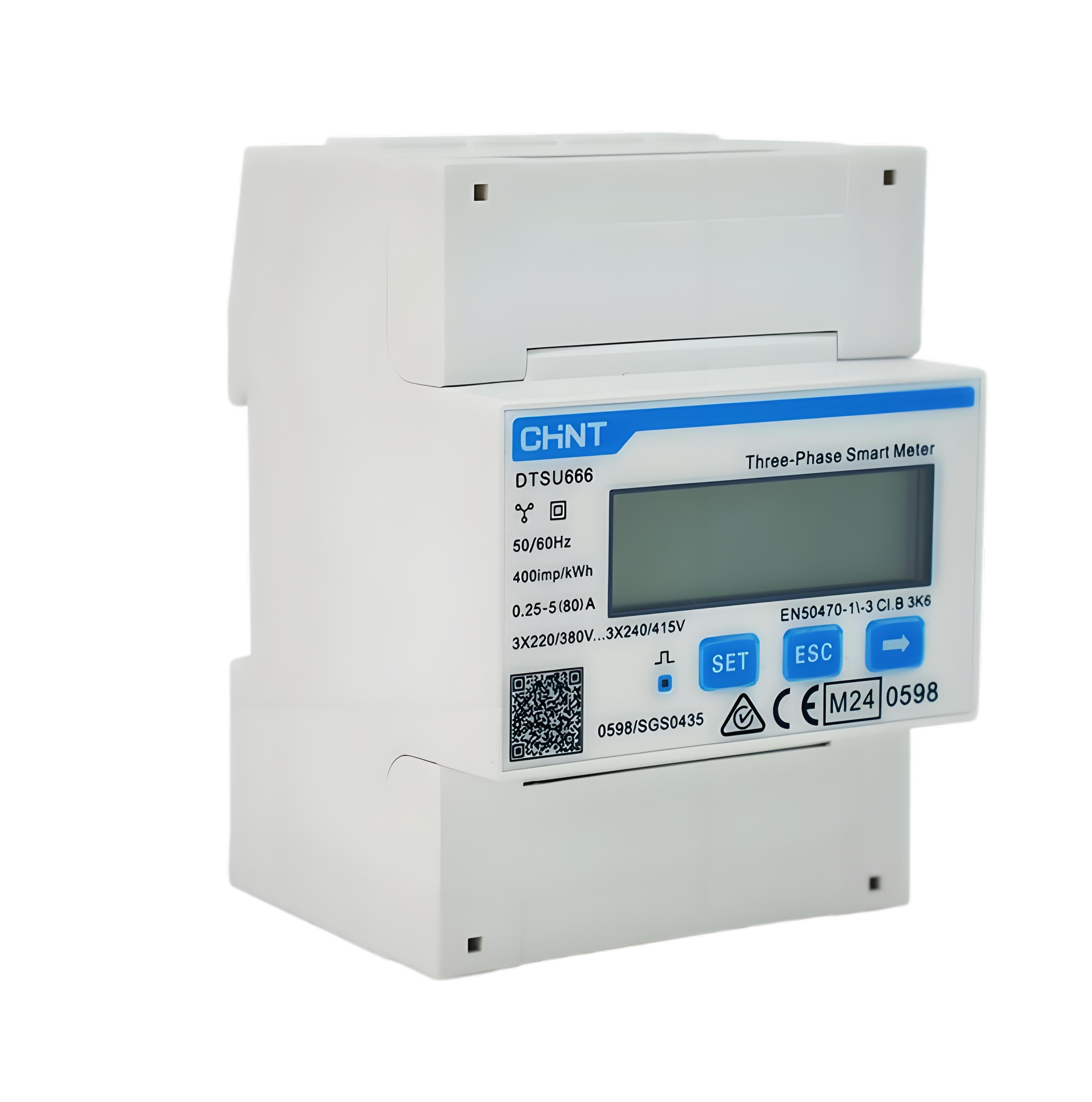
The Chint DTSU666 is most compelling when a compatible inverter, EMS, or installer workflow already expects this style of direct-connected 3-phase meter.
Choose the Chint DTSU666 when:
- The inverter or energy-management system explicitly lists DTSU666 compatibility.
- The site is a 3-phase 4-wire installation within the direct-connected current rating.
- Panel space matters and a compact DIN-rail meter is helpful.
- The main goal is export control, solar import/export metering, or inverter-side energy management.
- You want the meter to serve the solar system first and a dashboard second.
Be more cautious when:
- You need support for single-phase or 3-phase 3-wire use from the same meter choice.
- You want a more open DIY monitoring ecosystem with broad community examples.
- The load may exceed the direct 80 A path and should move to a CT-input meter family instead.
- You expect a polished consumer app from the meter itself.
Where the Eastron SDM630 makes more sense
The Eastron SDM630 is often the more practical choice when the meter is part of a broader monitoring stack instead of a narrowly inverter-led install. Eastron documentation supports use across 1P2W, 3P3W, and 3P4W networks, with direct current up to 100 A and local RS485 Modbus RTU on the Modbus variant. That makes it attractive for energy dashboards, RS485 gateway projects, sub-metering, and sites where an installer may want one familiar meter family across several electrical configurations.
The SDM630 also has a long footprint in open energy-monitoring projects. That does not make it automatically easier for every user, but it does mean technically confident buyers are more likely to find Modbus register examples, gateway notes, and integration patterns. If the project owner plans to bring data into Home Assistant, Emoncms, a BMS, SCADA, or a custom database, that familiarity can matter.
Choose the Eastron SDM630 when:
- You want a direct-fed meter with up to 100 A per phase.
- The project may involve 1P2W, 3P3W, or 3P4W wiring contexts.
- The monitoring stack is open, local, or gateway-based rather than tied to one inverter app.
- You want import/export energy, phase data, power factor, voltage, current, and power data exposed over Modbus.
- You care about long-term data ownership more than a vendor cloud dashboard.
Be more cautious when:
- The inverter vendor specifically asks for a different meter model.
- DIN-rail space is limited and the panel is already tight.
- The site needs CT input for high-current circuits; in that case, compare a CT-operated SDM630MCT-type model rather than the direct-fed SDM630.
- The installer is not comfortable configuring Modbus addresses, baud rate, parity, registers, and gateway settings.
The Modbus point: both are local, but neither is magic
Both meters are attractive because they can expose useful data locally over RS485 Modbus RTU. That is important for energy monitoring because it avoids forcing every dashboard through a vendor cloud. It also makes the meter usable with an inverter, gateway, PLC, BMS, EMS, Home Assistant, or a custom polling service, provided the receiving system knows the register map and communication settings.
Home Assistant's Modbus integration supports standards-based Modbus devices over serial RS485, TCP, UDP, and RTU-over-TCP style paths. In practical terms, that means either meter can be used in Home Assistant through suitable RS485 hardware or a Modbus gateway, but you should not treat either one as a one-click native integration. You still need the right wiring, bus termination where appropriate, address settings, baud rate, parity, register definitions, scaling, and entity configuration.
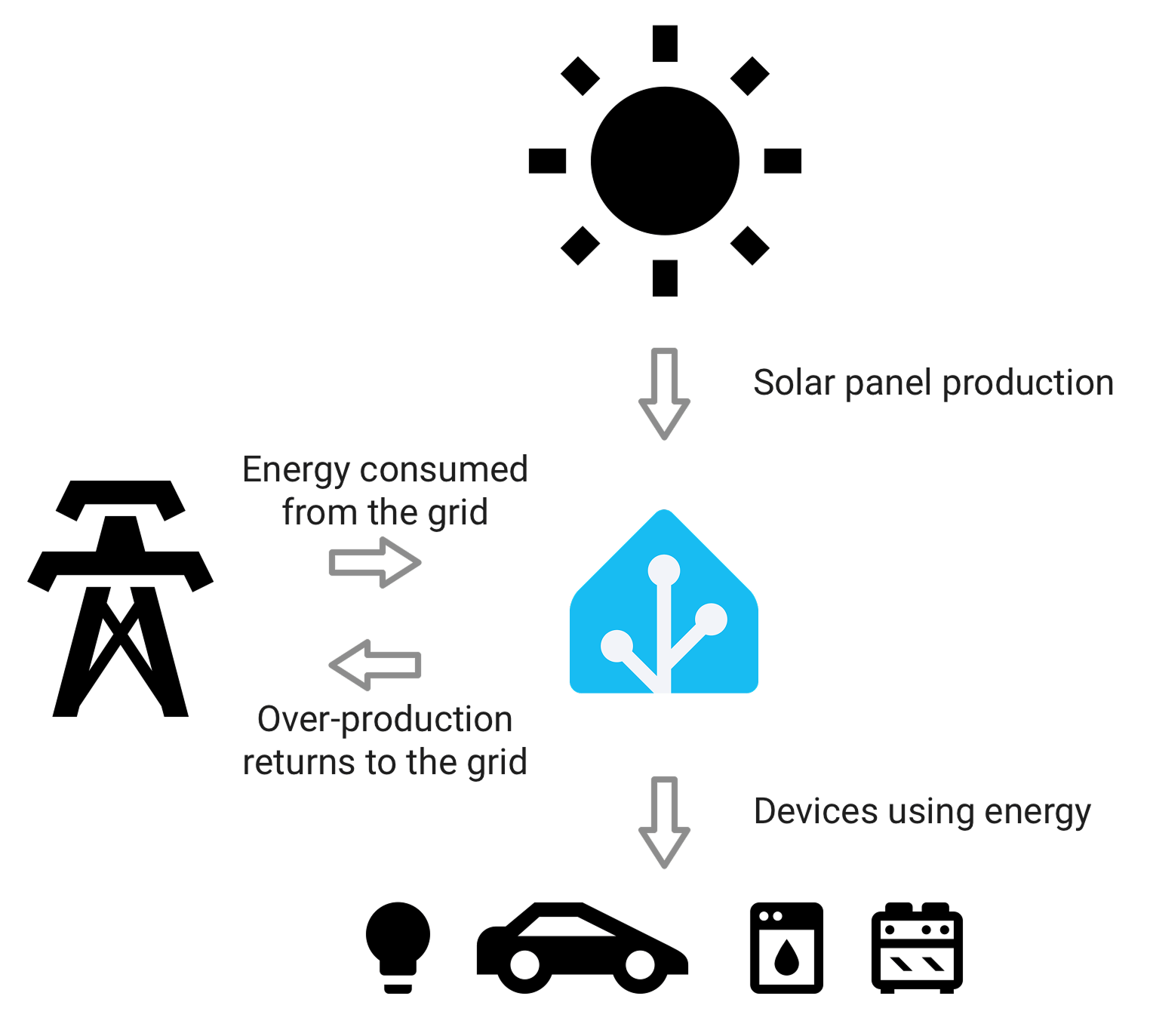
For Home Assistant and other local dashboards, the meter is only one part of the stack. The RS485 adapter or gateway, register map, and entity configuration decide whether the data becomes useful.
A simple rule helps: if the meter is going into an inverter ecosystem, check the inverter compatibility list first. If the meter is going into a monitoring ecosystem, check the Modbus register path first.
Solar integration: compatibility beats raw specs
In solar projects, the best meter is usually the one the rest of the system can use reliably. A meter with better standalone specifications may still be the wrong choice if the inverter cannot read it, if the EMS expects a different register map, or if the installer has no commissioning process for it.
For export limiting, self-consumption tracking, battery control, or EV charger load coordination, the meter's job is to report grid-side power flow clearly and consistently. That means four practical checks matter before brand preference:
- Meter location: Can it be installed at the grid connection point or the circuit boundary you actually need to measure?
- Direction convention: Does the receiving system interpret import and export signs the same way the meter reports them?
- Register support: Are the required values available, including active power, import kWh, export kWh, per-phase readings, and power factor if needed?
- Commissioning path: Does the installer or owner know how to confirm readings with a known load and solar output condition?
This is where the Chint DTSU666 can win in inverter-led projects. If the inverter vendor already supports it, the commissioning path may be familiar. The Eastron SDM630 can win in open monitoring projects because the data path is not locked to one solar brand and the meter family is commonly used in Modbus-centric energy monitoring.
Direct-connected current: 80 A vs 100 A is not just a bigger number
The Chint DTSU666's direct 0.25-5(80) A rating and the Eastron SDM630's direct 100 A format make both meters suitable for many residential and small commercial panels, but the difference should be treated carefully.
A direct-fed meter carries the measured current through the meter terminals. That can keep the installation simpler than a CT-input meter, but it also means the circuit, conductor size, protection, enclosure, heat, standards, and local electrical rules matter. If the measured circuit is close to the meter's current limit, or if the service is larger than the meter can directly carry, do not stretch the specification. Move to a CT-operated meter family instead.
For many normal 3-phase solar homes, either direct-fed rating may be enough. For higher-load sites, workshops, larger EV charging loads, or commercial distribution boards, the extra 20 A of direct-connected headroom on the SDM630 may be useful, but only if the physical installation and local code allow it. Otherwise, a CT-input meter is the safer design path.
Panel space, installation style, and serviceability
Panel space is often the quiet reason one meter wins over another. The Chint DTSU666 is compact and focused. If the board is tight and the system requirement is simply a 3P4W Modbus meter for a compatible solar system, that compactness can matter.
The Eastron SDM630 is more flexible, but flexibility can come with a bigger footprint and more choices to document. In an open monitoring install, those choices are useful. In a tightly scoped inverter install, they may be unnecessary.
Also think about who will service the system later. If the original installer disappears, a future technician needs to understand why the meter is there, what it is feeding, and what normal readings look like. Good labeling, a wiring note, the Modbus address, baud rate, and a short register reference can save hours later.
Which should you buy?
Buy the Chint DTSU666 if the project is a 3-phase 4-wire solar installation where compatibility with an inverter, hybrid inverter, export-control controller, or EMS is the main requirement. It is a practical, compact, direct-connected meter for solar and sub-metering jobs where the system already knows what to do with its Modbus data.
Buy the Eastron SDM630 if the project needs more phase-mode flexibility, 100 A direct-fed headroom, or a more open monitoring path. It is especially sensible when the meter will feed Home Assistant, Emoncms, a Modbus gateway, a BMS, or a site dashboard where local data access matters more than fitting one inverter vendor's preferred accessory list.
If neither choice cleanly fits the current rating or installation boundary, do not force it. Look at CT-input meters instead. A CT-operated meter is often the better tool for larger supplies, crowded panels, or situations where breaking the main conductors through a direct-fed meter is not desirable.
Final verdict
The Chint DTSU666 is the better inverter-side solar integration meter when a compatible system expects it. The Eastron SDM630 is the better general-purpose Modbus monitoring meter when flexibility, local data, and broader wiring support matter more.
For EnergyMeterHub readers, the most practical decision sequence is:
- Check the inverter, EMS, or dashboard compatibility list.
- Confirm the phase and wiring type.
- Confirm whether direct-connected metering is appropriate for the current level.
- Decide whether you need a cloud-free local Modbus data path.
- Only then compare price, availability, and panel space.
That order prevents the most common mistake: buying a meter with good specifications but poor fit for the actual system that must read it.
Related EnergyMeterHub pages
- Chint DTSU666 device page
- Eastron SDM630 device page
- Do You Need an RS485 to Ethernet Gateway for Home Energy Monitoring?
- When a Three-Phase Meter Is Worth It for a Residential Solar Home
- Best Meter for Three-Phase Solar Homes