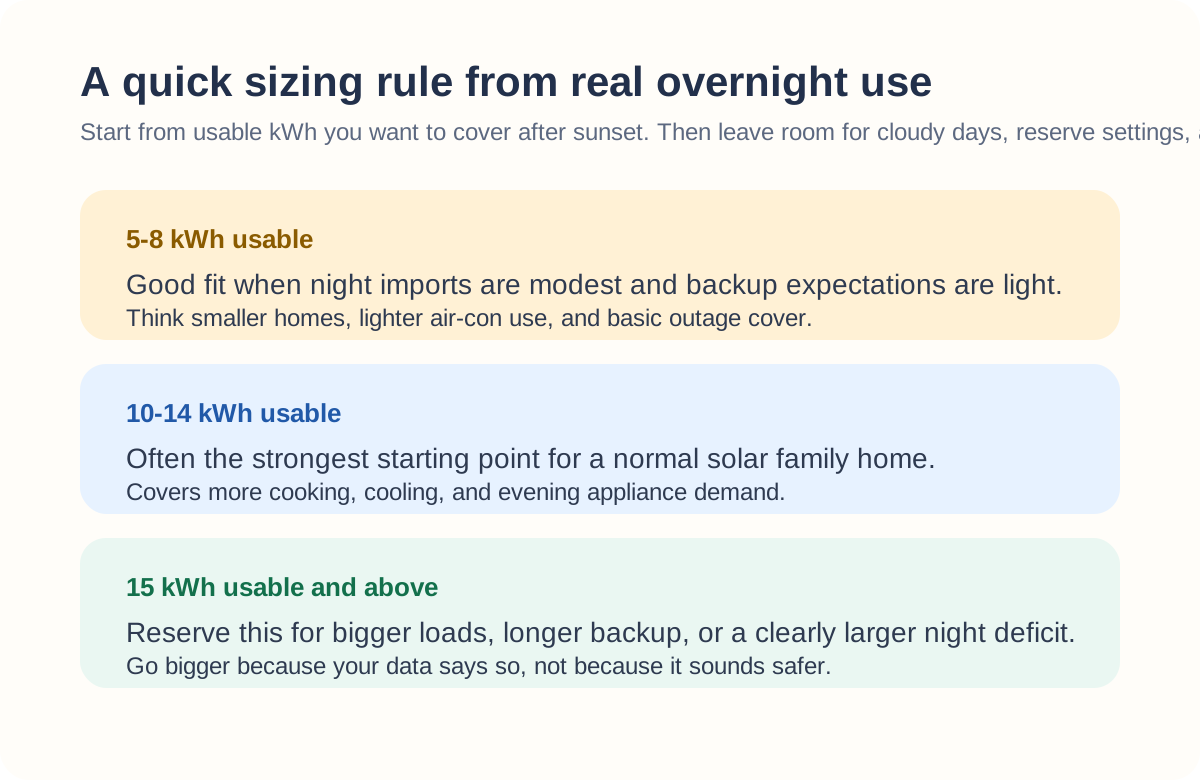
Most solar homes should size a battery from real evening and early-morning grid imports, not from total daily usage and not from panel size alone. In practice, a 5 to 8 kWh usable battery suits lighter homes, 10 to 14 kWh usable is often the strongest starting band for a normal family solar home, and 15 kWh usable or more only makes sense when night loads, backup expectations, or export pressure clearly justify it.
Australian government guidance says household batteries are typically 4 kWh to 14 kWh, and it also warns that homes using large amounts of electricity in the morning and evening will need a larger capacity. That is a useful starting range, not a magic answer. The right size still depends on how much power you want to shift after sunset, what must stay on during an outage, and whether you are trying to avoid cheap solar exports, expensive peak imports, or both.
| Your situation | Usually sensible starting band | Why |
|---|---|---|
| Modest night use, lighter backup needs | 5-8 kWh usable |
Enough for a smaller evening deficit without paying for a big reserve you rarely touch |
| Typical family solar home | 10-14 kWh usable |
Often the best balance between bill savings, self-use, and real product availability |
| Large night loads or longer outage support | 15+ kWh usable |
Better for heavier cooking, cooling, EV overlap, or stronger backup expectations |
Jump to your case
- I mostly want lower bills
- I want backup during outages
- I have export limits or weak feed-in rates
- I want a quick sizing rule
- I want real battery examples by size
- I just want the checklist
The short answer
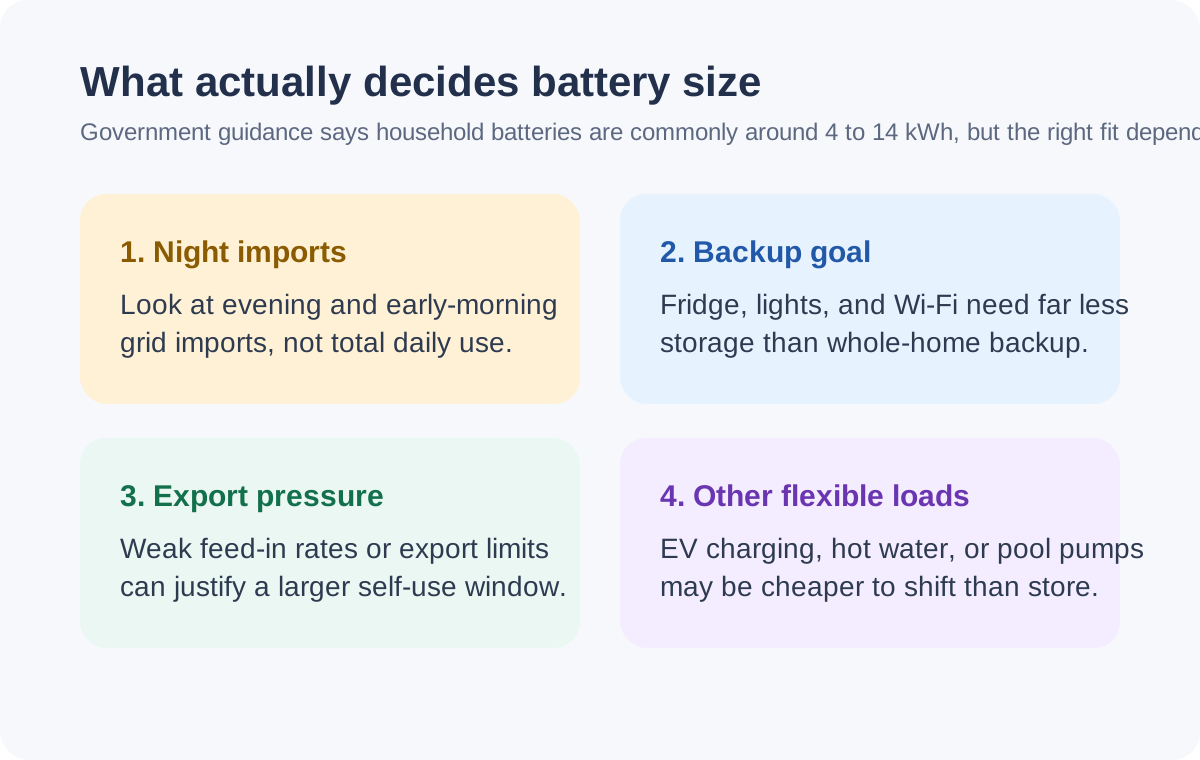
For most homes, the battery should be large enough to cover the part of your evening and early-morning demand that solar cannot reach, but not so large that you are buying storage you rarely cycle. If you mainly want bill savings, start with your overnight imports. If you care about blackout resilience, start with your essential loads. If you have weak export credits, export limits, or a time-of-use plan with painful evening imports, that can push the answer upward.
What official guidance already says
The Australian Government's solar guide gives four sizing cues that matter more than most sales pitches:
- household batteries are typically around 4 to 14 kWh
- usable capacity is lower than nameplate capacity, usually by about 5% to 10% for lithium-ion batteries
- if your home uses a lot of electricity in the morning and evening, you will need more capacity
- battery power output in kW matters too, because it limits how many appliances the battery can run at the same time
That last point is easy to miss. A battery can have enough energy on paper but still be unable to run several heavy loads together without grid support. If you are comparing storage for savings rather than backup alone, usable kWh and output kW need to be looked at together.
Start with overnight imports, not panel size
The cleanest way to size a battery for bill savings is to look at the energy you still import after solar stops carrying the house.
That usually means:
- evening usage after the sun drops
- overnight baseload
- early-morning heating, cooling, hot water, or kitchen loads before solar ramps back up
If your monitoring shows you only import around 4 to 5 kWh across that window on a normal day, a giant battery is rarely the smart first move. If you are still importing 8 to 10 kWh most nights, a smaller battery will leave too much savings on the table.
If you do not already know those numbers, fix that first. Read Solar Monitoring System Australia: What Homeowners Should Buy in 2026. Guessing battery size from a quarterly bill is one of the easiest ways to overspend.
A practical sizing rule, not a government formula
This next framework is our rule of thumb, not a government formula. It is based on the official sizing guidance above and how current residential batteries are actually sold.
- If your night deficit is usually around 4 to 6 kWh, start around 5 to 8 kWh usable
- If your night deficit is usually around 7 to 10 kWh, start around 10 to 14 kWh usable
- If your night deficit is regularly 12 kWh or more, or your backup goal is much bigger than your bill-saving goal, look at 15 kWh usable and above
The important word there is usable. A battery sold as 10 kWh does not usually deliver a full 10 kWh every day in real operation. That is why usable capacity matters more than the brochure headline.
Three quick household examples
Case A: smaller solar home
You have moderate evening use, no EV, and you mainly want to push more solar into the dinner-to-bedtime window. A 5 to 8 kWh usable battery is usually the first band to test.
Case B: normal family home
You have cooking, cooling, and appliance use after sunset, and you still import a meaningful chunk every night. This is where 10 to 14 kWh usable often becomes the strongest starting point.
Case C: larger electric home
You want longer backup, heavier overnight loads, or you are trying to support more of an all-electric routine. This is where 15 kWh usable and above starts to make sense, but only if your data supports it.
Backup changes size faster than bill savings
If the goal is only lower bills, you can size fairly tightly around your normal night imports. Backup changes that.
Ask a harder question: what do you actually want powered in an outage?
- fridge and freezer
- lights
- internet and device charging
- a few power points
- medical or communications equipment
- heating or cooling, if that is essential for your household
That list can be small or it can get expensive quickly. The Australian Government's inverter guidance also notes an important detail for 3-phase homes: if you install a single-phase battery or hybrid inverter for backup, it only backs up the circuits connected to that one phase.
So if you have a 3-phase home and want serious outage support, the backup design matters just as much as battery size. A "big" battery with the wrong backup layout can still feel disappointing.
How real products map to those size bands
This is where current products help. They show what "small", "mid", and "large" really mean in the market.
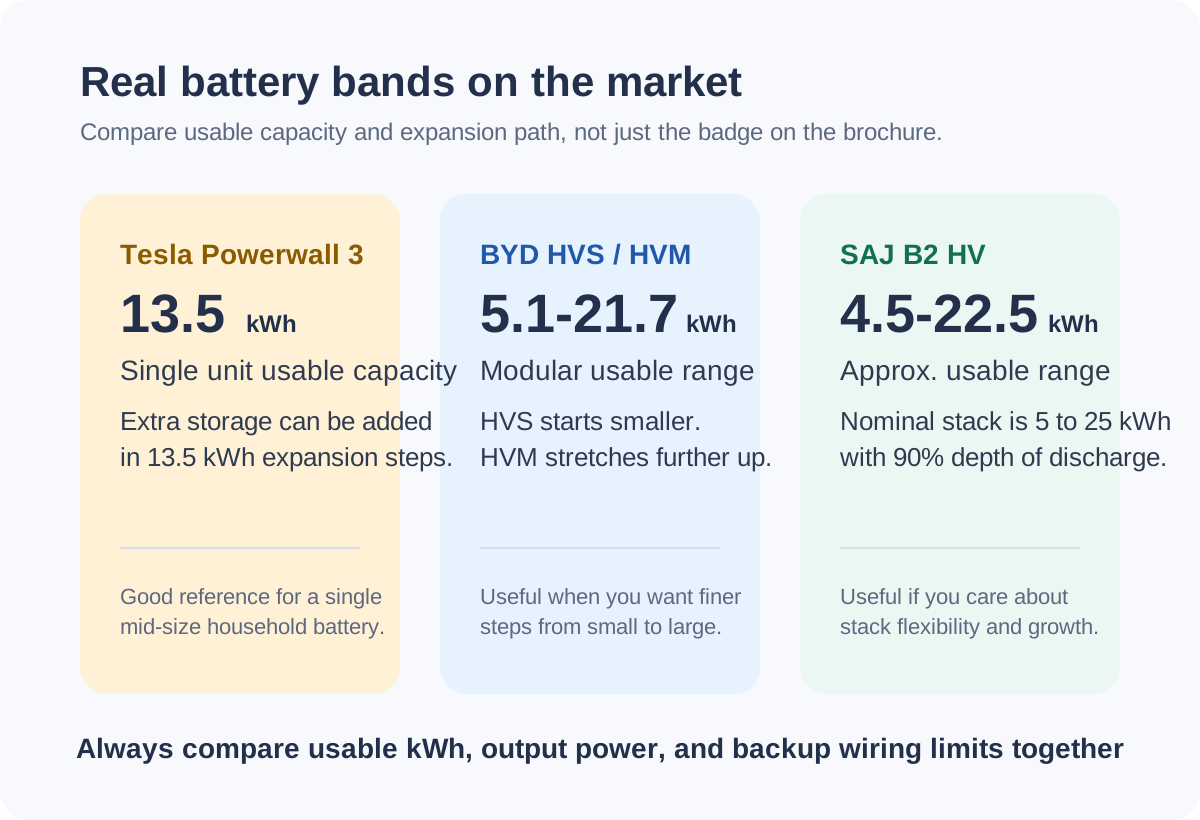
- Tesla Powerwall 3 is a 13.5 kWh battery and Tesla says each Powerwall 3 Expansion unit adds another 13.5 kWh. That makes it a strong reference point for the mid-size band.
- BYD Battery-Box Premium HVS runs from 5.1 to 12.8 kWh usable, while HVM runs from 8.1 to 21.7 kWh usable. That is useful if you want a more modular ladder.
- SAJ B2 HV Series spans 5.0 to 25.0 kWh nominal, which works out to roughly 4.5 to 22.5 kWh usable at its stated 90% depth of discharge. If you want a modular high-voltage stack, see SAJ B2 HV Series.
Those ranges are why the 10 to 14 kWh usable band keeps showing up in real buying conversations. It is large enough to matter for a lot of homes, but still close to what mainstream residential products are built around.
Do not size a battery without checking tariffs and export pressure
Two homes with the same night deficit can land on different battery sizes if their economics are different.
Go a bit harder on sizing when:
- your feed-in credit is weak and daytime exports are not worth much
- your retailer punishes evening imports on a time-of-use plan
- export limits are clipping how much solar value you can capture
- you know you will add more evening load soon
Be more conservative when:
- flat-rate power is still relatively reasonable
- most of your big loads can be scheduled into solar hours
- an EV, hot water system, or pool pump can be moved instead of stored
If export limits are the real trigger, read Solar Export Limits in Australia (2026): When a Home Battery Starts Making More Sense. If tariff structure is doing more damage than battery size, read Best Tariff for Solar Homes in Australia (2026): Time-of-Use vs Flat Rate.
When going bigger actually makes sense
Going beyond the common household band is reasonable when the battery is solving more than one problem.
That can include:
- large evening cooling or heating demand
- weak export value plus heavy evening imports
- longer backup expectations
- future electrification plans
- a bigger all-electric household rhythm than the "typical" guide assumes
It is also reasonable when incentives change the economics. As of 1 July 2025, the Australian Government's Cheaper Home Batteries Program is providing a discount on eligible small-scale batteries, and the discount is tied to battery size. That does not mean "buy the biggest battery". It means the right-sized battery may now be more affordable than it was a year ago.
If you are trying to decide whether a battery is worth adding at all, not just how large it should be, read Will a Home Battery Save You Money With Solar?.
Before you buy, check these 6 things
- Check your evening and early-morning imports over at least a few representative weeks.
- Check usable kWh, not just nameplate capacity.
- Check the battery's output power in kW, especially if several appliances may run together.
- Check what needs backup and whether your phase layout limits what can actually stay on.
- Check whether some demand is cheaper to shift than to store, especially EV charging and hot water.
- Check whether your real problem is tariff design, export limits, or backup, because each one points to a different battery size.
Bottom line
If you want a simple place to start, think like this:
- 5 to 8 kWh usable for lighter homes and modest night deficits
- 10 to 14 kWh usable for many normal family solar homes
- 15 kWh usable and above only when heavier night loads or longer backup goals clearly justify it
That is not a universal rule. It is a practical starting framework based on Australian guidance and today's mainstream battery ranges. The best battery is not the largest one you can afford. It is the one that matches your actual imports after sunset, your backup priorities, and the economics of your plan.
Sources
- Australian Government: Batteries
- Australian Government: Inverters
- Australian Government: Cheaper Home Batteries Program
- Tesla: How Powerwall Works
- Tesla: Powerwall 3 Datasheet AU
- BYD Battery-Box: Battery-Box Premium HVS and HVM
- SAJ: B2 HV Series