Solar Monitoring System Australia: What Homeowners Should Buy in 2026
If you search for a solar monitoring system in Australia, you quickly run into two problems.
The first is that almost every system claims to be "smart". The second is that many homeowners only discover after installation that their app shows solar generation, but not what the house is actually using, what the battery is doing, or how much power is being exported to the grid.
That matters more in Australia than it did a few years ago. The local market is no longer just about "how many kilowatts are on the roof?" It is about self-consumption, export limits, evening peak usage, batteries, EV charging, and whether your monitoring is good enough to catch underperformance before it quietly costs you money.
According to the Clean Energy Council's Rooftop Solar and Storage Report, July to December 2025, rooftop solar PV had reached 28.3 GW of installed capacity in Australia, and rooftop solar contributed 14.2% of electricity generated in Australia in the second half of 2025. The same report said 183,245 batteries were sold in Australia in the second half of 2025 alone. In plain English: a lot more homes now need monitoring that can see more than one number.
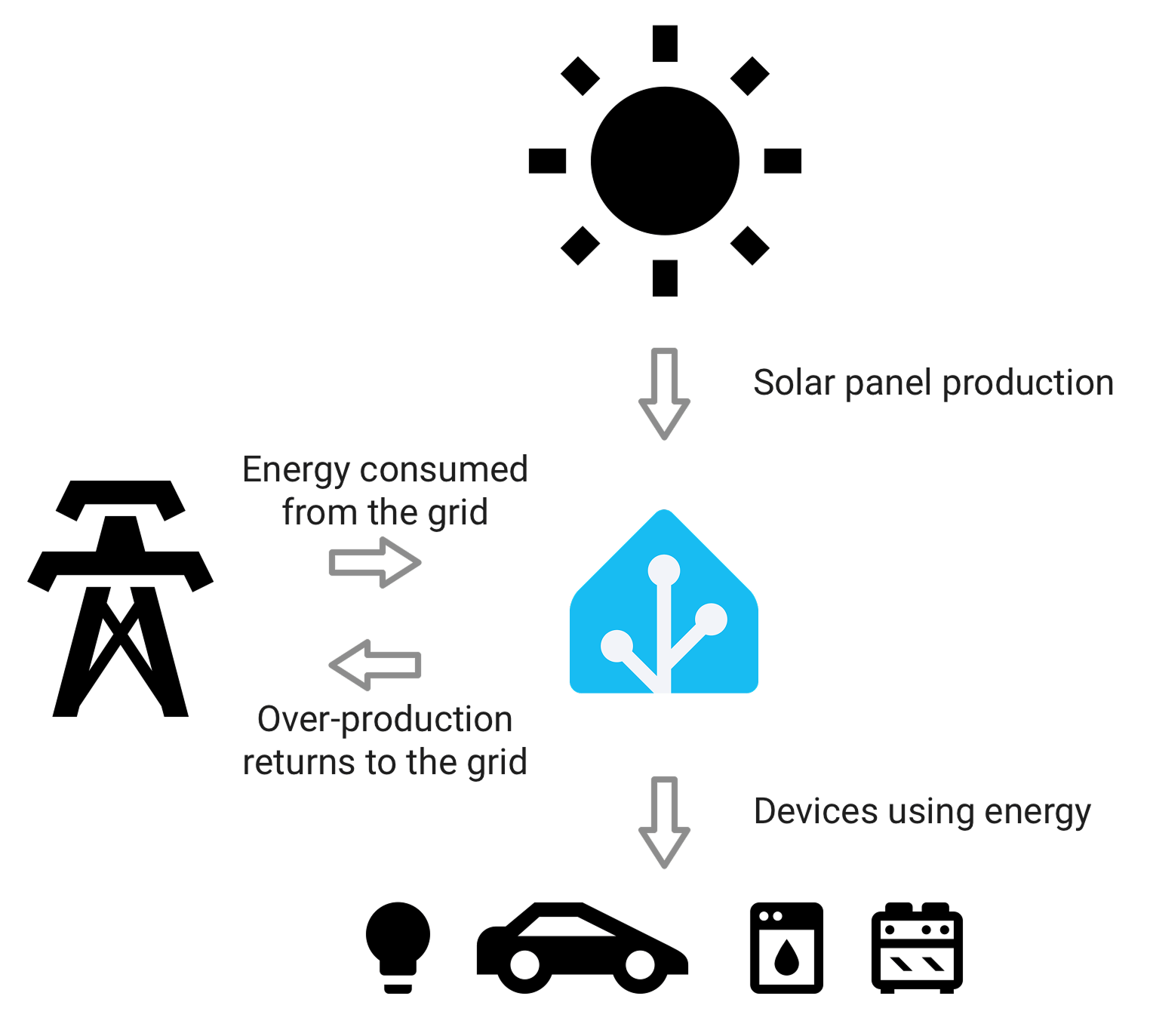
A dashboard that shows imports, exports, and home usage is usually more useful than a generation-only chart.
The short version
- If you only want to know whether your solar system is alive and roughly how much it generated today, the inverter app is often enough.
- If you want to see home consumption, grid imports, exports, and whether solar is really covering your daytime loads, you usually need a metered setup, not just the inverter portal.
- If you want the most control, especially for Home Assistant, tariff automations, EV charging, or local data retention, a dedicated energy meter is usually the better long-term buy.
That is the real split in Australia now. The question is not just "which app looks nicest?" The question is which layer of monitoring your house actually needs.
What Australian homeowners should monitor first
The Australian Government's energy guidance is blunt on this point: monitoring helps you see how much electricity your system is generating, how much electricity you are buying from the grid, how much solar you are exporting, and, if you have a battery, when it is charging and discharging. The same guidance also notes that the biggest bill savings come from self-consuming your solar electricity.
That one sentence is the key to buying the right system. If your monitoring cannot show self-consumption properly, it is much harder to decide:
- whether the dishwasher should run at 1pm or 8pm,
- whether the hot water timer is helping or hurting,
- whether the battery is actually covering the expensive evening window,
- and whether an EV charger is soaking up excess solar or just pulling from the grid.
Australia's average household usage is wide enough that "basic monitoring" often stops being useful
The federal energy guidance says Australian households typically use around 11 to 23 kWh per day. That is a big range. A smaller all-day household can get decent value from simple generation monitoring. A larger family home with air conditioning, pool equipment, an EV, or a battery usually needs a system that shows both generation and consumption.
The three main solar monitoring system types
1. Inverter app only
This is the default path. You install solar, the inverter gets commissioned, and the installer hands over a phone app.
What it usually does well:
- daily, weekly, monthly, and lifetime solar generation,
- fault alerts,
- some service diagnostics,
- and a simple "is the system working?" answer.
What it often does not do well unless extra hardware is installed:
- whole-home consumption,
- precise grid import and export,
- load shifting decisions,
- and local data ownership.
For a lot of Australian homes, inverter-only monitoring feels fine for the first two months. Then the questions get more specific. "Why did my bill stay high?" "Why am I exporting so much?" "Why is the battery still full at lunch but empty by 7pm?" That is where inverter-only setups start to feel thin.
2. Inverter monitoring plus consumption metering
This is the sweet spot for a lot of mainstream Australian installs in 2026.
You still get the vendor app, but you add the metering needed to see:
- solar production,
- household consumption,
- grid imports,
- grid exports,
- and, in many systems, battery flows as well.
Enphase is a good example of this approach. On its Australian homeowner pages, Enphase says the app can show panel-level production detail, reports on home energy consumption, and live solar production. That is a very different level of usefulness from a basic generation-only portal.
3. Independent or local-first energy monitoring
This is the route for homeowners who want a deeper picture of the whole site, not just the inverter.
Typical setups here include:
- a dedicated energy meter,
- a monitoring platform such as Solar Analytics,
- or a local-first stack using a meter plus Home Assistant.
The advantage is not just prettier dashboards. It is better visibility across mixed systems. That matters in Australian homes where the inverter, battery, EV charger, heat pump, and retailer tariff logic may all come from different vendors.
What each monitoring setup can actually tell you
| Monitoring setup | Solar generation | Home consumption | Grid import / export | Battery view | Local data / automation | Best fit |
|---|---|---|---|---|---|---|
| Inverter app only | Yes | Usually no, unless extra meter is installed | Usually limited | Sometimes | Rarely | Homes that mainly want fault visibility and daily generation |
| Inverter app plus metering | Yes | Yes | Yes | Often yes | Limited to moderate | Most mainstream Australian solar and battery installs |
| Independent platform or dedicated meter | Yes | Yes | Yes | Usually yes if wired correctly | Strongest | Homes with batteries, EVs, TOU tariffs, or advanced automation goals |
That table is the easiest way to avoid buying the wrong thing. If your real goal is bill control, not just "solar is on", you want one of the last two rows.
A practical Australia-focused comparison
| Option | What it is good at | Watch-outs | Best for |
|---|---|---|---|
| Vendor inverter app | Fast handover, low friction, one support path | Often too shallow for import/export analysis | New installs where the main goal is simple visibility |
| Vendor app with metering | Better insight without rebuilding the system | May still lock you into one ecosystem | Most households with batteries or large evening bills |
| Solar Analytics style platform | Strong reporting, performance tracking, bill-oriented insight | Subscription cost and installer setup matter | Households that want guided analysis more than DIY control |
| Meter plus Home Assistant or local dashboard | Best flexibility and data ownership | More technical to set up and maintain | Power users, mixed-vendor systems, EV and tariff automation |
Where Solar Analytics fits in Australia
Solar Analytics is one of the most recognisable Australian examples of "monitoring beyond the inverter app".
On its official site, Solar Analytics says:
- integrated inverter connections are available with Fronius and Sungrow, with more brands on the way,
- real-time data can be collected in up to 5 second intervals on hardware-based setups,
- and the dashboard combines solar and consumption data to show a home's energy profile.
Its current Australian pricing page also lists an integrated plan at AUD $6 per month, while hardware-backed options are priced separately. That does not make it automatically cheap or expensive; it simply means Solar Analytics is usually a stronger fit for households that actually use the reporting and fault detection, rather than people who only open the app twice a month.
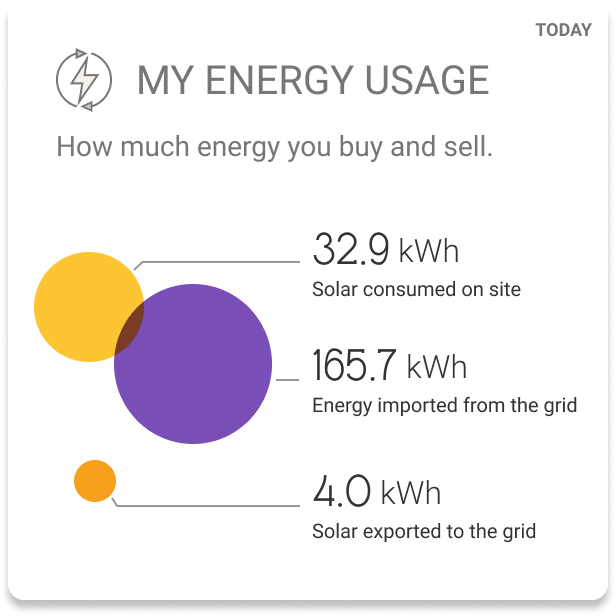
Official Solar Analytics image showing why consumption context matters. Generation alone does not tell you how much you bought from the grid or how much you exported.
When a dedicated energy meter is the smarter buy
If your home already has solar and you are trying to answer questions like these, a dedicated meter often gives better value than changing inverter brands or chasing a fancier cloud subscription:
- "Why are we still importing so much power after sunset?"
- "Is the EV charging off excess solar or off the grid?"
- "Is the battery really doing what the installer said it would?"
- "Can I keep the data even if I change inverter or battery later?"
This is where systems such as IAMMETER, Shelly, or other meter-led setups become attractive. They are less polished out of the box than a vendor app, but they can be better long-term tools for mixed systems and more advanced automation.
If that is the direction you are leaning, these two internal guides are more relevant than a generic inverter app comparison:
- Which Smart Energy Meter Works Best with Home Assistant?
- Best Smart Energy Meters for Home Solar in 2026
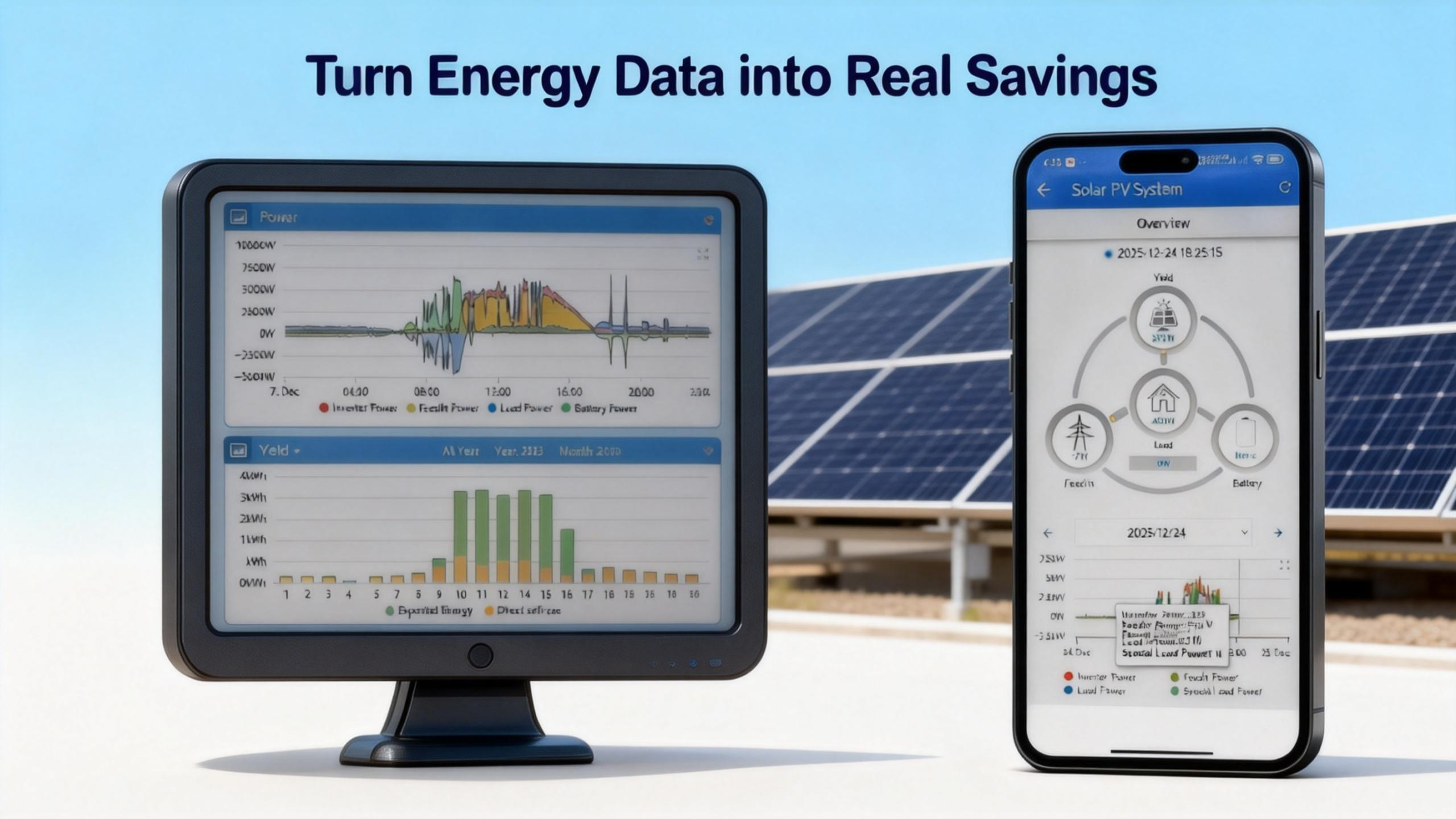
A meter-led monitoring view is usually the better choice when you want to track import, export, and whole-home behavior rather than just inverter output.
What most Australian homeowners should buy
Buy the inverter app only if:
- you mainly want fault alerts,
- you just want to confirm daily solar generation,
- and you are not trying to optimise battery or tariff behavior.
Buy metered inverter monitoring if:
- you have a battery,
- your bills still feel high despite good solar generation,
- you want to track self-consumption properly,
- or your installer offers a clean, well-supported metered package.
Buy an independent meter or local-first setup if:
- you care about long-term flexibility,
- you expect to add a battery, EV charger, or smart home automations,
- you want to keep your monitoring even if the inverter changes,
- or you are tired of cloud dashboards that only show part of the picture.
What to avoid
There are three common mistakes in Australia.
1. Confusing generation monitoring with whole-home monitoring
Plenty of people think they are "fully monitored" because the inverter app shows a nice generation graph. That is not the same thing as seeing consumption and grid flow.
2. Buying a smart battery, then leaving monitoring basic
If you spend battery money and still cannot clearly see charge, discharge, import, export, and evening performance, you are operating half-blind.
3. Ignoring installer familiarity
The best monitoring setup on paper is still the wrong buy if nobody on site commissions it properly. In Australia, good monitoring often depends as much on installer competence and CT placement as on the brand name in the app store.
Bottom line
For most Australian homes in 2026, the right solar monitoring system is not the fanciest app. It is the one that answers the questions your bill is actually asking.
If you only want to know whether the solar system is running, the inverter app is enough. If you want to lower bills, understand exports, and make sense of battery behavior, go at least one step further and choose a metered monitoring setup. If you want the deepest visibility and the most control, especially in a mixed-vendor home, a dedicated energy meter is usually the stronger long-term investment.
Sources
- Clean Energy Council, Rooftop Solar and Storage Report, July to December 2025: https://cleanenergycouncil.org.au/news-resources/rooftop-solar-and-storage-report-july-to-dec-2025
- Australian Government, Monitor your solar system: https://www.energy.gov.au/solar/use-your-solar-system/monitor-your-solar-system
- Australian Government, Size your solar system: https://www.energy.gov.au/solar/solar-system-design/size-your-solar-system
- Solar Analytics, How It Works: https://www.solaranalytics.com.au/how-it-works
- Solar Analytics, Subscription Prices: https://www.solaranalytics.com.au/subscription-prices
- Enphase, Enphase App (Australia): https://enphase.com/en-au/homeowners/enphase-app
- Enphase, IQ Gateway (Australia): https://enphase.com/en-au/store/communication/iq-gateway