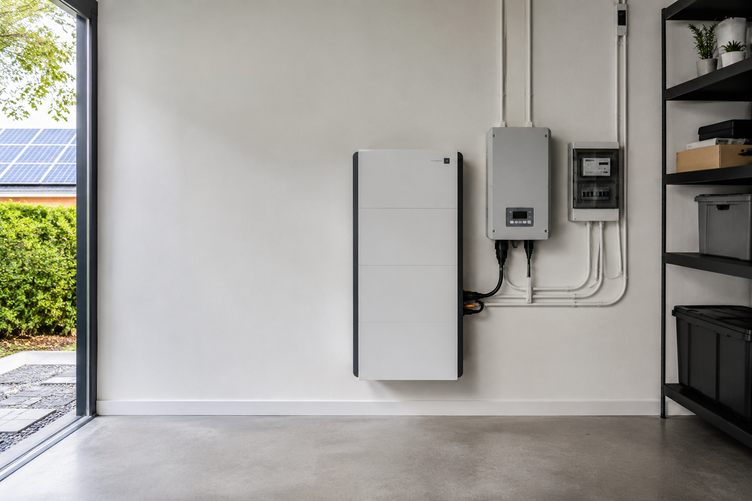
For many solar households, the real reason to buy a battery is not blackout protection. It is to keep more solar energy on-site, reduce evening imports, and get better value from a system that already produces more power in the middle of the day than the home can use.
That sounds simple, but a self-consumption-first battery decision is not the same as a backup-first battery decision. If your main goal is bill reduction, export avoidance, or tariff arbitrage, you should evaluate the battery around energy flows, control modes, measurement quality, and upgrade path fit. Backup capability may still matter, but it should not quietly dominate the budget, the system design, or the way stored energy is used.
Start with the problem you are actually trying to solve
Before comparing brands, clarify which of these problems is driving the purchase:
- You export too much solar during the day and import too much power after sunset.
- Your export tariff is weak, so storing solar is more valuable than sending it to the grid.
- Your tariff has a large peak and off-peak spread, making evening discharge more useful.
- Your current monitoring is too weak to show whether a battery would genuinely help.
- You want a battery-ready architecture now, even if the final battery size is not clear yet.
If your real problem is outage resilience, medical backup, or whole-home backup expectations, you should assess the system differently. But if self-consumption is the priority, the most useful question is this: how much expensive imported energy can the battery realistically replace, and under what operating constraints?
Check your load shape before you check battery size
A battery only helps when there is useful mismatch between solar production and household demand. That means your daily load shape matters more than your annual electricity total.
Look for three things:
- how much excess solar appears in the late morning and afternoon
- how much grid import happens from late afternoon through overnight
- whether those evening loads are steady enough for a battery to offset consistently
Homes with modest daytime exports and only light evening demand often buy more battery than they can use economically. By contrast, homes with regular cooking, HVAC, EV charging spillover, or evening family loads may have a much clearer self-consumption case.
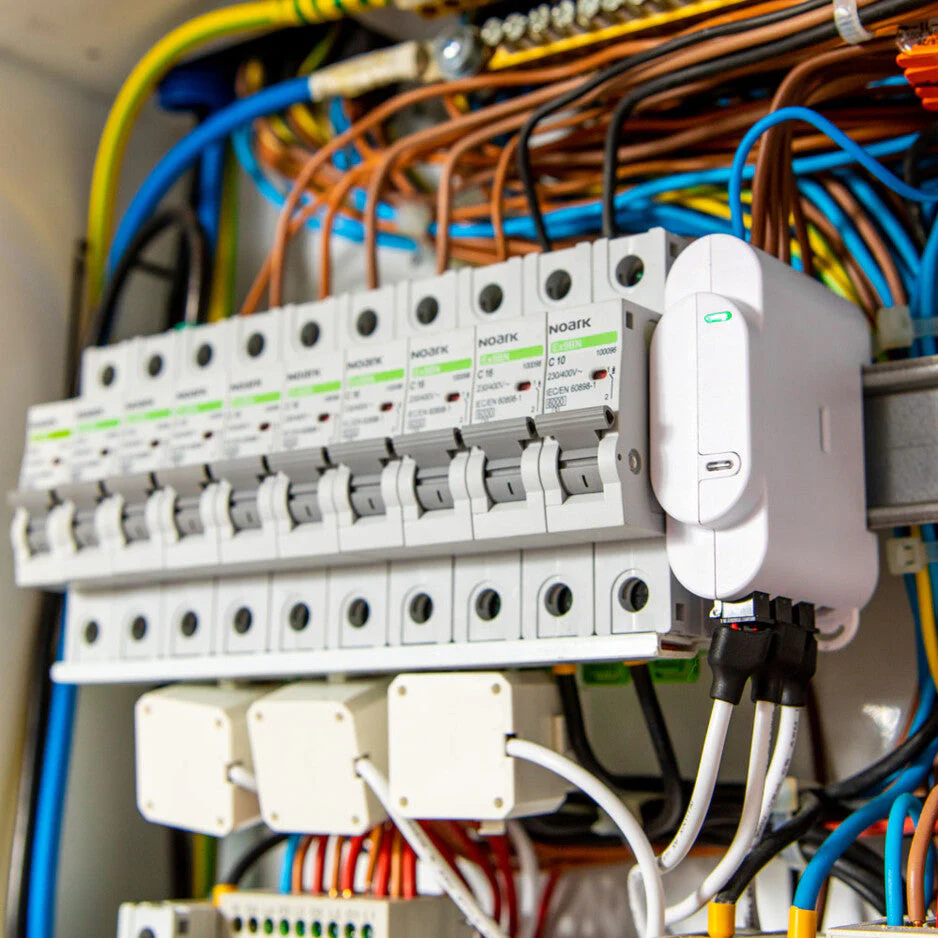 Reviewing export and evening import patterns is often the quickest way to tell whether a self-consumption-first battery has a real job to do.
This is also where monitoring quality becomes important. If you only have inverter production data, you may know how much solar you made, but not how much of it you exported, self-consumed directly, or would have shifted successfully into a battery. A battery quote built on incomplete visibility can look convincing while still being based on the wrong energy boundary.
Check whether your tariff structure actually rewards self-consumption
A self-consumption-first battery becomes easier to justify when exported energy is paid poorly and evening imports are expensive. The stronger that gap, the more useful stored solar usually becomes.
This is especially true under time-of-use structures, dynamic tariffs, or export-constrained markets. SolarEdge explicitly frames a non-backup "Rate Saver" battery configuration as ideal for time-of-use markets and notes that it can avoid backup hardware, main panel rewiring, and some upfront costs. Enphase also states that the IQ Battery 5P can be installed in a grid-tied, self-consumption configuration without backup for lower upfront investment and faster payback.
That does not mean every home should copy those architectures. It means the economic case for a battery depends heavily on whether you are paying for backup features you rarely need, or paying mainly for the ability to shift energy into higher-value hours.
Check the measurement boundary, not just the battery spec sheet
If you care about self-consumption, you need to see the right flows clearly:
- solar production
- household consumption
- grid import and export
- battery charge and discharge
Without that view, it becomes hard to answer practical questions after installation. Did the battery reduce peak imports? Is it charging from excess solar or from the grid? Is the system preserving too much reserve for backup? Is a control mode leaving usable savings on the table?
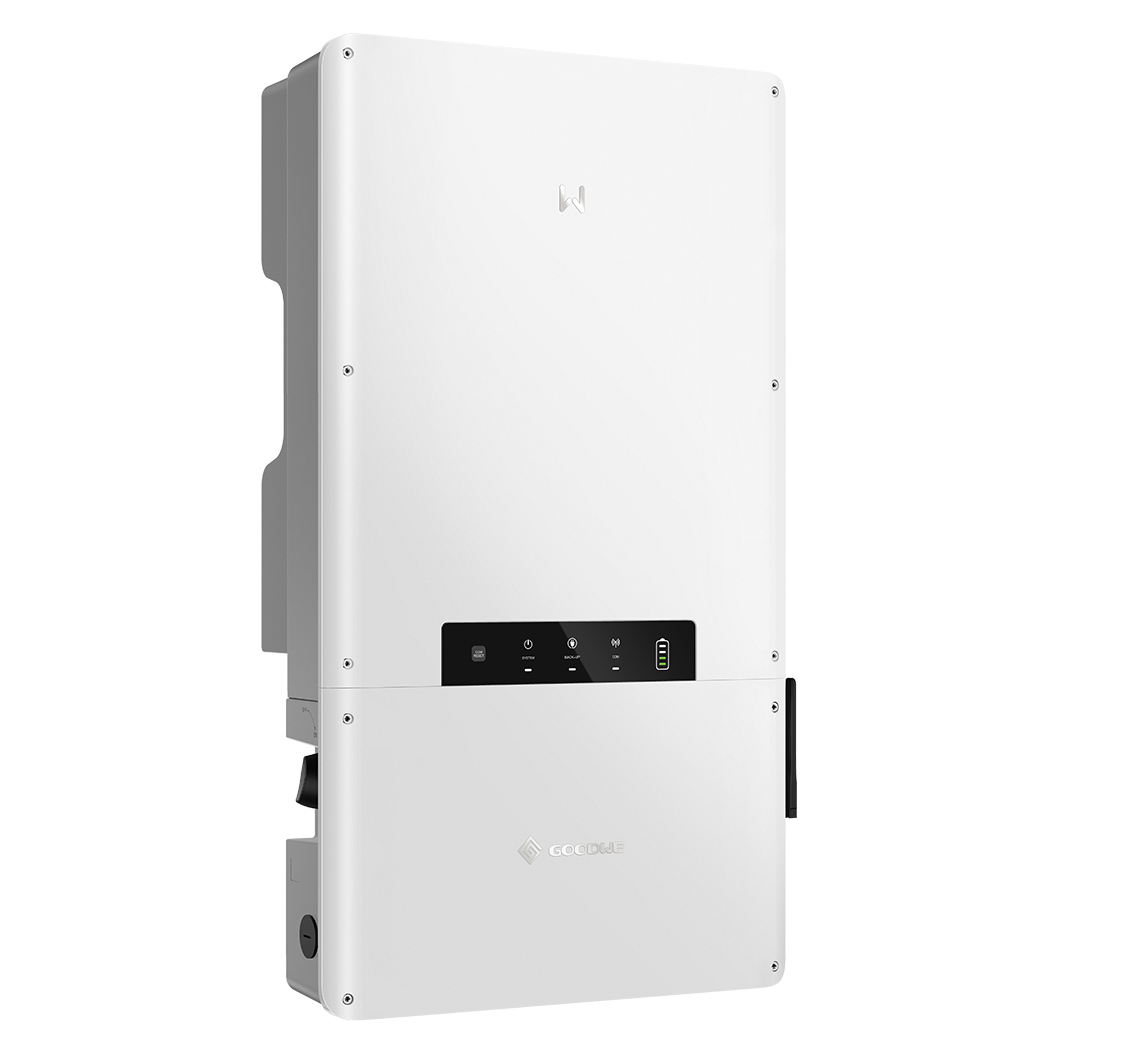 Good battery decisions depend on seeing the full measurement boundary clearly: solar, load, grid, and battery flows need to line up.
This is one reason smart metering keeps appearing in official vendor documentation. Fronius describes the Smart Meter as an essential component of its energy system and says it provides the basis for efficient energy management with a battery, Wattpilot, or Ohmpilot. In Fronius installation guidance, a smart meter becomes mandatory when a battery is added. GoodWe's Battery Ready application also highlights real-time load status monitoring through its smart meter and ties that visibility to self-consumption calculations.
For buyers, the lesson is simple: a battery should not be treated as an isolated box on the wall. If the measurement layer is weak, the battery may still work, but the owner will have a harder time proving value, tuning reserve settings, or understanding why savings differ from the sales model.
Check how the system handles reserve and operating modes
A self-consumption battery is only as useful as its control logic.
Tesla's Self-Powered mode is designed to store solar energy not used during the day and use it when household demand exceeds solar supply. Tesla also notes that Backup Reserve allocates part of stored energy for outage protection, and setting the reserve to 100% prevents use of Self-Powered mode or Time-Based Control, reducing the economic benefit.
FranklinWH describes the same tradeoff from another angle. In Self-Consumption mode, the system prioritizes solar for household loads and stores excess energy in the battery, while in Emergency Backup mode it prioritizes charging the battery to 100% and does not use stored power unless there is an outage.
That distinction matters more than many buyers realise. Two systems with similar nominal capacity can behave very differently depending on:
- reserve level
- export rules
- permission to charge from the grid
- time-of-use automation
- whether backup loads are configured
- whether self-consumption and backup goals are competing every evening
If your main goal is self-consumption, you should ask not only whether the system offers backup, but how easily the operating mode can be tuned so stored energy is actually used for savings.
Check whether you are paying for backup hardware you do not really need
Many batteries are sold inside a resilience-heavy story: outage protection, critical loads, gateway hardware, backup panels, automatic transfer behavior, and whole-home or partial-home backup configuration. Those features are valuable for the right household. They are not free.
If your main goal is solar self-use rather than resilience, ask what the quote includes specifically for backup:
- backup gateway or interface hardware
- essential loads subpanel work
- rewiring or switchboard changes
- additional installation complexity
- reserved battery capacity that will rarely be used economically
SolarEdge states that its Home Backup Interface is not required for non-backup, grid-tied battery solutions. SolarEdge also notes that Rate Saver installations can reduce upfront hardware cost by avoiding backup-oriented components. Enphase likewise presents self-consumption-without-backup as a lower-investment path.
In other words, a battery system designed mainly for self-consumption may be materially different from a battery system designed to keep the house running through outages. If you treat those as the same purchase, it becomes easy to overbuy the wrong layer.
Check whether the battery fits your retrofit path
The cleanest self-consumption outcome is not always the most feature-rich architecture. Sometimes it is the one that fits the existing solar system with the least friction.
Questions worth asking:
- Are you adding a battery to an existing string inverter system?
- Do you already have monitoring CTs or a smart meter in place?
- Is a DC-coupled path available only if you change inverter family?
- Would an AC-coupled battery reduce disruption even if it is not the most elegant architecture on paper?
- Are you trying to stay battery-ready now and delay the final storage purchase?
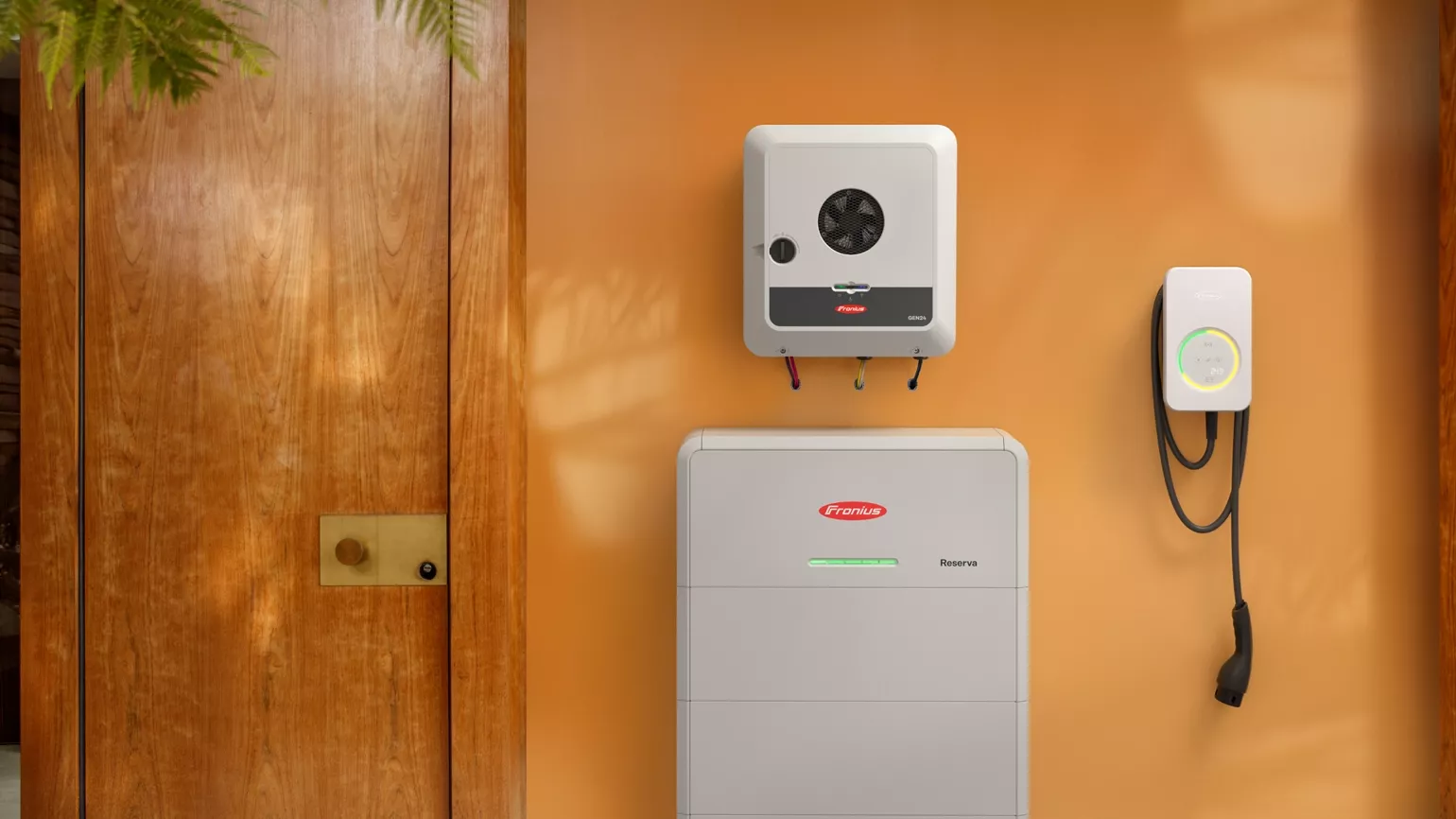 Retrofit fit matters more than brochure elegance: the best self-consumption battery path is often the one that keeps the system flexible without overcomplicating the switchboard.
SolarEdge emphasises the efficiency and integration benefits of its DC-coupled Home Battery ecosystem. Enphase emphasises modular expansion and flexible sizing. GoodWe's Battery Ready concept explicitly targets users who want to start with a conventional on-grid inverter and convert later when the self-consumption case becomes stronger.
The right answer depends less on marketing language and more on your current site conditions, inverter family, switchboard constraints, and whether you want the battery decision to remain flexible for another year or two.
Check power limits, not just kWh
Battery capacity gets most of the attention, but self-consumption performance is also shaped by charge and discharge power.
A battery with enough kWh but not enough discharge power may still leave expensive evening imports untouched when multiple loads turn on together. A battery with enough charge power to absorb midday solar spikes may perform better in practice than one that looks bigger on paper but clips useful charging opportunities.
For self-consumption buyers, good questions include:
- How much charge power is available from excess solar?
- How much discharge power is available during peak household demand?
- Can the battery support only selected loads, or full household demand?
- What happens when a heat pump, EV charger, or oven overlaps with other loads?
- Does the system keep enough control visibility to show why import still occurred?
This is where an installer's system design quality matters more than a brochure comparison table.
Check whether expansion will matter later
A self-consumption buyer is often trying to avoid overspending today while keeping options open. Expansion matters because many households discover, after a full summer and winter cycle, that their first estimate was too small or too large.
Enphase highlights modular growth as a design strength. SolarEdge notes that multiple batteries can be stacked per inverter. Those details matter if you want to start with a modest storage size and expand later once real usage data confirms the best path.
This can be more valuable than chasing the most aggressive first-install battery size. A right-sized first stage plus clear monitoring often beats a one-shot oversized system chosen from assumptions.
Who is usually a good self-consumption battery candidate?
A battery bought mainly for self-consumption often makes more sense when:
- the home already exports a meaningful amount of solar midday
- evening imports are regular and expensive
- export compensation is weak
- the household has good enough monitoring to confirm the problem
- the owner values control, measurement, and optimisation instead of backup alone
- the installation path can avoid unnecessary backup hardware
Who should pause before buying?
The case is usually weaker when:
- solar exports are modest or inconsistent
- the home already shifts a lot of load into solar hours
- evening consumption is low
- export compensation is still relatively attractive
- monitoring is too incomplete to verify the real opportunity
- the quote assumes a resilience-heavy design even though outages are not the main concern
In those cases, the better first move may be improved monitoring, tariff optimisation, controlled loads, EV scheduling, hot-water shifting, or a battery-ready inverter path rather than immediate storage.
A practical buyer checklist
Before you approve a quote, ask for clear answers to these questions:
- How much daytime export and evening import does my current data show?
- What tariff spread or export-rate weakness makes this battery worthwhile?
- What metering or CT hardware is included to measure solar, load, grid, and battery flows correctly?
- What reserve level and operating mode will the system use by default?
- How much of the quote is tied to backup hardware instead of self-consumption value?
- Is this the simplest retrofit path for my current inverter and switchboard?
- Can the system be expanded later without throwing away core hardware?
- What real control settings will be available after installation to tune self-consumption performance?
If an installer or vendor cannot answer those clearly, the problem is not that the battery is necessarily bad. It is that the project may not yet be defined around the outcome you actually want.
Bottom line
Buying a battery mainly for self-consumption is often less about chasing the biggest battery and more about buying the right control and measurement architecture. The strongest projects usually start with load shape, tariff logic, and system visibility, then choose the storage path that fits those facts.
That is the difference between a battery that looks impressive in a quote and a battery that quietly improves solar value every evening for years.
Sources
- Tesla Support: Self-Powered
- Tesla Support: Backup Reserve
- FranklinWH: Operating Modes
- Enphase: IQ Energy Management Self-Consumption
- Enphase: IQ Battery 5P
- SolarEdge Home Battery
- SolarEdge Home Backup Interface Installation Guide
- Fronius Smart Meter
- Fronius Smart Meter Quick Guide
- GoodWe Battery Ready Application