For most solar homes in Australia, flat rate is usually better when grid imports are still concentrated after sunset, while time-of-use usually works better when you can shift meaningful load into solar hours or cheap off-peak periods.
That is the core answer. Solar on its own does not automatically make a time-of-use tariff the better plan. The real question is when your home still needs to buy electricity from the grid, and how expensive that buying window is.
If you want the fastest version:
| If your home looks like this | The tariff that usually fits better | Why |
|---|---|---|
| Solar only, no battery, evening-heavy family usage | Flat rate | The most expensive imports still happen after sunset |
| Solar plus EV charged overnight | Often time of use | A large repeatable load can move into off-peak hours |
| Solar plus battery covering the evening peak | Often time of use | Storage can reduce expensive evening imports |
| Solar plus hot water, pool, or appliances you can time well | Often time of use | Flexible loads can use solar or off-peak windows |
| Solar home with weak load shifting and no one watching schedules | Flat rate | Simpler and less punishing if usage stays in the peak window |
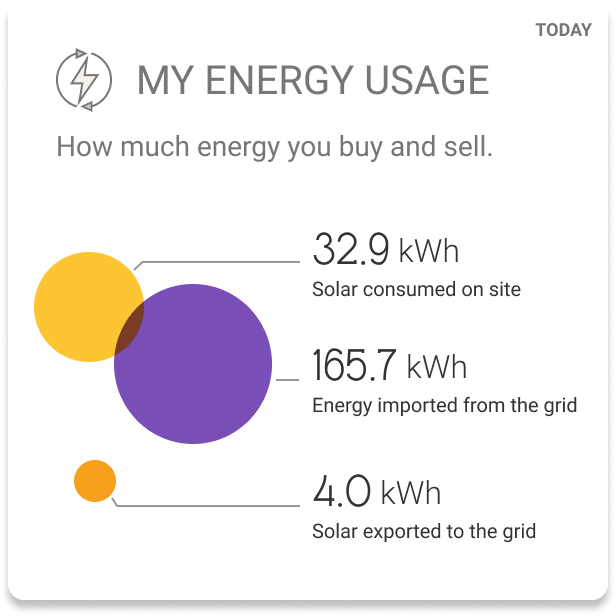
The tariff decision depends on when you still import from the grid, not just how much solar you generated during the day.
Jump to your case
- Solar only, no battery
- Solar plus battery
- Solar plus EV
- Timed hot water, pool, or other flexible loads
- What to check before switching plans
Before you switch, check these 5 things
Before comparing plans, check these on your latest bills and interval data:
When your home still imports from the grid
If most of your imports land in the evening, flat rate often stays competitive even with good solar generation.The retailer's actual peak and off-peak windows
Time-of-use only helps if your load can move into the cheap windows that your retailer really uses.Your full bill structure, not just the feed-in tariff
The Australian Government makes this point directly: the highest feed-in tariff is not always the best overall plan.Whether large loads are controllable
Electric hot water, pool pumps, EV charging, and some appliances can change the tariff maths much more than small daily habits.Whether the plan includes a demand charge
One badly timed spike can damage the economics of a plan that looked good on the headline usage rate.
If you do not have a good read on your import pattern yet, start here:
- Solar Monitoring System Australia: What Homeowners Should Buy in 2026
- Do You Need a Smart Meter for Solar Monitoring in Australia?
- Best Smart Energy Meters for Home Solar in 2026
Three quick household examples
| Household | Usually the safer starting point | Why |
|---|---|---|
| Case A: family home, no battery, cooking and cooling mostly after 6pm | Flat rate | Solar helps in the day, but the expensive buying still happens in the evening |
| Case B: EV charged most nights, hot water can be timed | Time of use | A large repeatable load can be pushed into cheaper hours |
| Case C: battery covers the evening window and some EV charging happens at home | Often time of use | Battery discharge and flexible charging can reduce peak-period imports |
These are not hard rules, but they are close to how the decision usually works in real homes.
Why solar does not answer the tariff question by itself
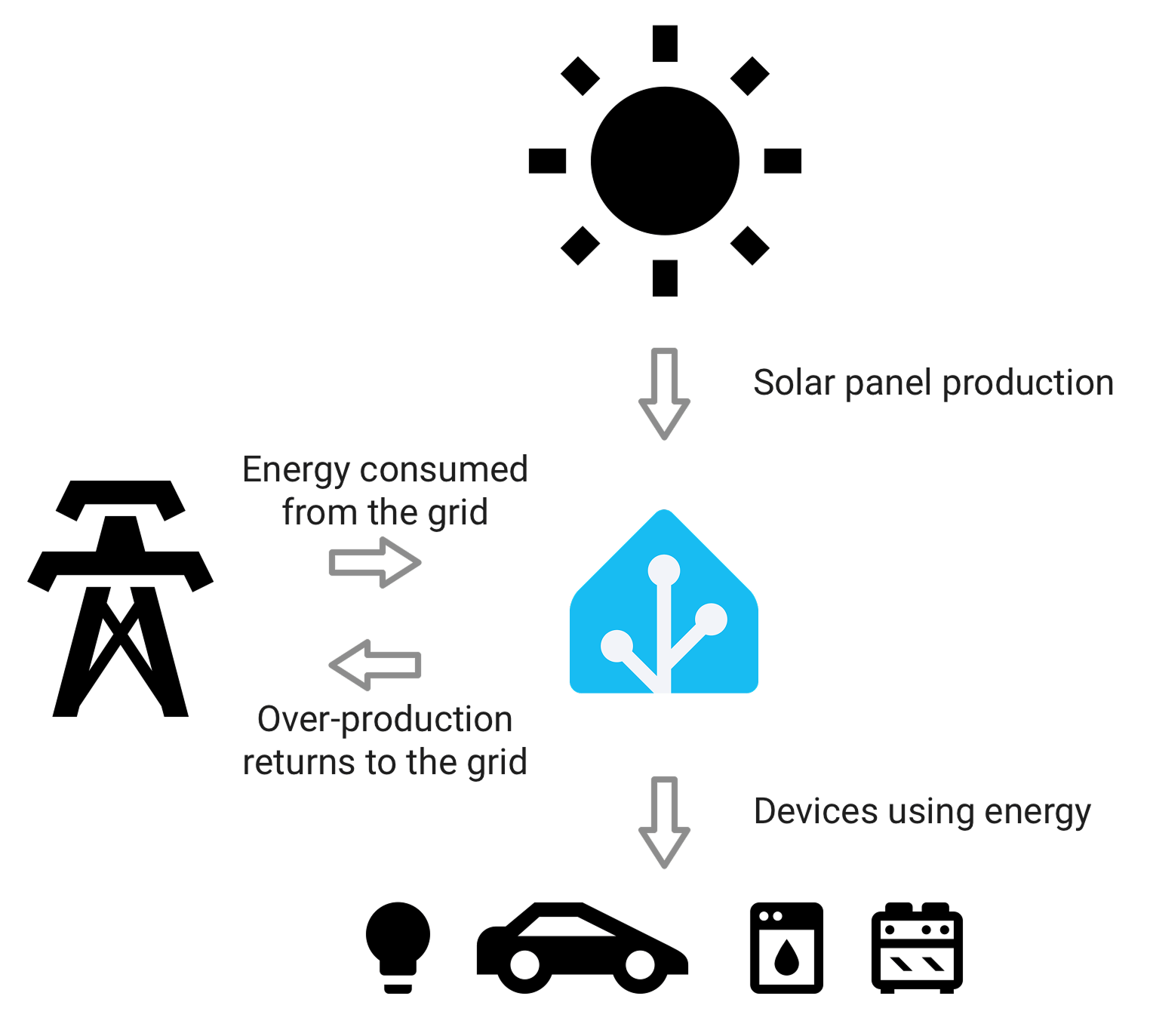
Solar changes your bill because it reduces daytime grid imports. It does not remove the importance of the tariff, because most homes with solar still buy electricity at some point, especially early in the morning, after sunset, and during poor weather.
The Australian Government breaks the value of solar into four paths:
- electricity used directly in the home,
- electricity exported,
- electricity stored in a battery,
- and, if export is limited, electricity that can be curtailed.
The most valuable solar energy is usually the electricity you use yourself. Export payments still matter, but they are often lower than the price you pay to import electricity later. That is why the tariff decision is really about your remaining imported electricity, not just your solar production.
Solar only, no battery
For many solar homes without a battery, flat rate is still the safer choice.
That is especially true if:
- most of the family is out during the day,
- dinner, air conditioning, and appliances all ramp up after sunset,
- there is no EV and no timed hot water advantage,
- and nobody wants to run the home around tariff windows.
In this situation, solar lowers daytime imports, but the most expensive imports may still happen in the evening. If the retailer's peak window lines up with that evening demand, time-of-use can easily become less attractive than it first looks.
Flat rate also has a practical advantage: it is simpler. You do not need to think as much about whether the dishwasher, washing machine, or reverse-cycle heating landed in the wrong window.
Solar plus battery
This is where time-of-use becomes more attractive.
The Australian Government says batteries can reduce bills by:
- increasing self-consumption,
- taking advantage of time-of-use tariffs,
- reducing peak demand,
- participating in a virtual power plant,
- and reducing curtailment, although that last benefit may be small.
That does not mean a battery automatically makes time-of-use the right answer. It means the economics change because the battery can cover the period when imported electricity is most expensive.
Time-of-use tends to look stronger when:
- the battery is large enough for the evening peak,
- the system is configured to discharge at the right time,
- the home still has meaningful peak-period imports to offset,
- and the tariff gap between peak and off-peak is wide enough to matter.
If you are still working out whether storage is worth the money at all, go next to:
Solar plus EV
EV charging changes this decision more than many homeowners expect.
According to the Australian Government, around 80% of reported EV charging in Australia happens at home. That means the household tariff often matters more than public charging prices for day-to-day ownership.
There are two common patterns:
EV mostly charged overnight
If the car is usually plugged in overnight and your retailer has a genuinely cheap off-peak period, time-of-use often starts to make sense quickly. A nightly EV charge is a large and predictable load, which is exactly the kind of demand that can justify TOU.
EV often charged during solar hours
If the car sits at home during the day and can use excess solar directly, the answer is less obvious. In that case, the value may come more from self-consumption than from chasing off-peak electricity.
This is why the question is not “Do you have an EV?” The real question is when and how the EV is charged.
Timed hot water, pool, or other flexible loads
Time-of-use also becomes more attractive when the home has other large, controllable loads.
Good examples are:
- electric hot water on a timer or controlled load,
- pool pumps,
- dishwashers and laundry that can run in solar hours,
- and automation that moves loads away from the expensive period.
This is the part many households overlook. You do not always need a battery to benefit from time-of-use. Sometimes a home with several well-timed flexible loads gets most of the way there without storage.
But the opposite is also true. If a household has no meaningful load-shifting ability, time-of-use can be all downside and very little upside.
The two tariff traps that catch solar households
Looking only at the feed-in tariff
The Australian Government is clear on this point: the plan with the highest feed-in tariff is not necessarily the best energy plan overall.
That matters because many solar homes export relatively low-value midday energy but still import more expensive electricity later. A retailer can win the comparison on feed-in tariff and still lose on the full bill once supply charges and evening usage rates are counted properly.
Ignoring demand charges
Some plans include a demand charge on top of the normal usage rate. That means your bill is influenced by how hard you hit the grid during a set interval, not just by total kilowatt-hours.
For a solar home, that often becomes a problem when:
- the oven, cooktop, hot water, and cooling overlap,
- an EV starts charging at the wrong time,
- or the battery does not cover the peak the way you expected.
If demand charges are involved, the “best tariff” question becomes more complicated than flat rate vs TOU alone.
Flat rate vs time of use: the practical rule
For most homes, the decision can be reduced to this:
- Flat rate usually fits better when your imports are still concentrated after sunset and you cannot move much load.
- Time of use usually fits better when you can shift a large, repeatable load into solar hours or cheap off-peak periods.
That is why solar on its own is not enough to answer the question. What matters is what the home still buys from the grid, when it buys it, and whether that behavior can realistically change.
Bottom line
If you want the shortest answer, use this one:
- stay closer to flat rate if your home is still evening-heavy and relatively inflexible,
- lean toward time of use if you can shift meaningful load through a battery, EV charging, hot water timing, or other repeatable controllable demand,
- and compare the full bill structure, not just the feed-in tariff or one headline usage rate.
For solar homes in Australia, the better tariff is the one that matches your real import pattern, not the one that sounds smarter in a retailer ad.
Sources
- Australian Government, Electricity pricing plans and tariffs
- Australian Government, How solar pays for itself and batteries reduce bills
- Australian Government, How to charge your electric vehicle
- Australian Government, Find the best energy deal
- Australian Government, Get the most from your solar system
- Australian Government, SunSPOT solar and battery calculator
- Clean Energy Council, Rooftop solar and storage report - July to December 2025