Do You Need a Smart Meter for Solar Monitoring in Australia?
Short answer: for a modern grid-connected solar setup in Australia, usually yes, you will need a smart meter somewhere in the process. But for solar monitoring itself, no, a utility smart meter is not the thing most homeowners are actually looking for.
That distinction matters because these three things get mixed together all the time:
- the retailer or distributor smart meter used for billing and exports,
- the inverter app that shows solar production,
- and the dedicated monitoring meter or CT setup that shows home consumption, imports, exports, and battery behavior properly.
If you keep those separate, the buying decision gets much easier.
The practical answer
| Question | Short answer | Why |
|---|---|---|
| Do you usually need a smart meter to install or run grid-connected solar in Australia? | Usually yes | Official Australian government guidance says if you get solar, you will need a smart meter. |
| Do you need a utility smart meter just to see whether your solar system is producing power? | No | The inverter app can usually do that on its own. |
| Do you need a smart meter to see home consumption, imports, exports, and battery behavior properly? | Sometimes, but not always the utility one | Many systems use a separate monitoring meter or consumption CTs for this job. |
| Is a retailer smart meter the same thing as a good solar monitoring system? | No | It helps with interval metering and billing, but it is not a substitute for live solar monitoring. |
Why this gets confusing in Australia
Australian solar homes often hear the phrase "you need a smart meter" at the same moment they are choosing an inverter app, battery, or monitoring add-on.
Those conversations are about different layers of the system:
- grid metering for billing and export settlement,
- solar production monitoring from the inverter,
- and whole-home energy monitoring if you want to see what the house is actually doing.
The official consumer guidance reflects that split. The Australian Government says most solar and battery systems come with some monitoring and can show generation, electricity use, battery charging and discharging, exports, and faults. But government guidance on solar connection also says that if you get solar, you will need a smart meter.
Those two statements are not contradictory. They are talking about different jobs.
What a utility smart meter actually does
A utility smart meter is mainly there to measure electricity flowing between your home and the grid. In a solar home, that usually means:
- electricity imported from the grid,
- electricity exported to the grid,
- interval data for billing and settlement,
- and the data your retailer or distributor needs to manage a modern connection.
It is important, but it is not a rich monitoring system by itself.
Some official Australian guidance still describes smart meters as recording electricity use every 15 or 30 minutes. The Australian Energy Regulator's current smart meter rollout page, checked on April 1, 2026, describes smart meters as measuring usage every 5 minutes. The practical interpretation for homeowners is the same either way: a smart meter is an interval meter, not a second-by-second solar dashboard.
What a solar monitoring system does
A proper solar monitoring system is there to answer questions your bill cannot answer on its own:
- Is the solar system generating what it should?
- Is the house using most of that solar or exporting it?
- Is the battery charging at the right time?
- Did the inverter trip or quietly underperform this week?
- Is the EV charger soaking up excess solar or just buying from the grid?
That is why a monitoring setup usually lives in one of these places:
- inside the inverter brand's app,
- in a vendor platform such as Solar Analytics,
- or in a dedicated energy meter plus a local dashboard.
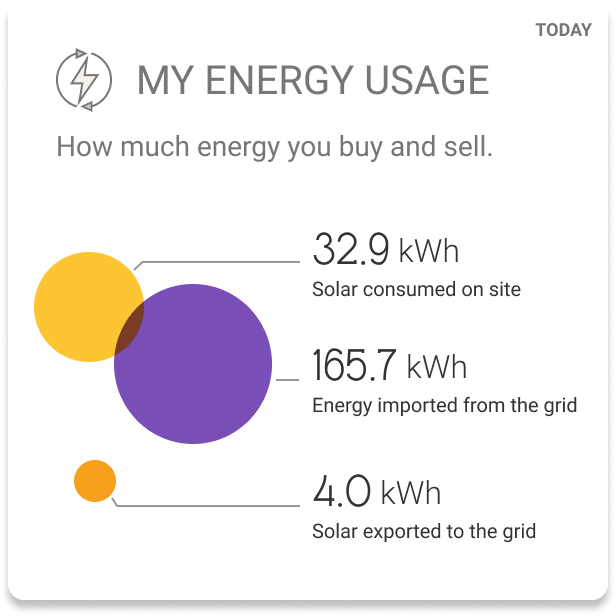
This is the kind of view homeowners usually want. It is not just "how much solar did I make?" It is "how much did the house use, how much came from solar, and how much still came from the grid?"
So when do you actually need a smart meter?
You usually do need one if:
- you are installing new grid-connected solar,
- you want export metering handled correctly,
- your retailer requires an advanced meter for the tariff or connection,
- or you are adding solar or a battery and your site still has an older basic meter.
This is the part installers and retailers are usually talking about. The AER also notes that if you request a smart meter yourself, including as part of installing solar or a battery, there can be charges depending on the situation and metering provider.
You do not need a utility smart meter if your real goal is only:
- seeing live solar production,
- getting inverter fault alerts,
- checking whether the system is on,
- or viewing panel-level data in the inverter app.
That can often be done without relying on retailer smart meter data at all.
You may need more than a smart meter if you want:
- whole-home consumption,
- accurate self-consumption tracking,
- better battery insight,
- EV and tariff automations,
- or local dashboards such as Home Assistant.
This is the point many Australian homeowners miss. The utility smart meter may be necessary, but it is often not sufficient.
The three devices people confuse
| Device | Who owns it or manages it | Main job | What it is bad at |
|---|---|---|---|
| Utility smart meter | Retailer / metering provider / distributor ecosystem | Billing-grade import and export data | Rich live solar monitoring |
| Inverter monitoring app | Inverter brand | Production, faults, basic system status | Whole-home visibility unless extra metering is added |
| Dedicated energy meter or CT monitor | Homeowner / installer | Live consumption, imports, exports, load tracking, local integrations | Usually needs extra setup and installer attention |
That table is the cleanest answer to the keyword question.
If you ask, "Do I need a smart meter for solar monitoring in Australia?", the real answer is:
- for solar connection and export metering, usually yes,
- for monitoring quality, not by itself.
A smart meter is often too slow and too shallow for the monitoring job people want
Australian government guidance on smart homes says smart meters can help track usage and that information is typically sent to your retailer once or twice a day. That is useful for bills and historical trends, but it is not the same thing as opening a monitoring app and seeing what the home is doing right now.
That is why people who care about solar performance often end up wanting:
- inverter-led live monitoring,
- a metered inverter setup,
- or a dedicated energy meter with faster local data.
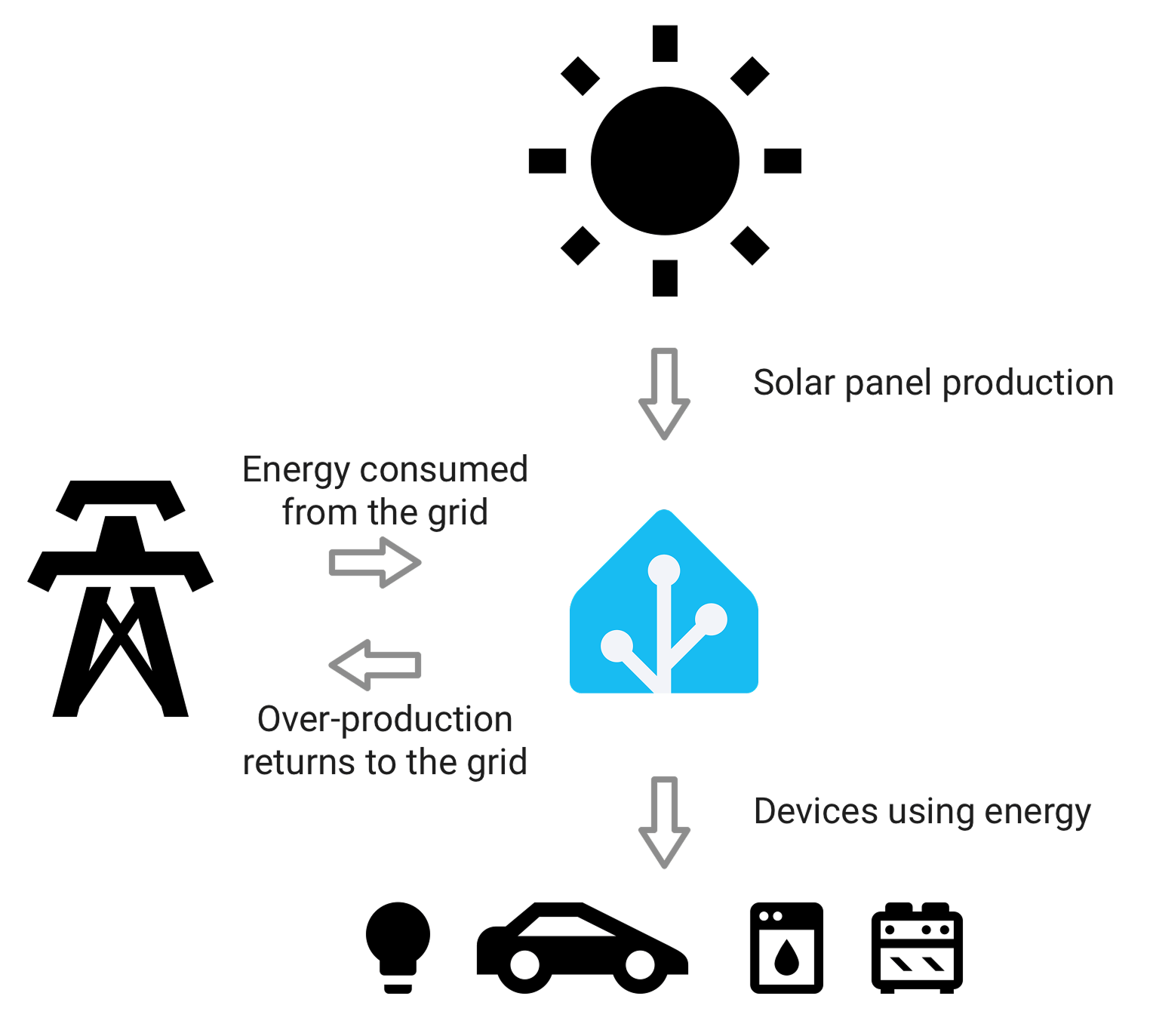
A real monitoring setup is usually about flows, not just billing data: production, home load, import, and export on one screen.
When the inverter app is enough
For plenty of Australian households, the inverter app is enough if:
- you only want a daily production check,
- you do not have a battery,
- you are not trying to optimise a time-of-use tariff,
- and you are not planning to automate EV charging, hot water, or other loads.
That is a perfectly reasonable place to stop. Not every solar home needs a monitoring rabbit hole.
When you need a dedicated monitoring meter as well
If you want better answers than the inverter app gives, a dedicated energy meter is often the better move.
That is especially true when:
- your bill still looks wrong,
- you want to know whether solar is being self-consumed,
- you have a battery and want to see real charge and discharge behavior,
- you want local dashboards or Home Assistant,
- or your system mixes brands and one vendor app only shows part of the picture.
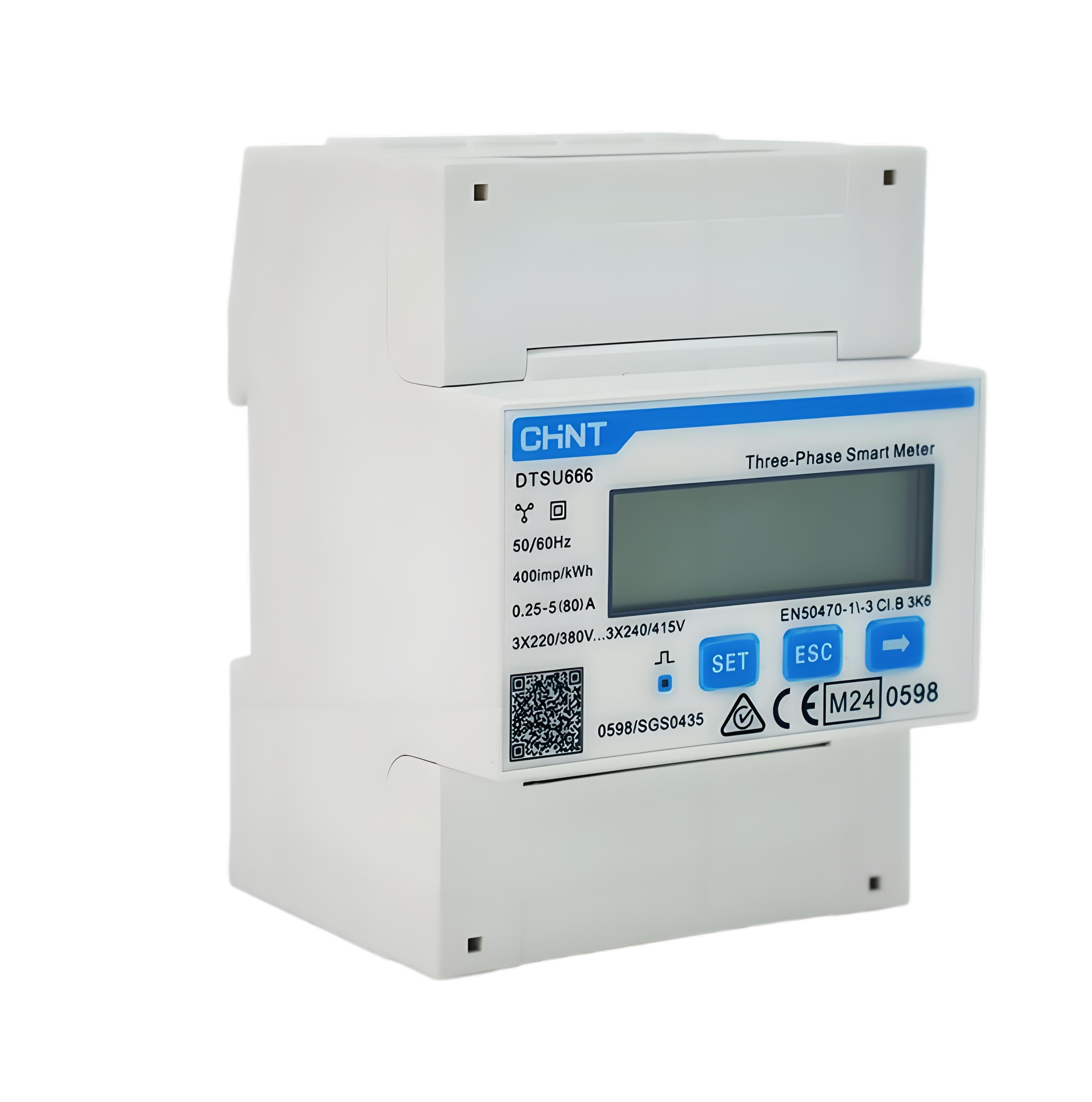
A dedicated monitoring meter in the switchboard is a different tool from the retailer-owned utility smart meter. It is there to improve monitoring visibility, not replace billing metering.
The most useful rule of thumb
Use this rule and you will avoid most of the confusion:
- The utility smart meter is for the market.
- The inverter app is for the solar system.
- The dedicated energy meter is for the homeowner.
Once you frame it that way, the buying decision gets clearer very quickly.
What most Australian homeowners should do
If you are getting a new solar install
Assume a smart meter will be part of the connection or metering conversation. But ask a second question immediately:
"What exactly will I be able to see after installation: just solar production, or also home consumption, imports, exports, and battery flows?"
That one question will save a lot of disappointment.
If you already have solar and just want better monitoring
Do not assume the answer is a retailer smart meter upgrade. Often the better answer is:
- adding inverter-compatible consumption metering,
- or installing a dedicated energy monitor.
Bottom line
In Australia, the answer is not a clean yes or no.
For a modern grid-connected solar system, you will usually need a smart meter in the broader connection and billing sense. But if you are asking about solar monitoring, the utility smart meter is usually not the thing you are really after.
If your goal is simply to verify solar generation, the inverter app is often enough. If your goal is to understand self-consumption, imports, exports, battery behaviour, and bill savings, you will usually need more than just the utility smart meter.
If you want the broader overview first, this companion guide is the next step:
And if you already know you need better monitoring than the inverter app can give, these are the more relevant follow-ups:
- Which Smart Energy Meter Works Best with Home Assistant?
- Best Smart Energy Meters for Home Solar in 2026
Sources
- Australian Government, Get connected: https://www.energy.gov.au/solar/installing-solar-and-batteries/get-connected
- Australian Government, Inverters: https://www.energy.gov.au/solar/solar-system-components/inverters
- Australian Government, Monitor your solar system: https://www.energy.gov.au/solar/use-your-solar-system/monitor-your-solar-system
- Australian Government, Size your solar system: https://www.energy.gov.au/solar/solar-system-design/size-your-solar-system
- Australian Government, Smart homes and home energy management systems: https://www.energy.gov.au/households/energy-upgrades/smart-homes-and-home-energy-management-systems
- Australian Energy Regulator, Smart meter rollout: https://www.aer.gov.au/industry/registers/resources/factsheets/smart-meter-rollout
- Australian Energy Regulator, Consumer rights and smart meters: https://www.aer.gov.au/industry/registers/resources/factsheets/consumer-rights-and-smart-meters