AI for Smart Energy Meters and Solar Inverters: What Actually Helps Homeowners in 2026
AI is suddenly everywhere in home energy marketing, but most homeowners are still asking very ordinary questions. Why did my bill jump this month? Why am I exporting so much solar at noon and buying power back at 7 pm? Do I need a better inverter, a better meter, or just a better way to read the data?
That is the right way to approach this category. The point is not that every smart meter has become "intelligent." The point is that a few products now do a much better job of turning raw electrical data into actions a household can actually use: clearer diagnostics, smarter load shifting, better battery scheduling, and less time staring at dashboards.
This guide focuses on real, current examples rather than vague AI promises. The strongest meter-first example today is IAMMETER Assistant, while inverter-led ecosystems from SolarEdge, Huawei, Sungrow, and GoodWe are pushing harder into automated optimization.
The short version
| AI scenario | What the user gets | What the system needs underneath |
|---|---|---|
| Natural-language energy analysis | Plain-English explanations of spikes, base load, solar export, and cost trends | Historical meter or inverter data plus a cloud API or local feed |
| AI-generated dashboards and automations | Faster setup of dashboards, MQTT flows, and custom monitoring pages | Open protocols such as MQTT, Modbus TCP, or HTTP APIs |
| Dynamic tariff optimization | Lower import during expensive hours and better battery scheduling | Tariff feed, weather forecast, load history, and control over battery or loads |
| Solar surplus diversion | More self-consumption and less low-value export | Real-time import/export measurement plus a controllable heater, EV charger, or relay |
| Fault analysis and predictive maintenance | Faster troubleshooting when generation drops or devices go offline | Device logs, power data, alarm history, and often a vendor cloud platform |
The hard part is not getting an answer from a chatbot. The hard part is feeding that assistant trustworthy data, at the right interval, and giving it something useful to control once it has made a recommendation.
1. AI over meter data is the easiest place to get real value
IAMMETER Assistant is one of the clearest examples of AI being applied to smart metering in a way that ordinary users can understand. IAMMETER's own description is refreshingly concrete: the assistant can connect to IAMMETER-Cloud, view real-time and historical data, compare meters and sites, analyze unusual patterns, check which devices are offline, and suggest ways to reduce electricity costs or increase solar self-consumption.
IAMMETER has also published a separate guide on using ChatGPT with its smart meters to generate an energy analysis report and even build a live monitoring dashboard from meter data. That matters because it shows two different kinds of AI value:
- Interpretation: turning raw kWh, W, voltage, current, and import/export data into something a non-engineer can act on.
- Production work: using AI to write the dashboard, JavaScript, MQTT client, or integration glue that many homeowners would otherwise never build.
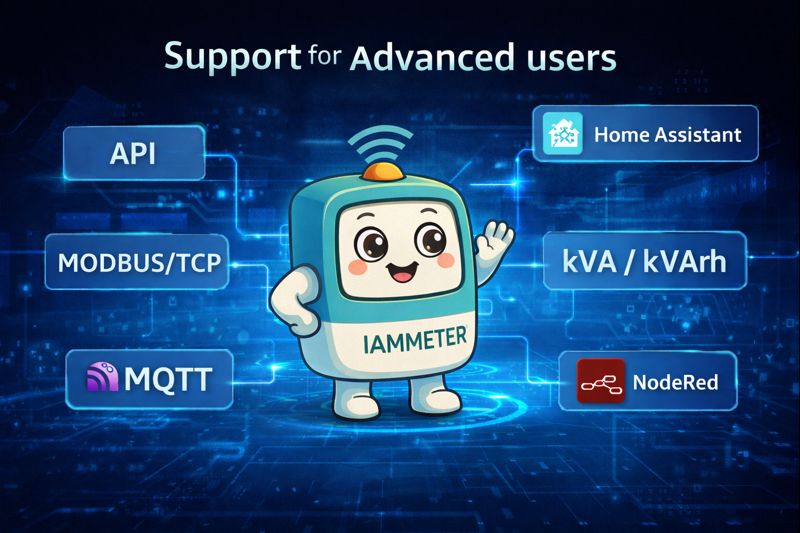
What makes this more credible than a generic chatbot wrapper is the data model underneath. IAMMETER already exposes open interfaces including HTTP, TCP, TLS, MQTT, Modbus/TCP, and HTTPS, so the assistant is not guessing from screenshots or manually copied values. It is working from a system that was already designed to publish usable energy data.
For homeowners, the benefit is straightforward. AI becomes a shortcut to answers you would otherwise have to derive manually:
- Why is my overnight base load still 280 W when nobody is awake?
- Which phase is carrying the most load?
- Did solar generation fall because of weather, shading, or a system issue?
- On which days did import peak during the most expensive tariff window?
That is a better fit for AI than vague "smart home intelligence" claims, because the questions are tied to measurable signals.
2. The best AI energy products do not just explain data, they can act on it
Once AI can see data clearly, the next step is control. This is where inverter-led ecosystems currently have an advantage over many standalone meters.
According to official product pages:
- SolarEdge ONE uses production forecasts, weather, dynamic electricity rates, and household consumption habits to optimize battery behavior and charging windows.
- Huawei Smart Home Energy Management combines second-level app monitoring with AI-based energy management and supports dynamic pricing feeds in multiple markets including Nord Pool, EPEX Spot, Octopus, Tibber, and Amber Electric.
- Sungrow iHomeManager highlights solar power forecasting, AI-optimized power strategy, and storm protection with up to 72 hours of pre-warning.
- GoodWe EzManager3000 positions itself as a home energy management gateway for PV, storage, EV chargers, heat pumps, and smart plugs, while GoodWe SEMS+ AI Agent focuses on intelligent analysis of logs and generation data for O&M.
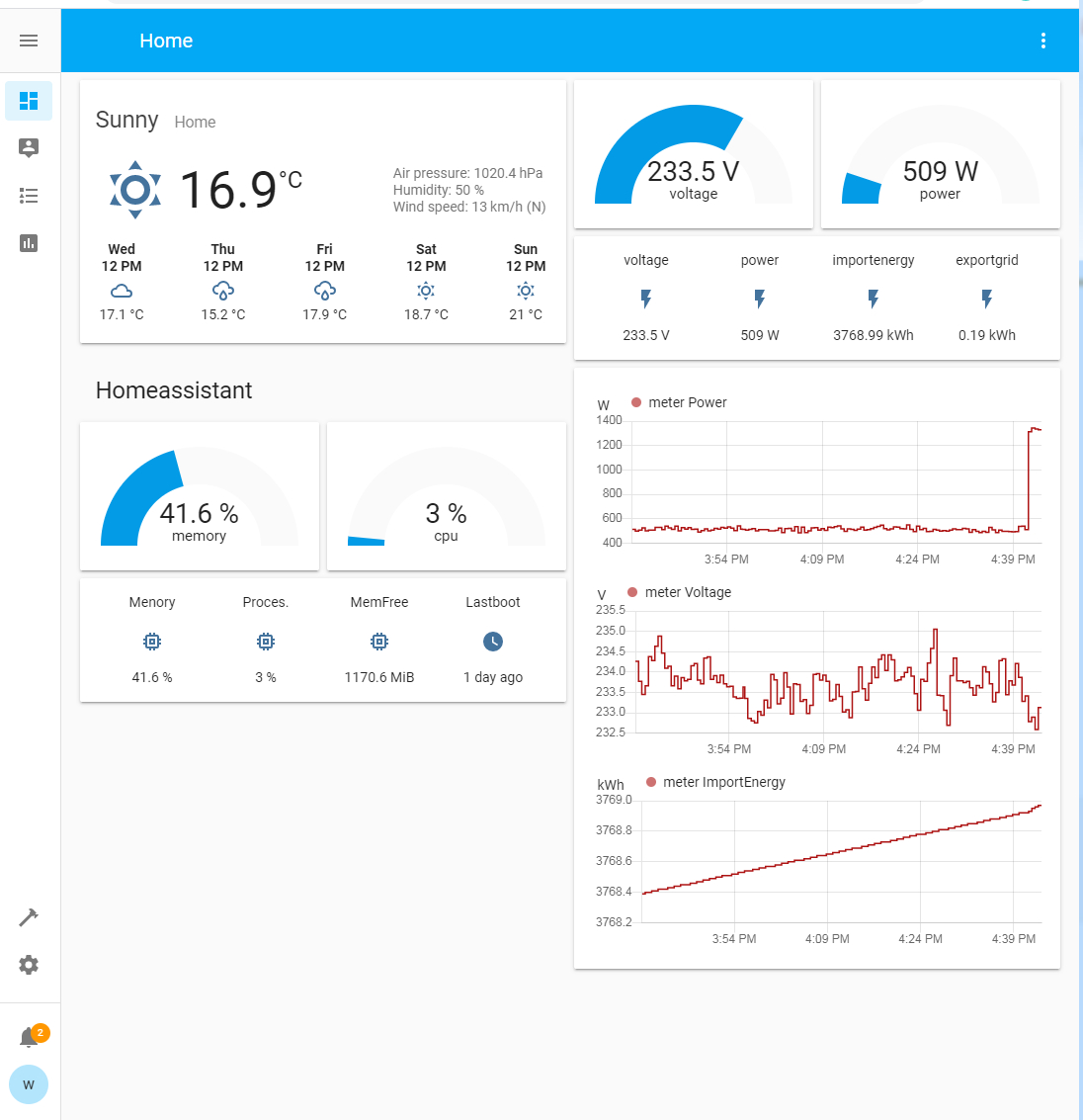
This is the real dividing line in 2026:
- Meter-first AI is usually better at explaining consumption, validating billing patterns, and feeding open dashboards.
- Inverter-first AI is usually better at automatic control, especially when battery dispatch, EV charging, or tariff arbitrage are part of the goal.
That does not make one category "better." It means they solve different household problems.
3. Where IAMMETER stands out
IAMMETER is interesting because it sits between those two worlds.
It is not a vertically integrated inverter ecosystem like Huawei or SolarEdge, but it is also not a closed, app-only meter. Its strongest advantage is that it gives users a practical AI entry point without demanding that they buy a new inverter or commit to one vendor's full energy stack.
Three details matter here.
First, the assistant is already public
This is not a roadmap slide. The IAMMETER Assistant is already presented as a working tool that can connect to user data and answer meter-specific questions.
Second, the hardware is open enough for AI to be useful
IAMMETER's own product documentation emphasizes APIs and protocol support rather than keeping data trapped in a mobile app. That matters far more than the AI label itself. If a platform cannot expose clean power data, every "assistant" built on top of it becomes shallow very quickly.
Third, IAMMETER can bridge from analysis to control
With the WPC3700 Wi-Fi power controller, IAMMETER can go beyond reporting and into solar surplus usage. IAMMETER describes this controller as a device that can automatically regulate resistive loads such as water heaters from 0% to 100% according to the amount of exported solar power. In practical terms, that means the system can use live meter data to consume excess PV locally instead of sending it back to the grid at a poor export rate.
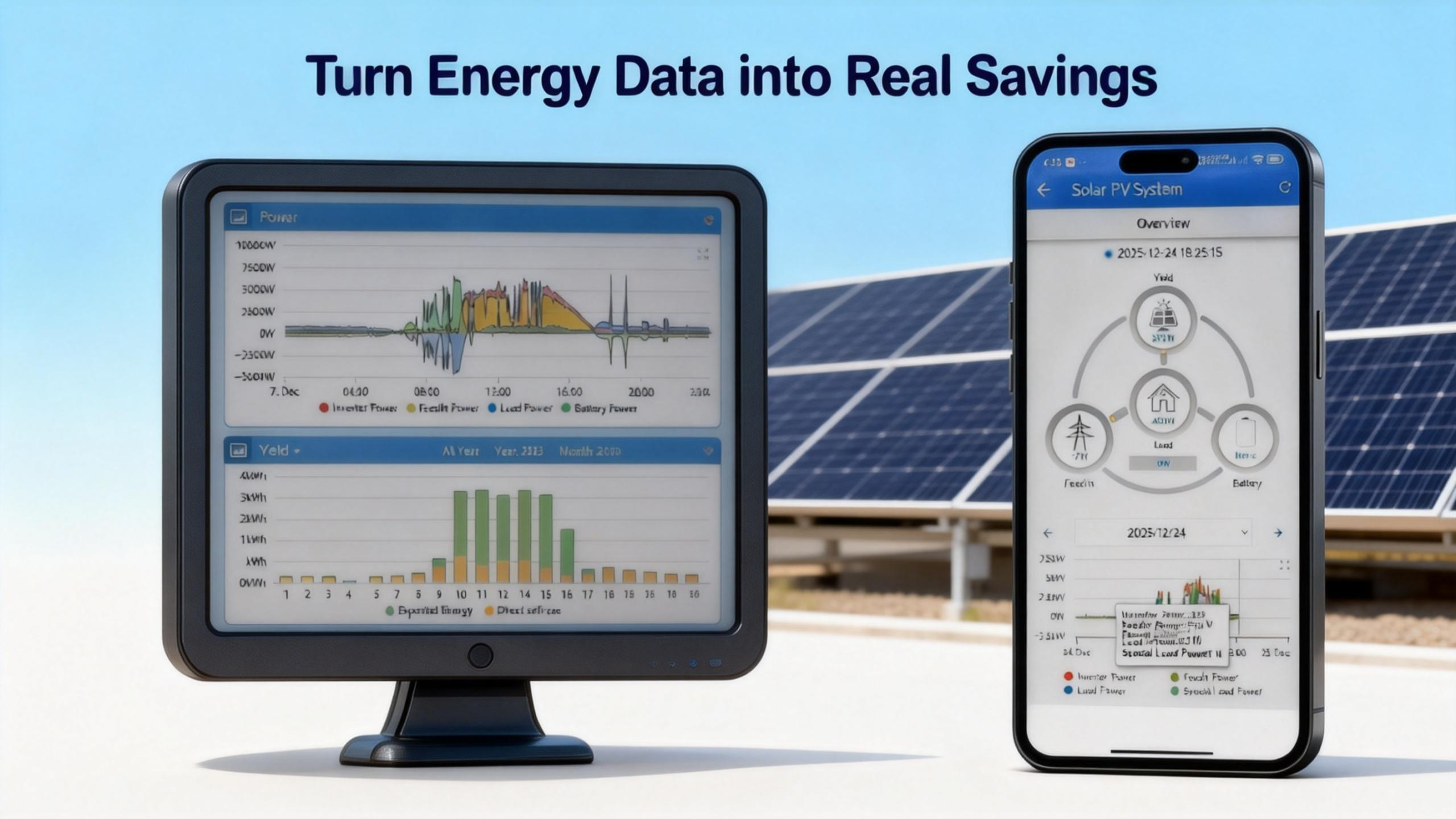
For homeowners, that is an important distinction. An AI recommendation that says "shift water heating into your solar window" is useful. A system that can actually detect export and modulate the heater is much more valuable.
4. IAMMETER product comparison: which hardware is the best fit for AI-driven monitoring?
IAMMETER's catalog is not huge, which is helpful. The main question is not "which one is newest?" It is "which one gives me the right mix of measurement, openness, and control for my house?"
| Product | Electrical setup | Key specs from official docs | Why it matters for AI workflows | Best fit |
|---|---|---|---|---|
| WEM3080 | Single-phase | 80-265 VAC, 1 x CT, Class 1 energy measurement, local API, Modbus TCP/RTU support, 1-5 minute upload interval | Enough for bill analysis, base-load discovery, and single-phase solar import/export tracking | Standard single-phase homes |
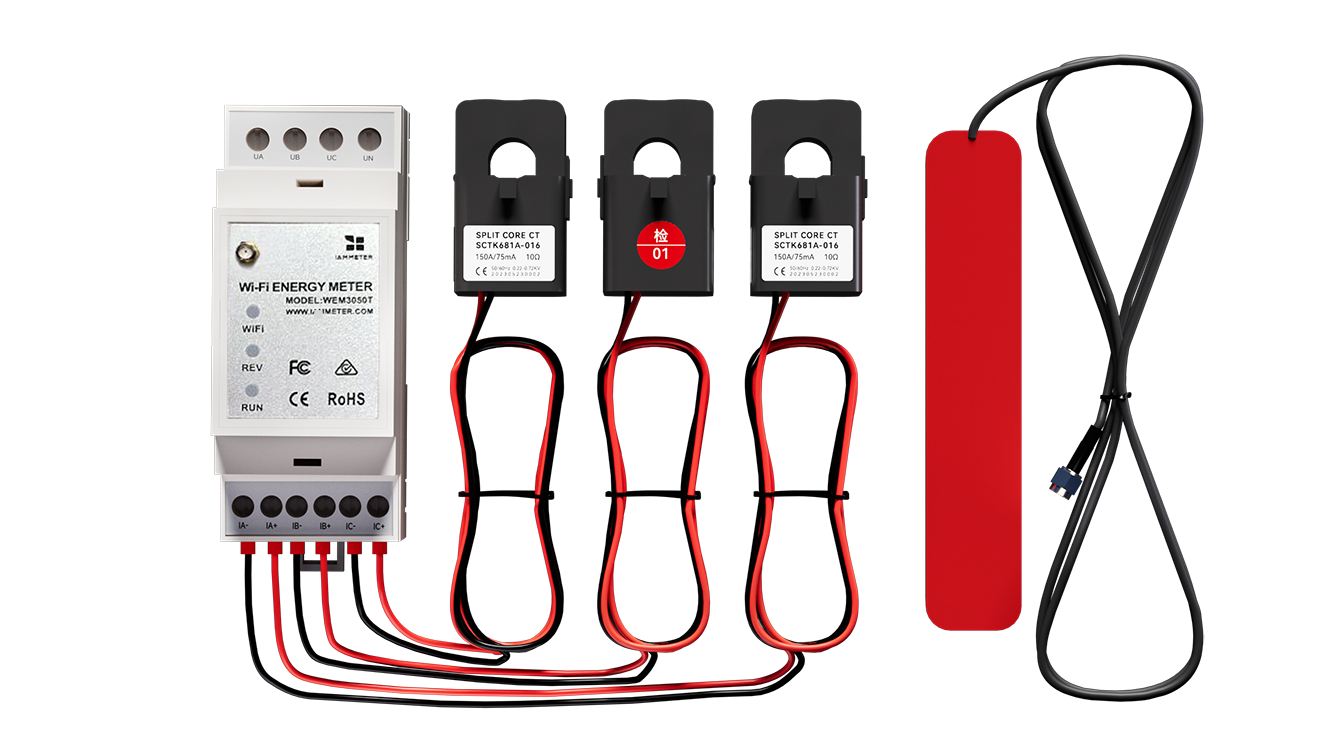
| WEM3050T | Three-phase or split-phase | 80-277 VAC / 140-480 VAC, 3 x 150 A fixed CTs, compact 2P body, Basic cloud service, HTTP/TCP/TLS/MQTT/Modbus/HTTPS support | A strong value option when you want three-channel data for AI analysis and custom dashboards without stepping into a heavier pro model | Budget-conscious three-phase or split-phase homes |
| WEM3080T | Three-phase or split-phase | 80-277 VAC / 140-480 VAC, 150 A / 250 A / 500 A CT options, 4P form factor, Pro cloud service, NEM and reactive power monitoring | Better fit when you want richer long-term solar analytics and more installation flexibility | Larger solar homes and multi-phase systems |
| WPC3700 | Single-phase load control | 220-260 VAC, output adjustable from 0% to 98%, designed for resistive loads, app/API control | Lets AI move from advice into action by using surplus solar in real time | Water heaters and other resistive loads |
The meter that feels "more AI-ready" is usually the one that gives cleaner, more accessible data to begin with. In that sense, the difference is less about model branding and more about whether you need:
- single-phase vs. three-phase measurement,
- open local data vs. app-only reporting,
- and analysis only vs. analysis plus direct load control.
5. A practical comparison: open meter AI vs. inverter ecosystem AI
This is the comparison that matters most for buyers.
| Approach | Example | Strength | Trade-off | Best for |
|---|---|---|---|---|
| Open meter + AI assistant | IAMMETER Assistant + WEM3080/WEM3050T/WEM3080T | Excellent for explaining consumption, exporting data, building dashboards, and mixing with Home Assistant or custom tools | You still decide how far to automate the system | Users who value flexibility and visibility |
| Meter + AI + direct surplus control | IAMMETER meter + WPC3700 | Very practical way to turn excess PV into usable hot water or other resistive loads | Control scope is narrower than a whole-home HEMS | Solar homes with daytime export and simple controllable loads |
| Inverter-led AI optimization | SolarEdge ONE, Huawei Smart Home Energy Management | Stronger automatic optimization for batteries, tariffs, and integrated energy assets | Usually more ecosystem lock-in | Homes already committed to that inverter stack |
| HEMS gateway + AI scheduling | Sungrow iHomeManager, GoodWe EzManager3000 | Better coordination of PV, storage, EV, and heating loads from one platform | Less open than meter-first setups | Users prioritizing turnkey optimization |
| AI for O&M and diagnostics | GoodWe SEMS+ AI Agent | Useful for troubleshooting and maintenance interpretation | Less directly consumer-facing for bill savings | Installer-led or fleet-style monitoring |
If the goal is "tell me what my house is doing and let me keep my options open," IAMMETER makes a strong case.
If the goal is "automatically control my battery, EV charger, and dynamic tariff strategy inside one vendor stack," inverter-led platforms still have the edge.
6. Why this matters in the real world: the savings are usually operational, not magical
The most believable AI savings stories are still built on ordinary energy fundamentals:
- finding a high overnight base load that nobody had noticed,
- shifting water heating or EV charging into a solar-rich or off-peak window,
- reducing peak import during expensive tariff periods,
- spotting one weak string, one offline meter, or one failing schedule before it quietly hurts performance for months.
That is why the best AI energy tools often feel less glamorous than the marketing suggests. They are not "thinking" in a science-fiction sense. They are doing a better job of combining:
- meter or inverter telemetry,
- weather and tariff context,
- historical household behavior,
- and a control surface such as a battery, charger, relay, or power controller.
When those four layers are present, AI can save users time and money. When they are missing, AI usually becomes a nicer-looking dashboard rather than a real optimization layer.
7. What to check before you buy an "AI energy" product
Before paying extra for any AI-branded meter, inverter, or home energy management platform, check these five things:
Can it expose clean data?
Look for MQTT, Modbus TCP, HTTP APIs, or a well-documented cloud API.Can it control anything useful?
Analysis is helpful, but the big gains come when the system can control a battery, charger, relay, or resistive load.What is the update interval?
Second-level monitoring helps with live control. One-minute or five-minute intervals are often enough for reporting and cost analysis.How locked-in is the ecosystem?
Inverter-led AI can be excellent, but many systems work best only if the battery, charger, and app all come from the same vendor family.Will this still be useful if you change one piece of hardware later?
Open meter platforms age better because they survive inverter changes, dashboard changes, and app changes.
Bottom line
AI is starting to matter in residential energy, but only in the parts of the system where there is enough real data and enough control to make decisions count.
For pure homeowner visibility, IAMMETER is one of the most interesting brands in the category right now because it already combines a public GPT-based assistant, open data interfaces, and practical surplus-solar control options. For households that want deeper automatic scheduling across batteries, EV charging, and tariffs, the strongest AI stories are still coming from inverter-centered ecosystems such as SolarEdge, Huawei, Sungrow, and GoodWe.
The safest buying rule is simple: buy the product that gives you the clearest data first, then the best automation second. In energy monitoring, AI works best when the measurement layer is already solid.
Official references
- IAMMETER Assistant GPT
- Using ChatGPT to build an IAMMETER monitoring dashboard
- IAMMETER open interfaces and protocol overview
- IAMMETER WEM3050T product page
- IAMMETER WEM3080 documentation
- IAMMETER WEM3080T documentation
- IAMMETER WPC3700 datasheet
- SolarEdge ONE
- Huawei Smart Home Energy Management
- Sungrow iHomeManager
- GoodWe EzManager3000
- GoodWe SEMS+ AI Agent