
If you want the short answer first, use this rule: start with Tesla Powerwall 3 if you want the strongest single-unit backup story and the cleanest all-in-one ownership experience, start with BYD Battery-Box Premium HVS/HVM if your real priority is landing in the right capacity band with room to expand, and start with SAJ B2 HV Series if you want modular storage with a more value-conscious feel and your installer already works comfortably in the SAJ ecosystem.
These are not perfectly identical products. Powerwall 3 is a more integrated battery-and-power-electronics platform. BYD Battery-Box and SAJ B2 HV are modular high-voltage battery families that depend more on the inverter pairing and overall system design. Even so, these are still three of the quote paths Australian homeowners are likely to compare side by side, so the practical decision is real.
| If you care most about... | Start with | Why |
|---|---|---|
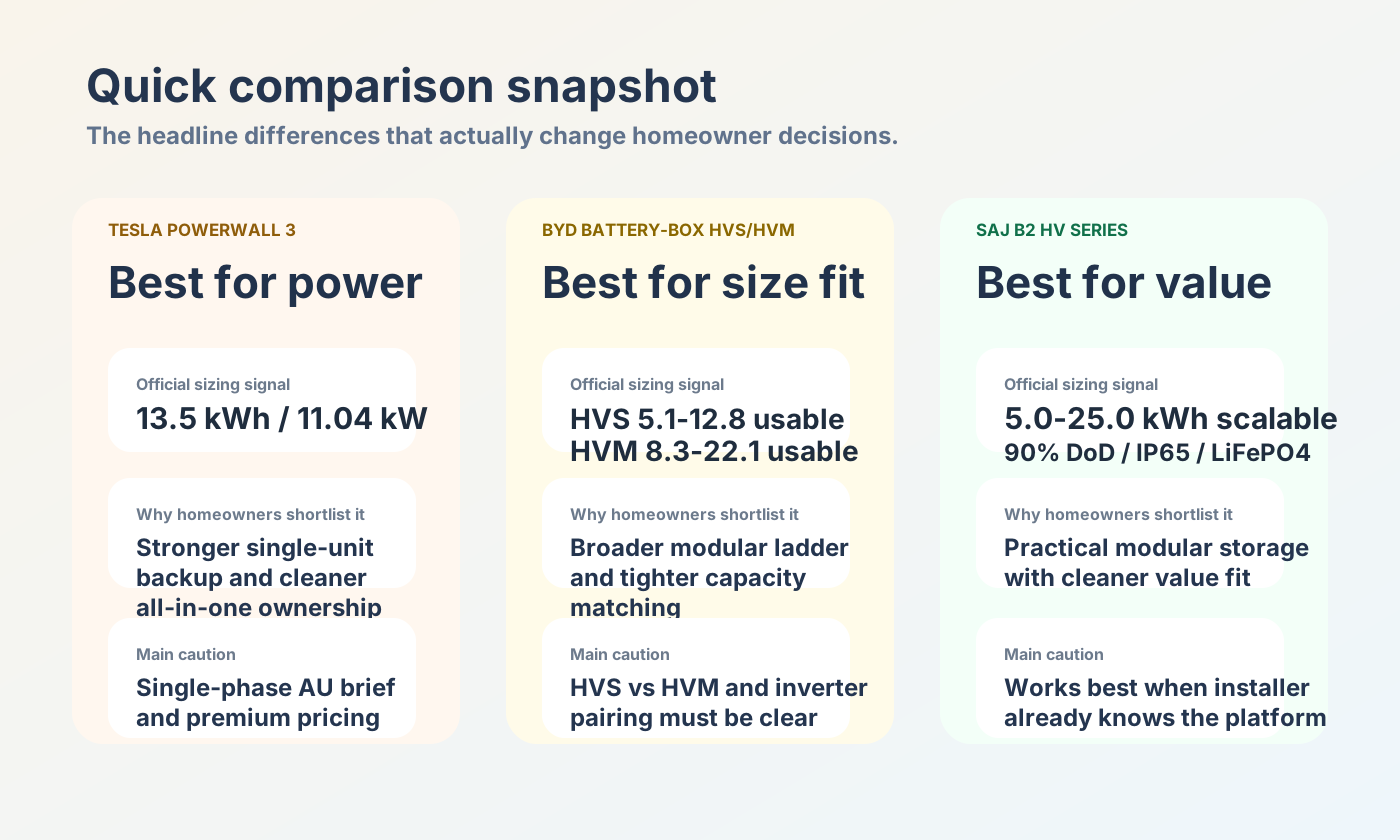
| Strong single-unit backup output | Tesla Powerwall 3 | Official Tesla AU figures put it at 13.5 kWh stored energy and up to 11.04 kW AC continuous output per unit. |
| Hitting a precise capacity band | BYD Battery-Box Premium HVS/HVM | BYD's AU datasheet gives a broad modular ladder, from 5.1-12.8 kWh usable on HVS and 8.3-22.1 kWh usable on HVM. |
| Value-oriented modular storage | SAJ B2 HV Series | SAJ positions it as 5.0-25.0 kWh scalable LiFePO4 storage with IP65 protection, 90% DoD, and remote firmware upgrades. |
Jump to your case
- I want the strongest one-battery backup story
- I want the cleanest capacity ladder
- I want the more value-conscious modular option
- I want the apples-to-oranges caveat first
- I want the quick compare table
- I want the quote checklist
The short answer
If your household cares most about backup performance, single-unit output, and a cleaner one-brand experience, Tesla Powerwall 3 is the strongest starting point. If your household cares most about matching the battery size to a measured evening deficit and preserving expansion flexibility, BYD Battery-Box Premium HVS/HVM is usually the cleaner fit. If your household wants modular high-voltage storage without drifting straight into a premium-brand price story, SAJ B2 HV Series is the more practical value-led option.
What this comparison is and what it is not
This is a buyer comparison, not a lab-perfect spec fight.
That distinction matters because Powerwall 3 is more integrated, while BYD Battery-Box and SAJ B2 HV behave more like modular battery platforms that need the right inverter and system design around them. So if you compare them as if they were three identical appliances, you miss the real decision.
The useful homeowner comparison is this:
- Tesla Powerwall 3 is the cleaner answer when you want a stronger single-unit backup brief and less component-level complexity.
- BYD Battery-Box Premium HVS/HVM is the cleaner answer when the battery needs to land in the right size band rather than forcing the house into one fixed step.
- SAJ B2 HV Series is the cleaner answer when you want modular storage, outdoor-ready hardware, and a more value-conscious path, especially in the SAJ ecosystem.
If you want the broader shortlist first, read Best Home Batteries for Solar Homes in Australia (2026): 3 Batteries Worth Shortlisting. If you still need to work out the right size band, read What Size Home Battery Do I Need in Australia? A Practical 2026 Guide.
The quick spec snapshot
| Battery | Official signal that matters most | Best fit | Main caution |
|---|---|---|---|
| Tesla Powerwall 3 | 13.5 kWh stored energy, up to 11.04 kW AC continuous output, support for up to 20 kW DC solar | Homes that want stronger single-unit backup and a simpler all-in-one ownership experience | Australian datasheet is single-phase, and the premium usually needs a stronger justification than simple cheap-kWh maths |
| BYD Battery-Box Premium HVS/HVM | HVS 5.1-12.8 kWh usable, HVM 8.3-22.1 kWh usable, direct parallel expansion to larger systems | Homes that want a tighter match between measured deficit and battery size | HVS and HVM are not the same size ladder, and outcomes depend on the inverter pairing |
| SAJ B2 HV Series | 5.0-25.0 kWh scalable, LiFePO4, IP65, 90% DoD, remote firmware upgrades | Buyers who want modular storage with a more value-oriented feel | It is strongest when the installer already knows the SAJ platform well |
Tesla Powerwall 3: best if output and backup matter most
Tesla Powerwall 3 is the easiest one here to explain to a normal homeowner because the value proposition is unusually clear. Tesla's Australian datasheet says one unit can support up to 20 kW DC of solar, provide up to 11.04 kW AC continuous output, and store 13.5 kWh of energy. Tesla also says systems can scale to up to 4 Powerwall 3 units plus up to 3 Expansion units, with a 10-year warranty and support for Backup Gateway 2.
That is why Powerwall 3 keeps showing up at the top of premium shortlists. It is not just about stored energy. It is about how much work one battery can do before you need to start explaining compromises.
Powerwall 3 usually makes the most sense for:
- all-electric homes that care about a stronger backup brief
- households that want the cleanest one-brand ownership experience
- buyers who would rather pay more once than keep second-guessing the platform later
It makes less sense when your biggest priority is squeezing into a very specific capacity band at the lowest possible quote. If you want the device-level breakdown, see Tesla Powerwall 3.
BYD Battery-Box Premium HVS/HVM: best if sizing flexibility matters most
BYD Battery-Box Premium HVS/HVM is the most useful option in this group when the battery decision is really a sizing decision.
BYD's Australian high-voltage datasheet says:
- HVS runs from 5.1 to 12.8 kWh usable
- HVM runs from 8.3 to 22.1 kWh usable
- HVS can scale to 38.4 kWh
- HVM can scale to 66.2 kWh
- the platform uses cobalt-free lithium iron phosphate (LFP)
- the HVM line is positioned as capable of high-powered emergency backup and off-grid functionality
That modular ladder is why BYD is so often the right answer when the quote needs to land at something like 8 kWh, 10 kWh, 13 kWh, 16 kWh, or 20 kWh instead of one fixed battery step.
BYD usually makes the most sense for:
- solar homes that have already measured a specific evening deficit
- buyers who want expansion flexibility without changing battery family later
- households where quote fit matters more than brand theatre
The main caution is that you need a clearer quote conversation. HVS and HVM are not interchangeable, and the inverter pairing matters more here than it does with a more integrated product like Tesla. For the device-level view, see BYD Battery-Box Premium HVS/HVM.
SAJ B2 HV Series: best if value and ecosystem fit matter most
SAJ B2 HV Series earns its place because it speaks to a different kind of buyer: someone who still wants modular high-voltage storage, but wants the overall story to feel more practical and less premium-branded.
SAJ's official product page describes the B2 HV Series as 5.0-25.0 kWh scalable energy storage with LiFePO4 cells, IP65 protection, 90% depth of discharge, wall or ground installation, and remote firmware upgrades.
That is a strong specification set for households that care about real-world residential use more than prestige. It gives SAJ a credible place in quotes where the buyer wants:
- modular storage around the normal 10 kWh to mid-teens home band
- outdoor-ready hardware and practical installation flexibility
- a cleaner value story than the premium headline names
The trade-off is not that SAJ is weak. The trade-off is that it depends more on ecosystem fit and installer familiarity. If your installer already knows SAJ well, the platform is easier to justify. If they do not, the friction goes up faster than it does on a more mainstream premium option. For the device page, see SAJ B2 HV Series.
Three normal quote patterns
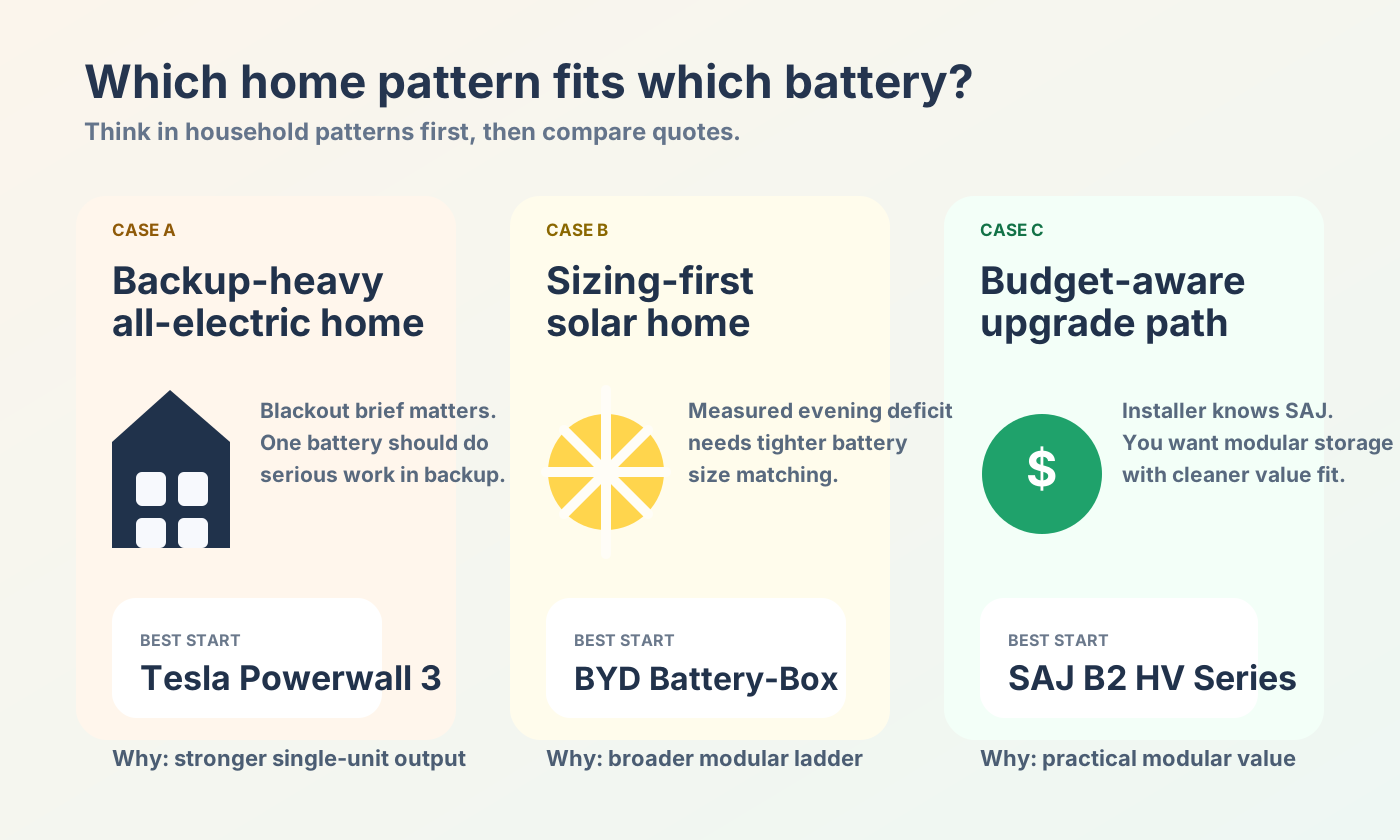
Case A: blackout-conscious all-electric home
You want one battery that can do serious work in backup mode without needing a complicated explanation. This is the clearest case for Tesla Powerwall 3.
Case B: sizing-first solar home
You already know your real evening deficit is in a tighter band, and you do not want to overshoot battery size just to get a product you recognize. This is where BYD Battery-Box Premium HVS/HVM often fits best.
Case C: practical upgrade with a tighter budget frame
You want modular storage, sensible specs, and a cleaner value story, especially if your installer already works in the SAJ ecosystem. This is the clearest case for SAJ B2 HV Series.
What changes if backup matters more than payback
Backup reshuffles this comparison quickly.
If your main brief is backup performance, Tesla gets stronger because the official output figure is unusually strong for one residential unit and the overall backup story is more integrated.
BYD and SAJ can still be the right answer, but the outcome depends more on:
- the compatible inverter choice
- the phase setup
- what the installer is actually including for backup behavior
- whether the quote is really solving outage performance or just adding stored energy
So if your brief is mostly bill savings and export relief, BYD or SAJ may be easier to justify. If your brief is backup first, Tesla is often the simpler answer to defend.
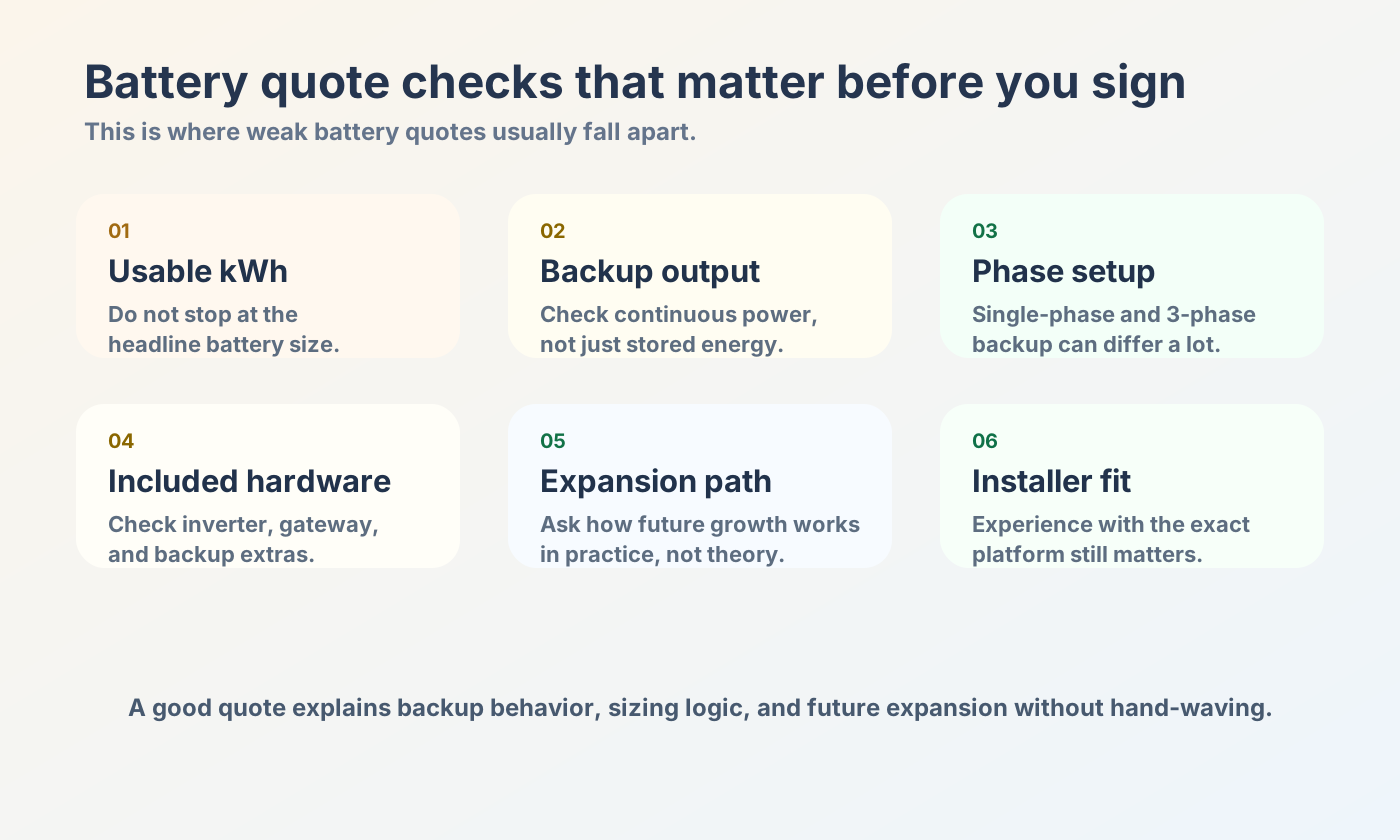
Before you accept any battery quote, check these 7 things
- Check the usable capacity, not just the headline battery size.
- Check the continuous output power in backup mode, not just stored kWh.
- Check whether the quoted outcome changes on single-phase vs 3-phase homes.
- Check which inverter, gateway, or backup hardware is included in the quote.
- Check whether the battery is being sized around your measured night imports, not a sales guess.
- Check how future expansion works in practice, not just in brochure language.
- Check whether your installer actually has repeated experience with the exact platform they are recommending.
If your real trigger is export pain rather than backup, also read Solar Export Limits in Australia (2026): When a Home Battery Starts Making More Sense. If your real trigger is overall battery economics, read Will a Home Battery Save You Money With Solar?.
Bottom line
For Australian solar homes in 2026, this is the simplest way to think about it:
- choose Tesla Powerwall 3 if you want the strongest premium all-in-one backup story
- choose BYD Battery-Box Premium HVS/HVM if you want the most flexible capacity ladder
- choose SAJ B2 HV Series if you want the more value-oriented modular path
That is not a universal ranking. It is a better first filter. Once you know whether your home needs stronger output, tighter sizing precision, or better value fit, the shortlist gets a lot easier.
Sources
- Australian Government: Cheaper Home Batteries Program
- Australian Government: Batteries
- Tesla: Powerwall 3 Datasheet AU
- BYD Battery-Box: Battery-Box Premium Datasheet HV AU
- SAJ: B2 HV Series