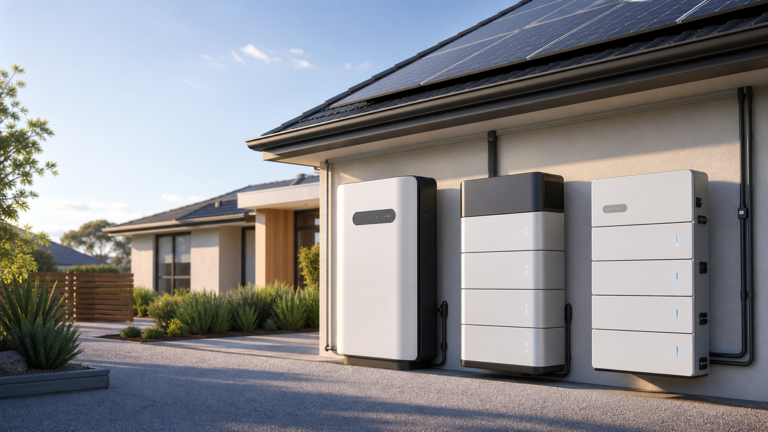
Most solar homeowners do not need ten battery options. They need a short list that maps to how they actually live. In Australia right now, the strongest starting shortlist is usually this: Tesla Powerwall 3 if you want the premium all-in-one benchmark, BYD Battery-Box Premium HVS/HVM if you want modular sizing flexibility, and SAJ B2 HV Series if you want a more value-oriented modular battery without giving up the basics that matter.
That does not mean these are the only good batteries on the market. It means these are three products that cleanly represent three different buying paths. For most homeowners, that is far more useful than a bloated "top 10" list with no real point of view.
| If you care most about... | Strongest first shortlist | Why |
|---|---|---|
| Premium one-box ownership and strong single-unit output | Tesla Powerwall 3 |
13.5 kWh usable, very strong AC output, polished app and backup story |
| Modular sizing from small to large | BYD Battery-Box Premium HVS/HVM |
Wide usable-capacity ladder with mature LFP modular scaling |
| Value-oriented modular solar storage | SAJ B2 HV Series |
Practical 5 to 25 kWh nominal range, 90% DoD, simpler pricing story |
Jump to your case
- I want the premium benchmark battery
- I want the most flexible capacity ladder
- I want a more budget-conscious modular option
- I want the quick compare view
- I care most about backup, not just kWh
- I just want the final shortlist
The short answer
If you want a premium, powerful, app-led battery, start with Tesla Powerwall 3. If you want the most flexible modular sizing ladder, start with BYD Battery-Box Premium HVS/HVM. If you want a more value-oriented modular battery that still covers the fundamentals well, start with SAJ B2 HV Series. The best battery is the one that matches your usable kWh target, backup goal, installer fit, and budget tolerance, not the one with the loudest brand.
What I optimized this shortlist for
This is not a pure specification ranking. It is a buyer ranking for normal solar homes.
The shortlist gives extra weight to:
- fit for common Australian home-battery sizes,
- clarity of product positioning,
- real-world usefulness for backup and self-consumption,
- expansion flexibility,
- and whether the product is easy to explain to a homeowner without a 40-minute detour.
That is also why I kept it to three. Once you understand these three buying shapes, the rest of the market gets easier to navigate.
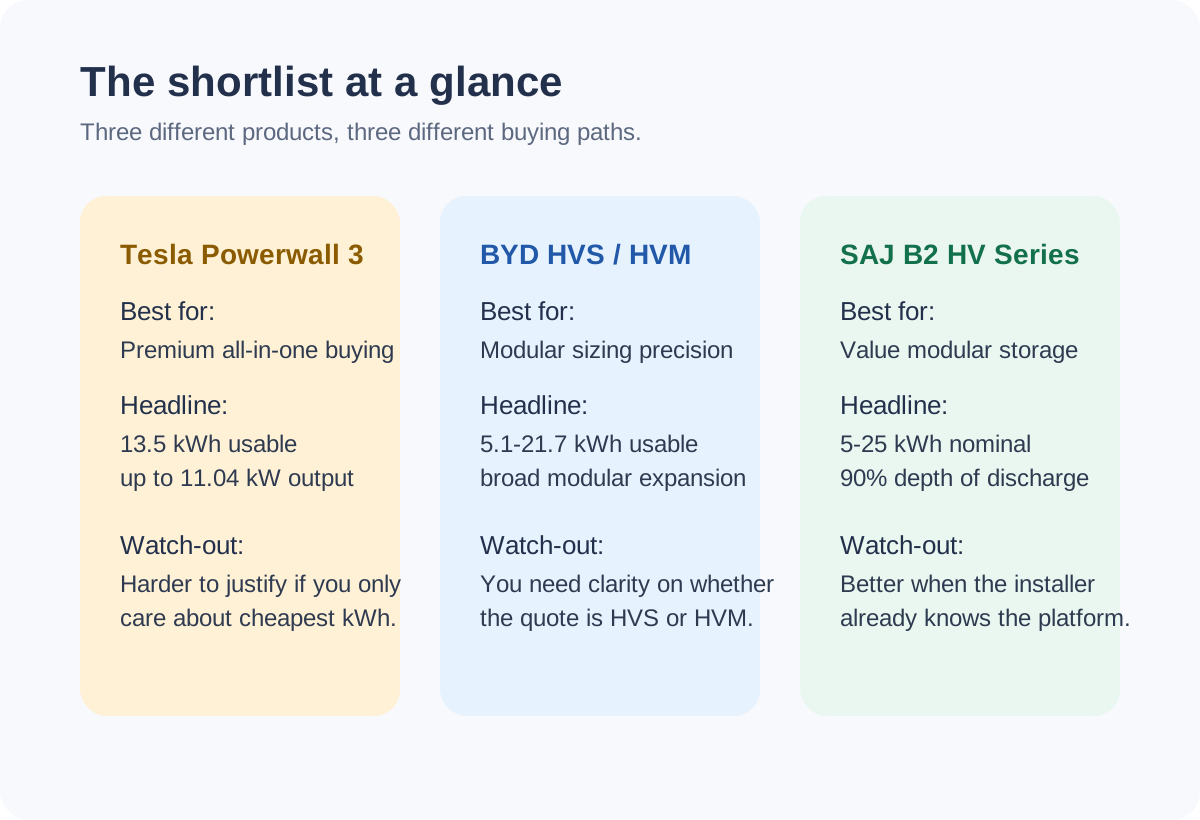
The quick compare
| Battery | Official sizing signal | Best fit | Watch-out |
|---|---|---|---|
| Tesla Powerwall 3 | 13.5 kWh usable, up to 11.04 kW AC continuous output | Premium homes that want strong single-unit backup and a polished one-brand experience | Costs are usually harder to justify if you only care about cheap kWh |
| BYD Battery-Box Premium HVS/HVM | 5.1 to 21.7 kWh usable across HVS/HVM ranges | Homes that want modular sizing precision and LFP-based scalability | Quote clarity matters, because HVS and HVM are not the same product band |
| SAJ B2 HV Series | 5.0 to 25.0 kWh nominal, 90% DoD | Buyers who want a simpler modular battery with a more value-conscious feel | Better when your installer knows the platform well |
Tesla Powerwall 3: best for premium all-in-one buyers
Tesla Powerwall 3 is still the cleanest "premium benchmark" battery for homeowners who want one battery to do more than basic solar shifting.
Officially, Tesla's Australian datasheet lists:
- 13.5 kWh usable battery energy
- up to 11.04 kW AC continuous output
- support for up to 20 kW DC of solar
- support for up to 4 Powerwall 3 units
- support for up to 3 Expansion units
That output number is the reason Powerwall 3 stays near the top of premium shortlists. Plenty of home batteries can shift solar. Fewer make a single-unit backup brief feel genuinely convincing.
It makes the most sense for:
- premium households that want a cleaner app-led ownership experience,
- homes that care about stronger backup behavior from one battery,
- and buyers who would rather pay more once than keep second-guessing the platform later.
If you want the product-level breakdown, see Tesla Powerwall 3.
BYD Battery-Box Premium HVS/HVM: best for modular sizing
BYD's Battery-Box Premium line is not the flashiest product in this group, but it is one of the most useful when the right answer depends on landing in the right capacity band.
BYD's official site says:
- HVS delivers 5.1 to 12.8 kWh usable
- HVM delivers 8.1 to 21.7 kWh usable
- HVS can scale to 38.4 kWh
- HVM can scale to 65.0 kWh
BYD also frames the platform around cobalt-free LFP chemistry, safety, life cycle, and modular expansion.
This is the shortlist choice for:
- households that want a smaller-to-mid-size battery without being locked into one giant step,
- buyers whose usage could grow over time,
- and quotes where modular fit matters more than brand prestige.
If you want the product-level view, see BYD Battery-Box Premium HVS/HVM.
SAJ B2 HV Series: best for value-oriented modular storage
SAJ B2 HV Series stays on the shortlist because it is one of the easier batteries to explain to value-conscious homeowners without dropping into bargain-bin territory.
SAJ's official positioning highlights:
- 5.0 to 25.0 kWh scalable storage
- 90% depth of discharge
- IP65 protection
- wall or ground installation
- remote firmware upgrades
That combination makes it appealing for homes that want a modular battery around the 10 kWh usable class now, while keeping room to grow later.
This is usually the best fit for:
- buyers who want a practical modular battery and cleaner pricing than premium-brand options,
- homes where the installer already knows the SAJ ecosystem,
- and households that care more about usable storage and sensible expansion than badge value.
See the product page at SAJ B2 HV Series.
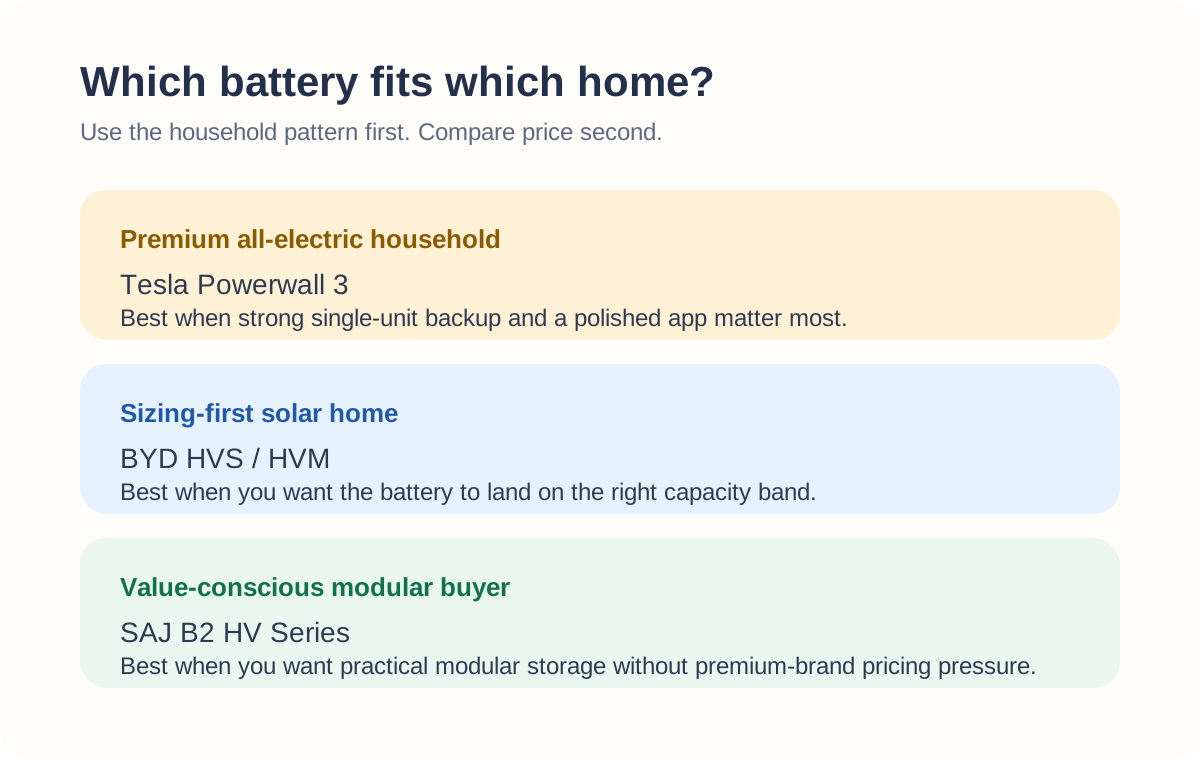
What matters more than the brand name
Brand matters. It just does not matter as much as people think.
What usually matters more:
- usable kWh, not nameplate kWh
- output power, not just storage size
- how the battery behaves in backup mode
- whether your installer actually knows the platform
- whether the battery size matches your evening imports
- whether your tariff and export situation justify storage in the first place
If you have not sized the battery yet, read What Size Home Battery Do I Need in Australia? A Practical 2026 Guide. If you are still deciding whether a battery is worth buying at all, read Will a Home Battery Save You Money With Solar?.
Three normal household patterns
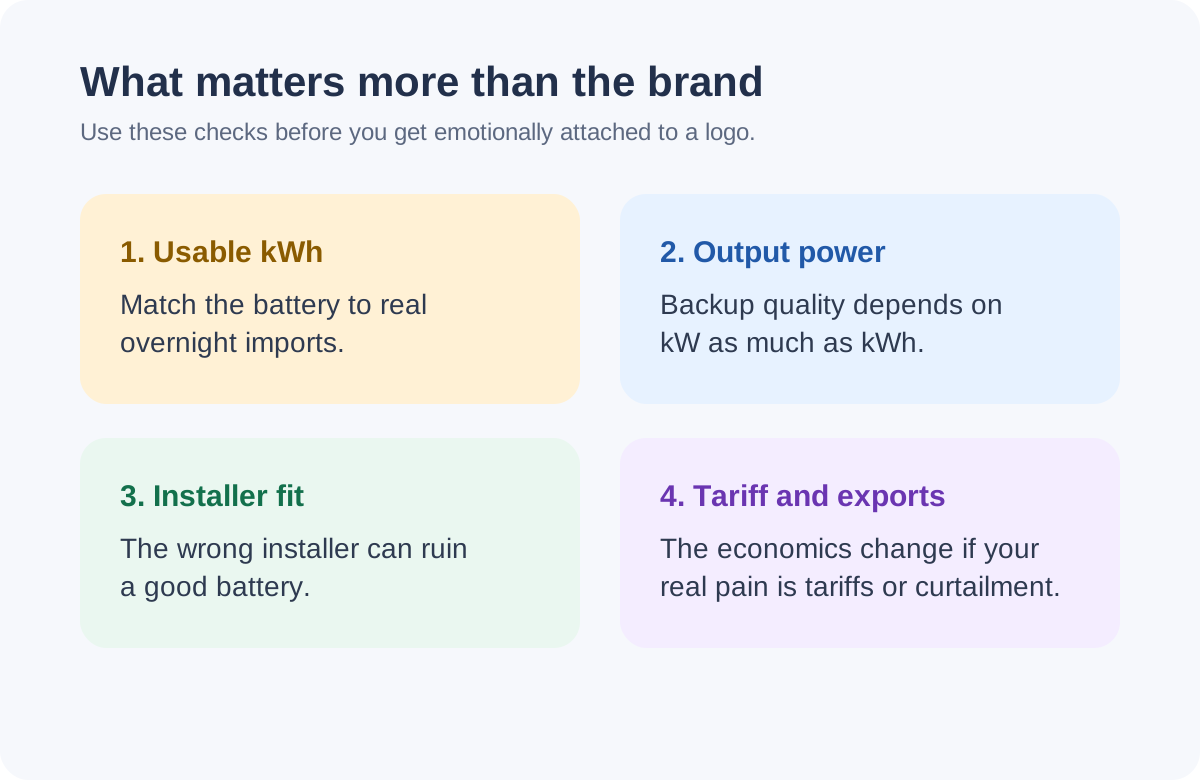
Case A: premium all-electric home
You want a battery that can do serious work in backup mode, and you do not mind paying for a stronger one-brand platform. This is where Powerwall 3 makes the most sense.
Case B: sizing-first solar home
You want the battery to match a very specific usable-capacity target rather than forcing your home into a fixed product step. This is where BYD HVS/HVM is easiest to like.
Case C: practical value-focused upgrade
You want modular storage, solid residential specs, and a cleaner pricing story than the premium headline products. This is where SAJ B2 HV Series earns its place.
What the Australian policy context changes
Australia's battery environment is shifting for two reasons:
- the federal Cheaper Home Batteries Program has made more households revisit storage economics,
- and more solar households are now comparing batteries against weak feed-in rates, export limits, and time-of-use penalties rather than treating batteries as backup-only products.
That does not automatically make the biggest battery the best battery. It just means battery buying is less niche than it was a few years ago.
Before you shortlist any battery, check these 6 things
- Check your evening and early-morning imports, not just your total bill.
- Check the battery's usable capacity, not only the marketing kWh headline.
- Check continuous output power, especially if backup matters.
- Check whether your home is single-phase or 3-phase, because backup behavior can change a lot.
- Check whether your installer actually works regularly with the battery you are considering.
- Check whether your real problem is backup, solar self-use, export limits, or tariff pain, because those do not all point to the same battery.
Bottom line
If I had to keep the shortlist brutally short for Australian solar homes in 2026, it would be:
- Tesla Powerwall 3 for premium all-in-one buyers
- BYD Battery-Box Premium HVS/HVM for modular sizing buyers
- SAJ B2 HV Series for value-oriented modular buyers
That is not a universal ranking. It is a practical buyer framework. Start with the battery that matches your real capacity band, backup goal, and installer fit. Then compare price.
Sources
- Australian Government: Batteries
- Australian Government: Cheaper Home Batteries Program
- Tesla: Powerwall 3 Datasheet AU
- BYD Battery-Box: Battery-Box Premium HVS and HVM
- SAJ: B2 HV Series