
If nobody is home during the day, a battery can still be a strong match for a solar household. In fact, an empty daytime home often creates the exact energy pattern a battery is designed to solve: solar production peaks while consumption is low, then grid imports rise after sunset when people return.
That does not mean every away-during-the-day household should buy a battery. The decision depends on how many kilowatt-hours you export in the charging window, how many you import after solar production falls, the price difference between importing and exporting, and whether the battery has enough usable capacity and power for the loads you want it to cover.
This guide shows how to test that fit with your own interval data before asking for quotes.
The short answer
A home battery is more likely to help when all four conditions are true:
- Your solar system regularly exports useful surplus energy during the day.
- You buy a meaningful amount of electricity in the evening or overnight.
- Imported electricity costs substantially more than the value of exported solar.
- The battery can charge from your surplus and discharge during your expensive import period without being oversized.
Being away during daylight hours can strengthen conditions one and two. It usually lowers direct solar self-consumption and leaves more energy available to charge a battery. The battery then moves part of that energy into the evening.
A battery is less compelling when daytime export is small, evening use is already low, your export credit is close to your import price, or a much cheaper schedule change could shift major loads into solar hours.
Quick fit check
| Your household pattern | Likely battery fit | Why |
|---|---|---|
| High midday export, high evening import | Strongest | The battery has both energy to capture and later load to serve |
| High midday export, low evening import | Mixed | A large battery may sit partly full or have little useful load |
| Low midday export, high evening import | Mixed | The battery may need grid charging or more solar to cycle fully |
| Low export, low evening import | Weak | There is little energy to shift in either direction |
| Time-of-use plan with expensive evening peak | Potentially strong | Each discharged kWh can avoid a higher-priced import |
| Frequent outages and valuable essential loads | Value may be non-financial | Backup can matter even when bill savings alone are modest |
The Australian Government explains the basic value clearly: a battery stores solar energy for use when panels are not generating enough, including at night, and can also move energy into periods when electricity costs more. The same physics applies in other markets; tariffs, incentives and connection rules vary by location.
Why an empty daytime home can suit a battery
Without a battery, a solar home follows a simple priority: live household loads use solar first, and any remaining generation is exported. If the home is quiet between morning and late afternoon, refrigerators, standby devices and perhaps a pool pump may be the only significant loads. A large share of solar production can therefore leave the property.
When people return, cooking, water heating, cooling, laundry, entertainment and EV charging can raise demand just as solar output falls. The household then buys electricity back from the grid.
A battery changes the timing, not the total amount of energy the home needs. It can capture some midday surplus and discharge it later. Because every charge-discharge cycle has losses, one exported kilowatt-hour does not become one full kilowatt-hour at the appliance. The economic question is whether the avoided import is worth more than the export credit you give up, after accounting for losses, battery degradation and ownership cost.
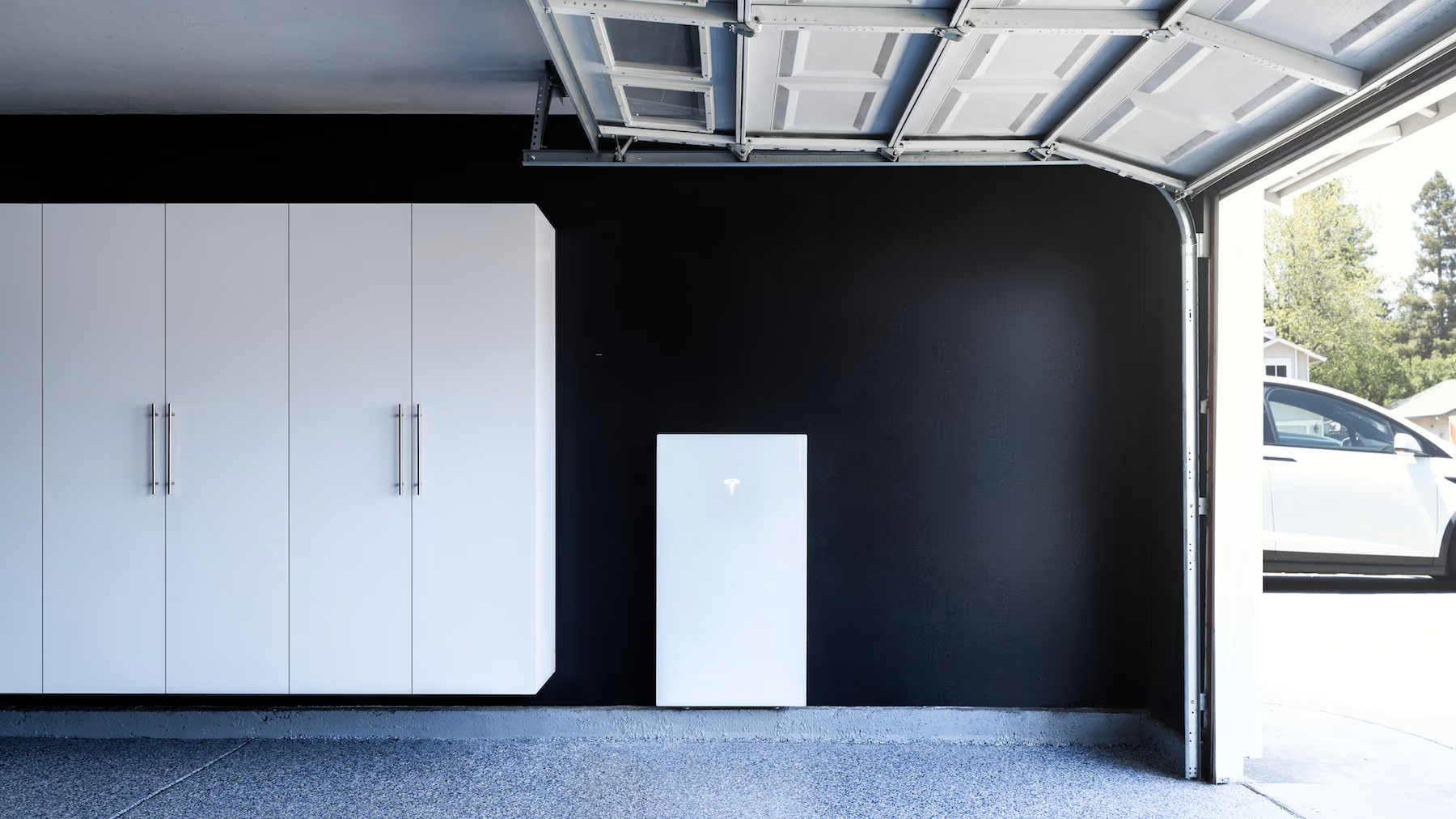
Residential batteries are most useful when their charging window matches real solar surplus and their discharge window matches real household demand.
Measure the energy window before choosing a size
Do not size a battery from total daily consumption. For this use case, two narrower measurements matter:
- Charge opportunity: solar exports during the period when the battery could charge.
- Discharge opportunity: grid imports from late afternoon until the next useful solar window.
Use at least two to four weeks of interval data, and include both workdays and weekends. A full season is better because heating, cooling and solar output vary across the year.
For each day, record:
- solar generation, if available
- grid export between roughly late morning and mid-afternoon
- grid import from late afternoon to the following morning
- the highest sustained household demand during the intended discharge period
- unusual loads such as an EV, electric hot water or pool equipment
Your utility smart meter can usually show net grid import and export. An inverter app may show solar production. A whole-home energy meter can make the relationship clearer by measuring grid flow and household load at the same time. Make sure timestamps, time zones and import/export directions align before combining datasets.
A practical sizing ceiling
A useful first estimate for daily usable battery capacity is:
usable capacity target = the lower of typical solar surplus and typical evening/overnight import
Suppose a home typically exports 11 kWh during the day and imports 8 kWh from 4 p.m. until solar resumes. An 8 kWh usable battery is a more defensible starting point than a 13 kWh unit, because the smaller number limits the energy that can be shifted on a typical day. After allowing for conversion losses and reserve settings, the practical target may be lower still.
Now imagine the same home exports only 4 kWh but imports 10 kWh overnight. Solar alone cannot reliably fill a 10 kWh battery. A larger unit might still work with off-peak grid charging, backup requirements or future solar expansion, but that is a different economic case and should be modelled separately.
Use percentiles rather than one perfect sunny day. A battery selected from the 70th or 80th percentile of repeatable surplus and evening demand is often more realistic than one sized to the annual maximum.
Capacity and power solve different problems
Battery proposals often emphasize kilowatt-hours, but capacity is only half the design.
- Energy capacity (kWh) tells you how long the battery can support loads.
- Power rating (kW) tells you how much load it can support at one moment.
A battery may hold enough energy for the evening but still be unable to run an oven, induction cooktop, air conditioner and EV charger simultaneously. When household demand exceeds battery output, the grid supplies the difference. That is normal in a grid-connected system, but it affects expected savings and backup performance.
Ask for these values explicitly:
- nominal and usable capacity
- continuous charge and discharge power
- short-duration peak power
- minimum reserve setting
- expected round-trip efficiency
- warranted energy throughput or cycle terms
- power and capacity at the end of the warranty
- expansion limits and whether later modules must match the original hardware
Do not assume a larger energy capacity automatically brings enough output power. Compare both figures against the household's interval data and intended essential loads.
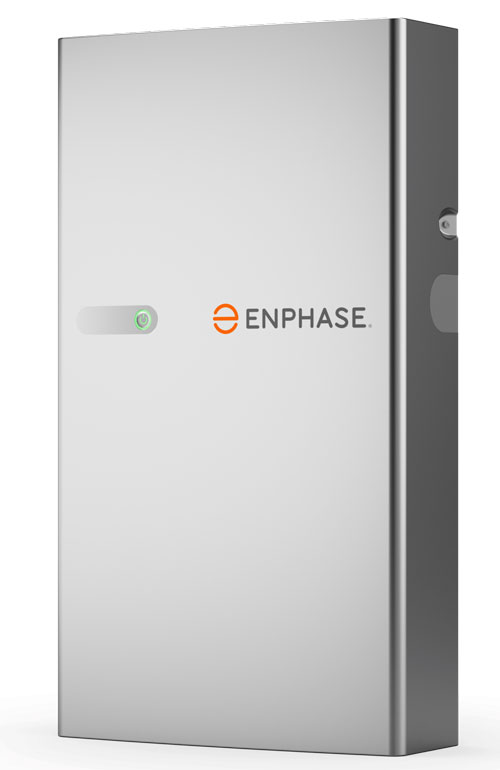
Modular systems can make staged capacity easier, but compatibility, commissioning rules and warranty terms still need checking before assuming future expansion is simple.
Run the value calculation with your own tariffs
For each kilowatt-hour discharged from solar, the gross bill value is approximately:
avoided import cost - lost export credit
Then reduce that value for storage losses and allow for battery wear.
As a simplified example, assume:
- evening import price: $0.35/kWh
- solar export credit: $0.06/kWh
- 8 kWh of solar is sent into the battery
- 7.2 kWh returns to household loads after losses
Without the battery, the exported solar earns $0.48. With the battery, 7.2 kWh avoids $2.52 of imports. The simplified daily gross benefit is therefore $2.04 before degradation, fixed charges, financing, maintenance and seasonal variation.
This is an illustration, not a universal tariff assumption. Use the actual import rate that applies during discharge and the actual export rate that applies during charging. If your tariff changes by time, calculate each interval rather than using a daily average.
For a more honest annual model:
- Export and import interval data for at least several representative months.
- Apply the battery's usable capacity, power limit and reserve.
- Apply a conservative round-trip efficiency.
- Prevent the model from charging and discharging more energy than the data permits.
- Price every import and export interval using the correct tariff.
- Compare annual savings with the installed price, warranty length and an allowance for declining capacity.
This avoids the common mistake of assuming the battery completes a full profitable cycle every day of the year.
Time-of-use tariffs can change the answer
A household away during the day may return during an expensive evening peak. That can improve the value of stored solar because the battery avoids the highest import rate rather than the daily average.
Some systems can also charge from the grid during an off-peak period and discharge during a peak period. This may help in winter or during cloudy weather, but verify:
- whether grid charging is permitted under local rules and incentives
- whether the battery software can schedule it reliably
- whether demand charges or controlled-load arrangements change the result
- whether grid charging affects renewable-energy claims or program eligibility
- whether the off-peak-to-peak spread remains worthwhile after losses
A tariff strategy is only durable if it still works when prices and plan structures change. Model a conservative case with a smaller price spread, not just the most attractive current plan.
Backup power is a separate requirement
A battery installed for self-consumption does not automatically provide useful outage backup. Backup requires compatible equipment, approved wiring and a defined backup boundary. Some systems support only selected essential circuits; others can support broader loads but still have strict power limits.
Before paying for backup, decide what must run:
- refrigeration
- lighting
- internet and communications
- medical equipment
- garage doors or pumps
- heating or cooling
- cooking
- EV charging
Then check both runtime and starting power. A 10 kWh battery could theoretically supply a steady 1 kW load for many hours, but real runtime is reduced by reserve settings, conversion losses and changing loads. High-power appliances can exceed inverter output even when plenty of stored energy remains.
Solar panels alone normally shut down during a grid outage unless the system has the correct islanding and inverter configuration. The U.S. Department of Energy notes that solar-plus-storage needs a properly configured inverter and storage system to operate independently of the grid. Ask the installer to demonstrate the outage transition, backed-up circuits and solar recharging behaviour during commissioning.
Monitoring matters more than the app's headline number
Good monitoring should let you distinguish at least four flows:
- solar generation
- household consumption
- grid import and export
- battery charge and discharge
If one of these is inferred incorrectly, the dashboard can show impossible energy balances or exaggerate savings. CT clamps installed backwards, phases mapped incorrectly, duplicated meters and mixed sampling intervals are common sources of confusion.
After installation, validate the system on a clear day:
- Around midday, confirm surplus solar charges the battery before the home exports, according to the configured mode.
- At sunset, confirm the battery begins serving household loads.
- Turn on a known load and verify the measured power changes in the expected direction.
- Check that grid import plus solar plus battery discharge balances household load and battery charging, allowing for conversion and timing differences.
- Compare daily grid totals with the utility meter over several days.
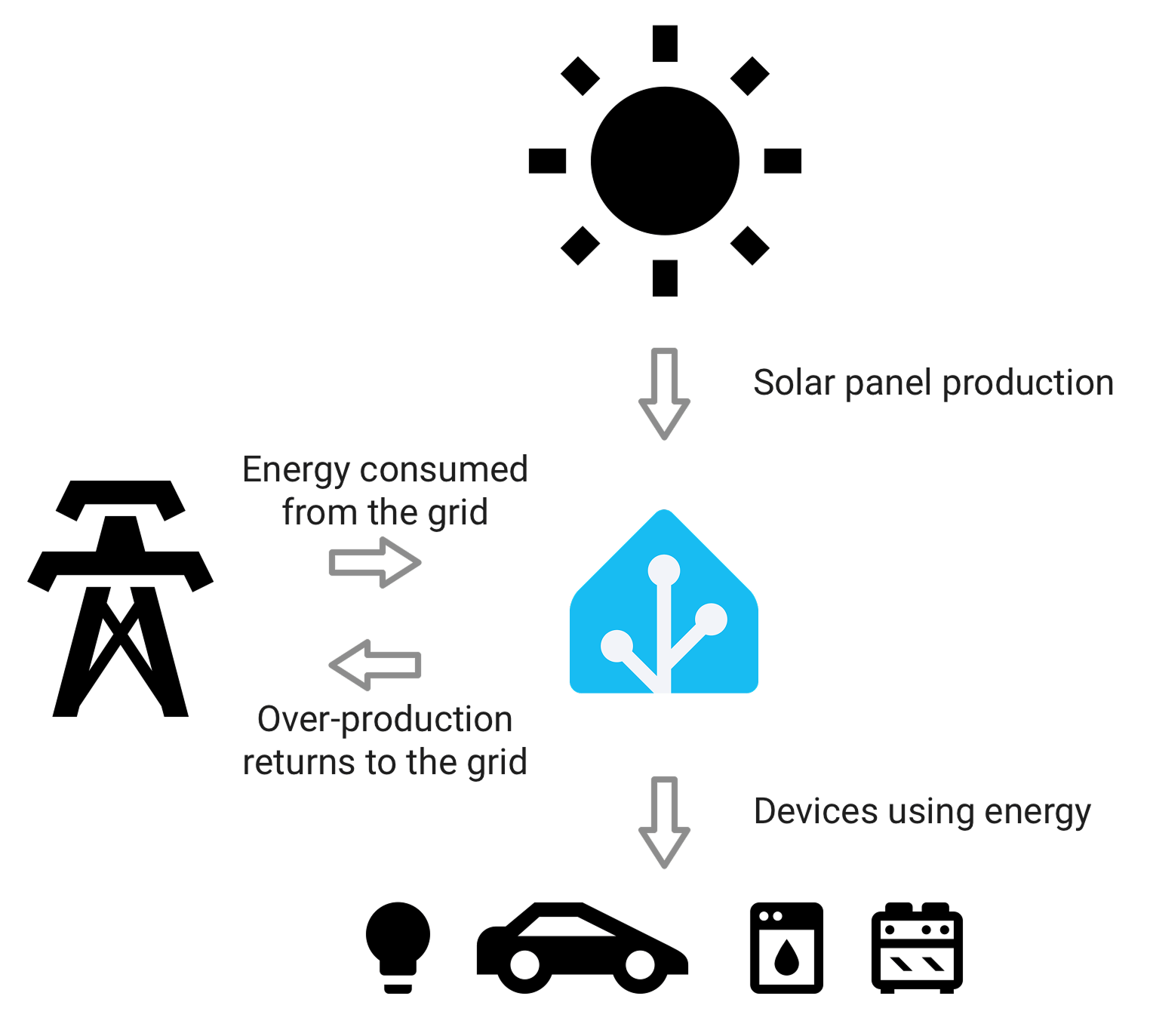
A complete energy-flow view is more useful than a battery state-of-charge screen alone because it reveals whether solar, grid, load and storage are being measured consistently.
For deeper preparation, see How to Use Smart Meter Data to Find the Hours That Cost You Most and How to Read Smart Meter Interval Data Before You Buy Solar or a Battery.
When a battery is probably not the first move
A battery may be technically workable but still rank behind cheaper actions.
Shift flexible loads first
If an EV, dishwasher, washing machine, pool pump or electric water heater can run during solar hours, scheduling may raise self-consumption without battery hardware. Measure the remaining export and evening import after testing those changes.
Fix an undersized or poorly performing solar system
A battery cannot store energy the solar array does not produce. If exports are low because the array is small, shaded, faulted or frequently curtailed, diagnose that first. Adding storage without enough repeatable surplus can leave capacity unused.
Reconsider the electricity plan
A different tariff may reduce evening costs enough to weaken the battery case. Conversely, a strong peak price can improve it. Compare plans using the same interval dataset rather than a generic household profile.
Reduce the evening load
Efficiency can be cheaper than storage. Better heating and cooling settings, hot-water scheduling, appliance replacement at normal end of life and standby-load reduction may shrink the battery capacity you need.
Avoid buying for rare maximum days
Oversizing to cover an occasional party, heatwave or overnight EV charge can leave expensive capacity unused most of the year. Let the grid handle rare peaks unless backup independence is an explicit priority.
Seven-day pre-quote audit
Before requesting proposals, run this simple test:
Day 1: Download utility interval data and confirm whether it is import-only or includes export.
Day 2: Match it with inverter generation data and correct any time-zone mismatch.
Day 3: Mark the midday export window and evening/overnight import window.
Day 4: Identify flexible loads that could move into solar hours.
Day 5: Estimate typical shiftable energy using several ordinary days, not the best day.
Day 6: Test the value under your current tariff and one less favourable tariff scenario.
Day 7: Write a requirements list covering savings, backup, usable capacity, output power, monitoring, local data access, warranty and future expansion.
Give the same dataset and requirements to each installer. That makes quotes easier to compare and reduces the chance that each proposal uses a different optimistic assumption.
Questions every quote should answer
- What measured data was used to choose this capacity?
- How many kWh are usable at commissioning?
- What continuous power is available on-grid and during backup?
- Which circuits will operate in an outage?
- Can solar recharge the battery while the grid is down?
- Can the system charge from the grid, and can that be scheduled?
- How are grid import/export and whole-home load measured?
- What happens if internet or the vendor cloud is unavailable?
- Is local data access available?
- What capacity or throughput is warranted, and for how long?
- Can the system be expanded later, and under what constraints?
- What assumptions were used for annual savings and payback?
- Which permits, connection approvals and safety inspections are included?
A proposal that cannot connect its battery size to your measured exports and evening imports is not yet a complete design.
Bottom line
If you are away during the day, a battery can help by storing solar that would otherwise be exported and using it when the household becomes active after sunset. That pattern can be better for storage than a home that consumes most solar as it is generated.
The strongest case is not “nobody is home.” It is repeatable midday surplus plus repeatable later imports at a meaningfully higher price. Measure those two energy windows, then choose capacity, power and backup features around them.
Start with the data, test cheaper load-shifting options, and ask installers to show their assumptions. A battery should be sized as part of an energy system, not sold as a box with a universal payback.
Sources and further reading
- Australian Government: Solar PV and batteries
- Australian Government: How solar pays for itself and batteries reduce bills
- U.S. Department of Energy: Solar and Resilience Basics
- U.S. Department of Energy: Homeowner's Guide to Solar
- Clean Energy Council: Guide to Installing a Household Battery Storage System
- Pexels cover photo by Elite Power Group