Most normal homes should start with a simple question before they compare brands: is this roof straightforward enough that a good string inverter already solves the real problem, or is the roof irregular enough that module-level electronics are worth paying for?
For many homes with one main roof plane, limited shade, and no special need for panel-level visibility, a good string inverter is still the cleaner value choice. But when the array is split across roof faces, gets regular partial shade, or the owner cares about panel-level monitoring, easier staged expansion, or module-level fault visibility, microinverters start to make much more sense.
The short answer
If your home has a simple roof and a straightforward daytime solar pattern, a string inverter is usually the default answer.
If your home has multiple roof planes, recurring partial shade, awkward module grouping, or you care deeply about panel-level monitoring, microinverters are often worth the premium.
The mistake is assuming microinverters are always "better" in every situation. They are often more capable in more complex roofs, but that does not automatically make them the best-value answer for a very normal house.
What is the real difference?
A string inverter takes DC power from a group of panels wired together and converts it to AC in one main inverter. In most homes, that inverter sits on a wall near the switchboard, meter, or garage.
A microinverter does that conversion at each panel. Instead of one central box doing almost all of the DC-to-AC work, each module has its own inverter.
That design difference affects five things homeowners actually feel:
- how the system behaves when panels do not all perform equally
- how easy it is to see a weak module
- how expandable the array is later
- where the electronics live and how servicing feels over time
- how much you pay upfront
Microinverter vs string inverter at a glance
| Question | Microinverters | String inverter |
|---|---|---|
| Best fit | Complex roofs, split orientations, recurring partial shade | Simple roofs, low shade, cost-sensitive installs |
| Conversion point | At each panel | At one central inverter |
| Monitoring | Usually panel-level | Usually system-level or MPPT-level unless extra hardware is added |
| Shade and mismatch handling | Better when panels behave differently from each other | Best when the array behaves uniformly |
| Expansion later | Usually easier for small staged additions | Usually easier when planned upfront around inverter sizing |
| Upfront cost | Usually higher | Usually lower |
| Battery path | Often works best inside a matching ecosystem or AC-coupled storage path | Often simpler when choosing a hybrid or battery-ready inverter from day one |
| Service trade-off | More electronics on the roof, but one failed unit affects less of the system | Fewer conversion devices, but one inverter fault can affect the whole array |
Why microinverters can outperform on awkward roofs
This is where the article stops being marketing and starts being a design question.
NREL's Building America material notes that microinverters can improve overall AC output when a PV system is mounted on more than one roof plane or when modules are unevenly shaded. That is the key condition. The gain is not magic. It comes from reducing the penalty that one weak panel can impose on a larger grouped section of the array.
NREL's PVWatts modeling note goes further and gives a practical range for this effect in partially shaded systems: distributed electronics such as microinverters and optimizers can recover roughly 25% to 40% of shading losses, with a default shade mitigation factor of 0.33 used as an average modeling assumption.
That does not mean your total annual generation rises by 25% to 40%. It means some portion of the energy that would otherwise be lost to shading mismatch can be recovered. On a roof with almost no shading or mismatch, that advantage may be small. On a roof with chimneys, vent shadows, dormers, or east-west split layouts, it can matter a lot more.
When a string inverter is still the smarter answer
A lot of homeowners overbuy inverter architecture because they imagine rare edge cases as daily realities.
A string inverter remains a very strong answer when most of these are true:
- your panels sit on one main roof face or two very similar roof faces
- shade is minimal or limited to short periods that do not hit many modules
- you are trying to keep installed cost disciplined
- you prefer fewer conversion devices in the system
- you may want a cleaner path into a hybrid inverter or DC-coupled battery later
That is why string inverters still dominate many normal residential installs. On a simple roof, they are not the "cheap compromise." They are often the right architecture.
For a broader shortlist of current inverter directions, see Best Solar Inverters for Home Use in 2026.
The part sales pages often skip: mismatch matters more than labels
Microinverter marketing often makes the technology sound automatically superior. String-inverter marketing often makes the opposite case and frames microinverters as unnecessary complexity.
Real homes sit in the middle.
The important variable is not the label. It is how similar or dissimilar your modules behave across the day and across the year.
If one section of the array regularly behaves differently because of:
- chimney or tree shade
- different roof pitch
- different roof azimuth
- dirt or debris affecting one section more than another
- future small extensions to the array
then module-level electronics become more compelling.
If nearly all modules behave similarly most of the time, the practical advantage of microinverters shrinks.
Monitoring is often the hidden reason homeowners prefer microinverters
Some buyers do not really want microinverters for yield. They want them for clarity.
Panel-level monitoring makes it easier to spot:
- one weak module
- one failed unit
- one section suffering repeated shade or dirt problems
- a warranty issue that would otherwise stay hidden for months
That is a real benefit, especially for owners who actively watch performance.
SolarEdge makes a similar case from the optimizer side: its platform provides monitoring down to the module level, enabling faster fault detection and remote diagnosis. That is useful context because it shows the real decision is not only "microinverter vs string." It is also centralized string monitoring vs module-level visibility.
If this kind of visibility matters to you, compare not just microinverters but also optimizer-based systems.
Warranty length matters, but it is not the whole reliability story
One reason microinverters remain attractive is warranty length.
Enphase says its IQ8 microinverters are backed by a 25-year limited warranty. That is longer than the typical warranty many homeowners associate with mainstream string inverters.
By contrast, Fronius states that its inverters in the U.S. come with a 10-year warranty, and the company also offers extension paths depending on region and registration.
That sounds like a simple win for microinverters, but the real-life ownership picture is more nuanced.
A longer warranty is valuable. But system service behavior also depends on:
- how easy replacement logistics are in your market
- whether your installer is likely to still be around
- how quickly faults are detected
- whether a single failure affects one panel or the whole system
- how willing you are to pay for roof access or call-out visits outside covered labor terms
NREL's PVWatts note adds a useful counterweight here: while distributed electronics can reduce the impact of point failures, there is not enough evidence to assume higher overall system availability by default, and small individual failures may take longer to justify a service visit. That is one of the most useful reality checks in this whole topic.
So the sensible homeowner view is this:
- microinverters often reduce the blast radius of a single failure
- string inverters keep most conversion hardware in one serviceable location
- neither architecture removes the need to think about long-term service support
Battery plans can change the answer more than people expect
This is one of the most important design questions for 2026 buyers.
If you already know you want a hybrid inverter with a tightly integrated battery path, a string-based or hybrid inverter architecture may be the cleaner answer.
Fronius positions the GEN24 family exactly this way: a future-proof inverter with basic backup options, later battery activation, and fuller backup paths when paired correctly. That is a very different homeowner proposition from a microinverter-first system.
If you prefer an AC-coupled ecosystem and like the idea of building within a single brand stack, microinverters can still work well. Enphase is the obvious reference case here, because its microinverters, monitoring, batteries, and controls are designed to work as one system.
This means the right question is not only:
Which inverter type is best today?
It is also:
Which future upgrade path am I quietly buying into?
If your home is likely to add storage later, also read Hybrid Inverter vs AC Battery Retrofit in Australia (2026).
A more honest way to think about cost
Most buyers know microinverters usually cost more upfront. The problem is that many articles stop there.
The better cost question is:
what extra problem are you paying to solve?
That extra spend can be justified if it buys one or more of these:
- better yield on a genuinely awkward roof
- better visibility into panel-level faults
- easier staged expansion
- a preferred ecosystem and monitoring experience
- lower frustration over the life of the system
It is much harder to justify if your roof is simple and the system design does not need module-level flexibility.
In other words, microinverters are often easiest to justify when they solve a layout problem, a visibility problem, or an ownership-experience problem.
Three normal-home scenarios
1. Simple suburban roof, little shade, homeowner wants best value
This is classic string-inverter territory.
A straightforward single-phase string inverter such as the GoodWe GW5000-XS or a similar mainstream residential model is often the sensible answer. You keep cost lower and usually give up very little in real-world energy yield.
2. Split roof faces, small areas, recurring morning or afternoon shade
This is where microinverters start to earn their keep.
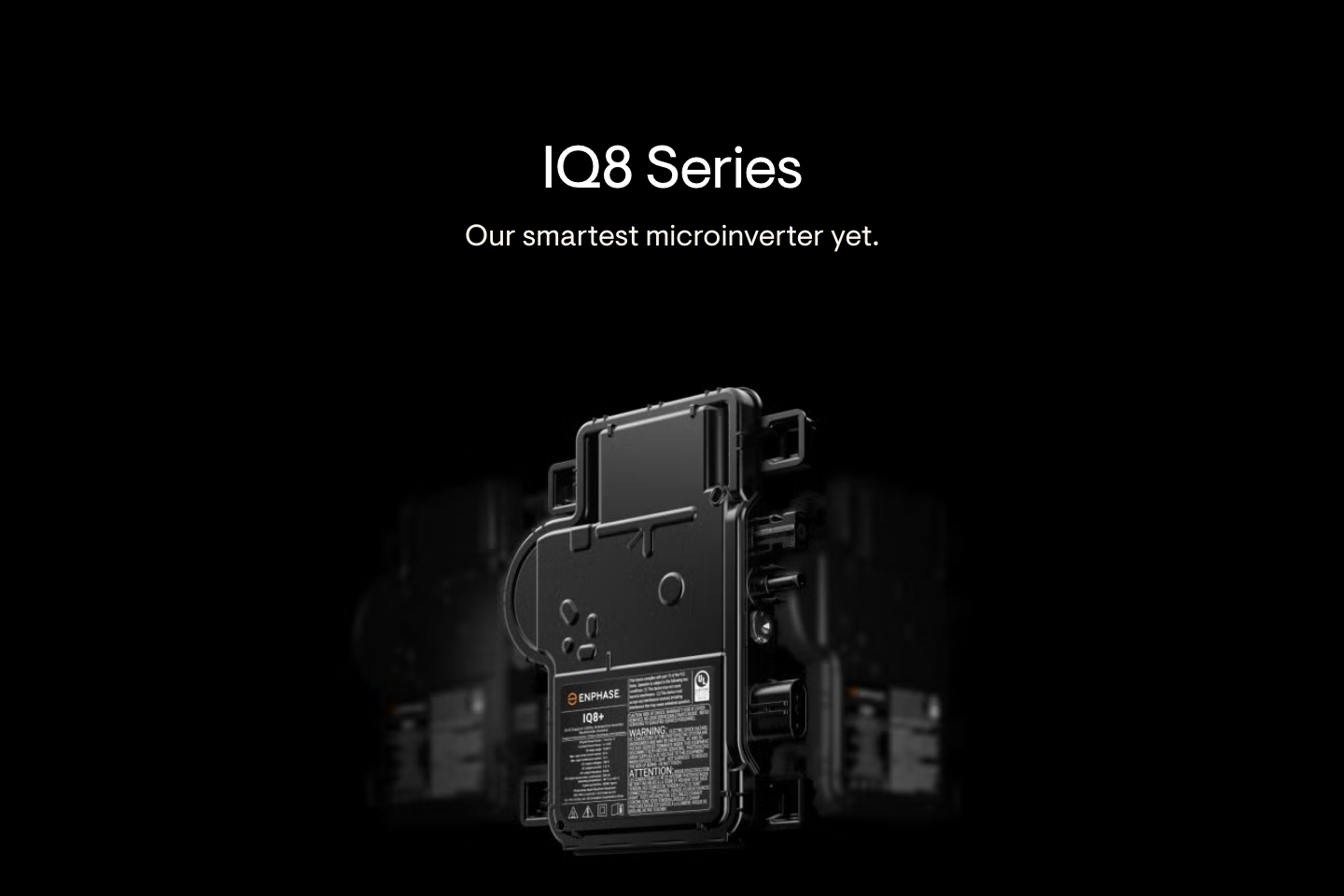
The more the modules behave differently from each other, the easier it becomes to justify a module-level design such as the Enphase IQ8 Microinverter.
3. Homeowner already expects to add battery backup later
This needs more care.
If the owner wants a hybrid inverter and a cleaner storage path, a product family such as the Fronius Primo GEN24 may fit better than defaulting to microinverters. If the owner instead prefers an Enphase-style all-in-one ecosystem, microinverters may still be the better fit.
What many installers mean when they say "normal home"
In practice, a "normal home" usually means:
- one dominant roof plane
- modest system size
- limited persistent shade
- no unusual monitoring requirements
- no strong preference yet for a storage ecosystem
For that kind of house, a good string inverter is often still the baseline recommendation.
Microinverters become easier to defend when the home stops being normal in one of a few specific ways: roof complexity, shade variability, monitoring expectations, or expansion plans.
What to check before you accept a quote
Before you let anyone push you into either architecture, ask these questions:
- How many roof planes will actually be used?
- Which modules get repeat shade, and at what times of year?
- Am I paying extra for real yield gains, or mainly for monitoring and flexibility?
- Do I expect to add battery storage, and if so, what kind?
- What does the warranty cover in my market, including labor and replacement process?
- If one component fails, what exactly stops working?
- Will I get panel-level visibility, string-level visibility, or only system totals?
If your monitoring data later looks odd, this is also exactly the kind of architecture issue that can feed into confusing production numbers. See How to Tell If Your Solar System Is Underperforming.
Bottom line
For a very normal, low-shade home, a string inverter is still often the smartest default.
Microinverters become worth serious attention when the roof is harder than average, the panels behave differently from each other, the owner wants panel-level monitoring, or the long-term ownership experience matters enough to justify the premium.
The best choice is not the one with the most impressive brochure. It is the one that matches your roof geometry, shade pattern, monitoring expectations, battery plan, and tolerance for complexity.
And that is exactly why the right answer changes from one house to the next.
Practical next step
If you are comparing quotes right now, do not ask installers only which inverter brand is better.
Ask them to show you why your roof layout makes module-level electronics necessary or unnecessary. If they cannot explain that clearly, the quote may be solving the wrong problem.
You can also use the Solar Monitoring Planner if your real concern is not only inverter choice, but how visible and future-proof the whole monitoring path will be.
Source paths and further reading
- NREL Building America: Photovoltaic Systems with Module-Level Power Electronics
- NREL: Modeling Microinverters and DC Power Optimizers in PVWatts
- Enphase: IQ8 microinverter warranty and IQ8 product materials
- Fronius: GEN24 product pages and warranty pages
- SolarEdge: module-level monitoring and optimizer safety overview