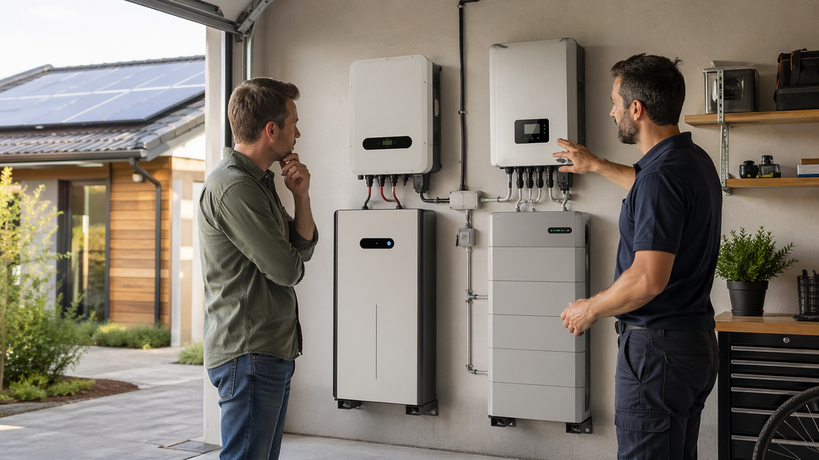
If you want the short answer first, use this rule: if your current solar inverter is still healthy and you mainly want to add storage, an AC battery retrofit is usually the better move. If your inverter is already nearing replacement age and you want battery plus backup as part of one cleaner redesign, the hybrid-inverter path usually makes more sense.
That sounds simple, but this decision is often where Australian households waste the most money. Plenty of quotes are really selling architecture, not solving the actual household problem.
The one-question test
Before you compare brands, backup modes, or battery chemistry, ask this:
Is your current inverter still worth keeping?
That one question separates the two paths.
| Your real situation | Usually the better path | Why |
|---|---|---|
| Existing inverter is healthy and not especially old | AC battery retrofit | You add storage without throwing away a working inverter |
| Existing inverter is old, undersized, unreliable, or likely to be replaced soon | Hybrid inverter path | You avoid paying for one redesign now and another one later |
| You mainly want self-consumption and bill reduction | AC battery retrofit often wins | It is usually the least disruptive way to add storage |
| You want battery, backup, and system redesign in one project | Hybrid inverter path often wins | The system can be planned as one integrated upgrade |
Why this feels more urgent in Australia now
This question matters more in 2026 than it did a few years ago.
On 1 July 2025, the Australian Government's Cheaper Home Batteries Program began offering a discount on eligible small-scale battery systems. Then on 15 December 2025, the government said the program was being expanded, and it also flagged further adjustments from 1 May 2026 to keep the scheme sustainable and better aligned with battery sizing.
At the same time, many homes are facing one or more of these pressures:
- low feed-in tariffs
- export limits or curtailment
- higher value from evening self-consumption than midday export
- stronger interest in blackout resilience
- an ageing first-generation solar inverter that is no longer a long-term asset
Those are not all the same project. A household trying to stop wasting exported solar is different from a household redesigning for blackout backup.
AC battery retrofit: the practical answer for many existing solar homes
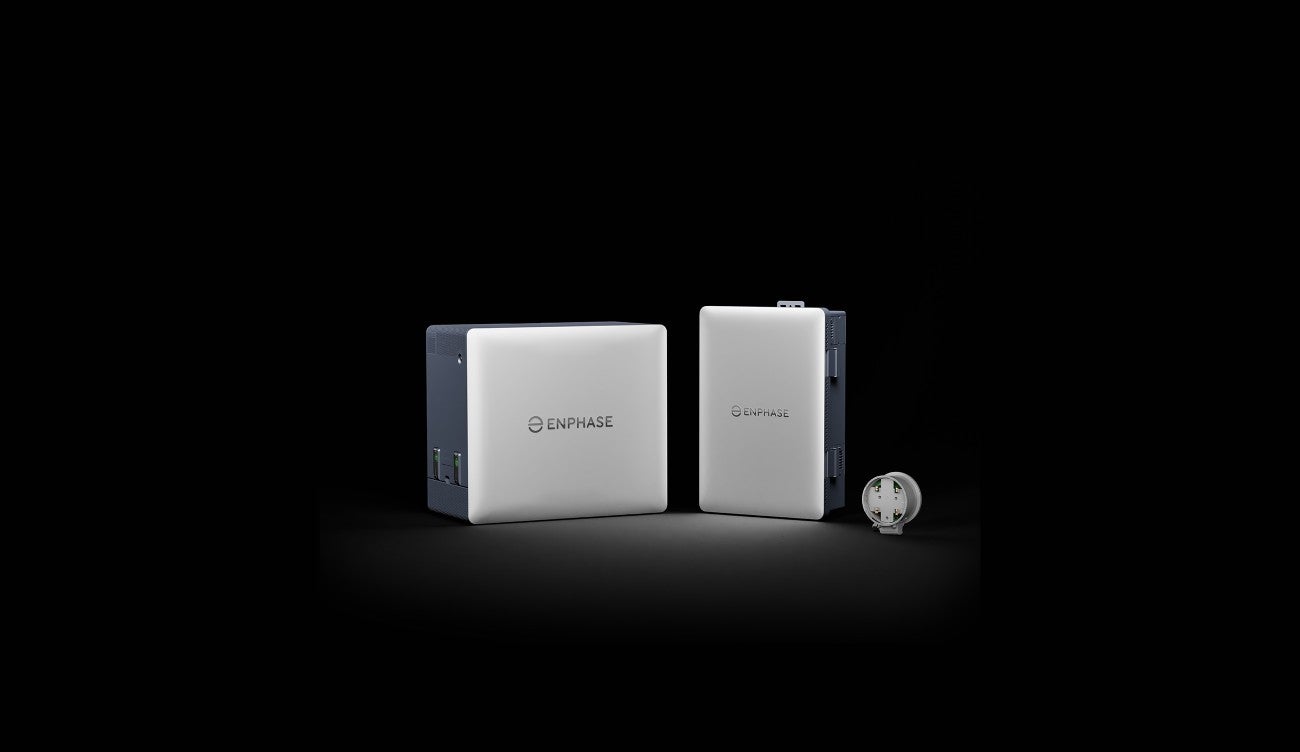
An AC battery retrofit usually makes sense when your solar system already works reasonably well and the inverter is not the problem.
You keep the current solar inverter doing its existing job, then add a battery system around it. That is often the right answer for households that want to capture more excess solar, reduce evening imports, or gain some backup capability without turning the whole installation into a bigger project.
The biggest advantage is not elegance. It is restraint.
You are not paying to remove a working inverter just because a cleaner-looking architecture exists on paper.
This path is usually strongest when:
- the current inverter is still reliable
- the original solar system is only mid-life
- the household mainly wants storage, not a complete redesign
- the quote needs to stay as simple as possible
- the home may revisit inverter replacement later, on its own timeline
What people often miss about the retrofit path
The retrofit option is sometimes dismissed as the less sophisticated setup. That is the wrong lens.
For a homeowner, the smarter path is often the one that preserves useful equipment and limits disruption. If your inverter has years of reasonable service left, replacing it early can weaken the economics of the battery project before you even start comparing brands.
That is especially true if your main pain point is one of these:
- solar exports are worth very little
- export caps are wasting midday production
- your evening import bill is the real issue
- you want a smaller first step rather than a full electrical redesign
If you are still deciding whether a battery itself is worthwhile, see Will a Home Battery Save You Money With Solar? and Solar Export Limits in Australia (2026): When a Home Battery Starts Making More Sense.
Hybrid inverter path: stronger when replacement is already justified
A hybrid inverter replacement becomes much more persuasive when the inverter change is already justified for its own reasons.
That is the part many articles skip.
If the existing inverter is old, undersized, unreliable, or likely to be replaced within the same planning window as the battery, a hybrid path can stop being a luxury and start becoming the cleaner long-term answer.
This is usually where hybrid makes more sense:
- the inverter is close to end-of-life or already problematic
- battery purchase is likely in the next 12 to 24 months anyway
- you want backup planning done properly rather than staged later
- you want one redesign instead of two separate projects
- you are already spending on switchboard or electrical works
Fronius is a good example of why this path can be attractive. On its Australian GEN24 Plus product pages, Fronius positions the range around integrated backup options such as PV Point and, on eligible models, Full Backup with a connected battery. That kind of platform story makes more sense when you are deliberately rebuilding the system rather than protecting a healthy existing inverter from premature replacement.

Three normal Australian household cases
Case 1: five-year-old solar system, inverter still healthy
This is the classic retrofit household. The family does not need a new inverter. They need more self-use, lower evening imports, or better resilience. In that case, AC retrofit is usually the cleaner first answer.
Case 2: nine- or ten-year-old inverter, battery likely soon
This is where hybrid begins to look rational. If replacement is already looming, doing battery and inverter strategy together can avoid duplicated labour, duplicated design work, and awkward staging.
Case 3: backup matters more than simple payback
Once backup becomes a core brief instead of a nice extra, system architecture matters more. Hybrid becomes easier to justify if the household wants a more deliberate backup-capable redesign rather than a basic add-on approach.

Backup changes the conversation more than most people expect
A battery purchase focused on bill savings is not the same project as a battery purchase focused on blackout behaviour.
If the brief is mostly financial, it is harder to justify replacing a healthy inverter early.
If the brief is backup performance, switchover behaviour, supported loads, and future expansion, then the hybrid route can become easier to defend because you are solving the system as a whole.
That does not mean AC battery retrofit is bad for backup. It means your quote should match the seriousness of your backup expectations.
Tesla's current Australian Powerwall 3 datasheet is a reminder that backup and integration claims should always be checked in product documentation, not assumed from marketing summaries. The current AU datasheet lists grid connection compliance for Australia and New Zealand, up to 20 kW solar input, and 3 MPPTs, but whether that makes sense in your project still depends on the rest of the system and the installation design.
The most expensive mistake: solving the wrong problem
The wrong upgrade path usually comes from one of these mistakes:
- Replacing a healthy inverter too early just to get a tidier architecture.
- Choosing retrofit when the inverter is already likely to become the next forced expense.
- Talking about payback when the real driver is backup.
- Accepting a battery quote without checking export limits, evening load, and actual self-consumption potential.
- Assuming every hybrid setup automatically delivers the backup experience you imagined.
A quote checklist that catches weak proposals
Before you approve either path, ask the installer to answer these in writing:
- Is my current inverter healthy, and what is the case for keeping or replacing it?
- If you recommend replacement, what specific issue makes it worth doing now rather than later?
- What problem is this quote mainly solving: exports, evening imports, backup, inverter age, or all of the above?
- What backup mode is actually included, and which loads are intended to stay on?
- What extra switchboard, changeover, or rewiring work is assumed?
- If I choose retrofit now, what is the likely consequence if the PV inverter needs replacement in a few years?
- If I choose hybrid now, what useful value am I getting immediately that justifies retiring the current inverter early?
So which path should most homes choose?
For many Australian solar homes, the most sensible order is still this:
- keep the current inverter if it is healthy
- add battery storage only if storage is the real problem
- move to hybrid when inverter replacement is already justified, or when backup and redesign are central goals
That is not as neat as saying one technology is simply better. But it is much closer to how homeowners avoid regret.
Bottom line
If your current inverter is still doing its job, an AC battery retrofit is often the least wasteful and most practical move. If the inverter is already on borrowed time and you want battery plus backup as one deliberate system redesign, the hybrid-inverter path gets much stronger.
Start with the condition of the inverter you already own, not with whichever architecture sounds more modern.
Sources
- Australian Government, Batteries page, accessed April 24, 2026: https://www.energy.gov.au/solar/get-know-solar-technology/batteries
- Australian Government, Six months of the Cheaper Home Batteries Program, published December 15, 2025: https://www.energy.gov.au/news/six-months-cheaper-home-batteries-program
- Fronius Australia, Fronius Symo GEN24 Plus technical page, accessed April 24, 2026: https://www.fronius.com/en-au/australia/solar-energy/installers-partners/technical-data/all-products/inverters/fronius-symo-gen24-plus/fronius-symo-gen24-10-0-aus-plus-sc
- Tesla, Powerwall 3 Datasheet AU, published March 2026 and accessed April 24, 2026: https://energylibrary.tesla.com/docs/Public/EnergyStorage/Powerwall/3/Datasheet/en-au/Powerwall-3-Datasheet-AU-EN.pdf