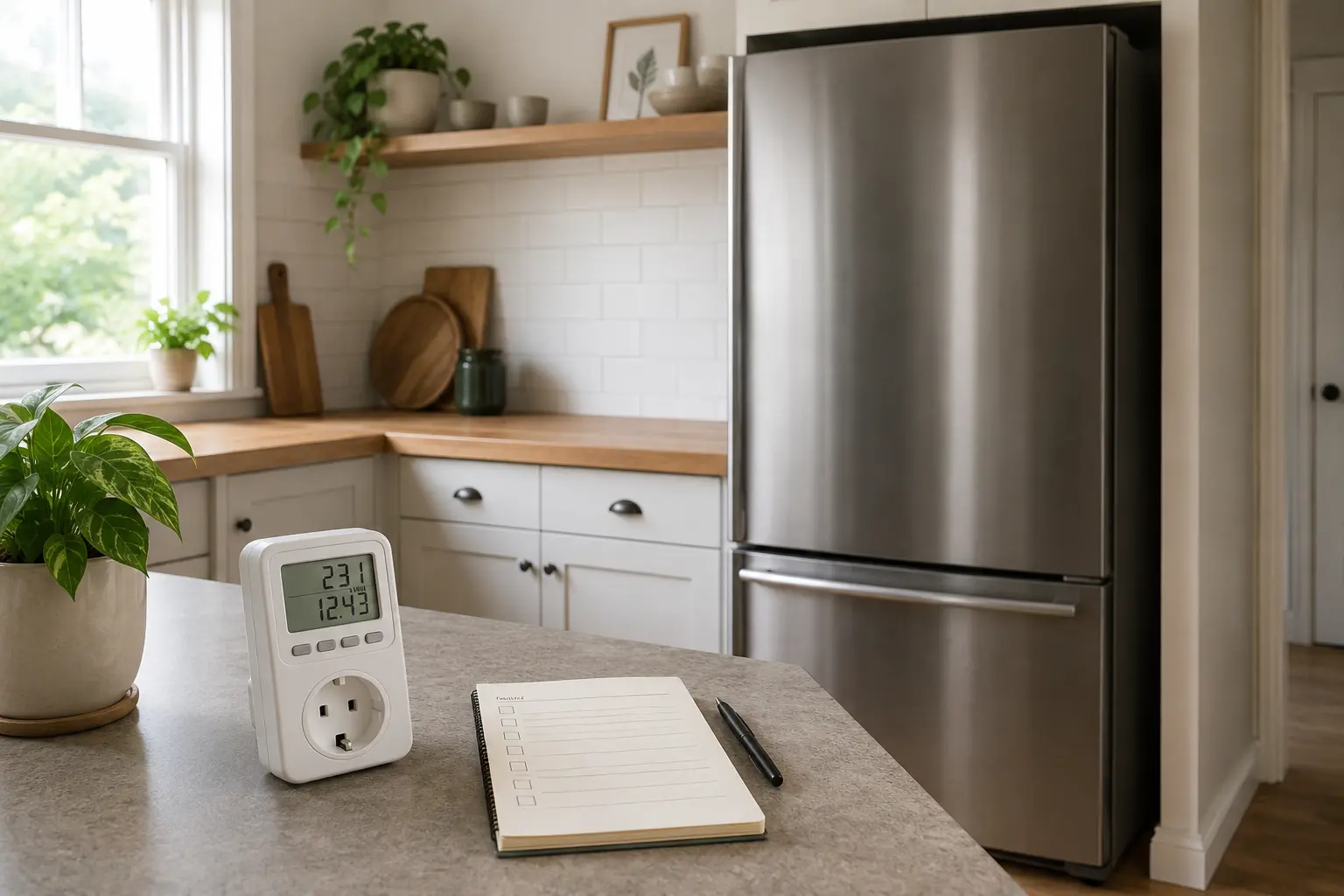
A refrigerator is one of the few household appliances that runs every hour of the year. That makes efficiency worth checking, but it does not mean the model with the highest rating, most doors, or longest feature list is automatically the best buy.
The practical choice is the smallest refrigerator that comfortably fits your household, has a suitable layout, works in its intended ambient conditions, and shows a competitive annual energy consumption in kWh against genuinely comparable models. Then convert the energy difference into money over the period you expect to own it. If the efficient model's lifetime saving is smaller than its price premium, you may be paying for a badge rather than a better financial result.
This guide explains how to make that comparison, where energy labels help, where they can mislead, and how energy monitoring can verify performance after installation.
The short answer
Use this order:
- Set a realistic capacity range and measure the available space.
- Compare refrigerators with similar volume, freezer arrangement, defrost type, ice-making features, and installation style.
- Read annual energy use in kWh, not the rating class or star count alone.
- Calculate annual and lifetime running cost using your own tariff.
- Check noise, climate class or ambient-temperature limits, ventilation clearances, door swing, service support, and warranty.
- Treat smart screens, extra doors, through-door ice, and oversized capacity as features that need to justify both their purchase cost and energy impact.
- After installation, verify several days or weeks of energy use before deciding that the refrigerator is performing badly.
The most important number is usually not the rating by itself. It is the annual kWh for a refrigerator that is the right size and type for you.
Start with capacity, not the efficiency badge
Energy labels are designed to help compare products, but their efficiency scale accounts for product type and capacity. Two refrigerators can carry the same class or star rating while using different amounts of electricity each year.
Australia's Energy Rating guidance makes the point clearly: compare appliances of similar capacity and features, because a larger highly rated refrigerator can still use more electricity than a smaller model with the same star rating. ENERGY STAR likewise advises buying an appropriately sized refrigerator and notes that larger models generally consume more energy.
That creates a useful two-step filter:
| Step | Question | Why it matters |
|---|---|---|
| 1. Fit | What usable refrigerator and freezer capacity does the household actually need? | Oversized space costs more to buy and cool |
| 2. Efficiency | Which comparable model has the lowest credible annual kWh without sacrificing essential needs? | This predicts the operating-cost difference |
Do not size from an occasional holiday or once-a-year gathering. If extra capacity is only needed a few days per year, a permanently oversized refrigerator is an expensive way to solve a temporary problem.
Also distinguish external dimensions from usable storage. Thick doors, ice makers, drawer mechanisms, ducting, and internal hardware can make two similarly sized cabinets feel very different inside. Check compartment volumes and shelf usability, not just the width on the sales page.
Read the label in the right order
Different markets use different labels, but the same reading discipline works internationally.
- In the United States, ENERGY STAR certification indicates that a product meets program efficiency requirements for its product class. The product finder also publishes annual energy use for certified models.
- In the European Union, the refrigerator label uses an A-to-G scale and also shows energy consumption, storage volumes, freezer information, and noise emissions.
- In Australia and New Zealand, the Energy Rating Label shows a star rating and estimated annual energy consumption. The official guidance recommends comparing stars within a similar capacity and feature set.
Read the label in this order:
- Annual energy consumption: the standardized kWh-per-year estimate.
- Capacity: refrigerator and freezer volumes, not just total external size.
- Product configuration: top freezer, bottom freezer, side-by-side, French door, built-in, or refrigerator-only.
- Efficiency class or stars: useful after the first three items match.
- Noise and climate information: important when the unit will sit near living areas or in a challenging room.
The label is a standardized comparison, not a guarantee of your exact bill. Door openings, room temperature, ventilation, settings, food loading, defrost cycles, ice making, and maintenance all change real consumption.
Convert annual kWh into a lifetime cost
The calculation is deliberately simple:
annual running cost = label kWh/year x electricity price per kWh
Suppose two comparable refrigerators are rated at 240 and 360 kWh per year. The difference is 120 kWh per year. At an illustrative tariff of 0.30 per kWh in your local currency, the annual difference is 36. Over 12 years, before discounting or tariff changes, that is 432.
This is the number to compare with the purchase-price premium.
| Model | Annual energy | Annual cost at 0.30/kWh | 12-year simple energy cost |
|---|---|---|---|
| Efficient option | 240 kWh | 72 | 864 |
| Higher-use option | 360 kWh | 108 | 1,296 |
| Difference | 120 kWh | 36 | 432 |
Use your actual tariff and expected ownership period. If you have time-of-use pricing, a refrigerator runs across every tariff period, so a single blended import rate is usually more useful than applying only the peak price. Solar may cover some daytime operation, but the refrigerator still runs overnight and on low-generation days.
The U.S. Department of Energy's purchasing guidance uses the same life-cycle principle: an efficient product is cost-effective when avoided lifetime energy costs exceed the extra upfront cost. Do not assume that every increment in label efficiency has the same payback.
Compare configuration and features honestly
A feature can be valuable without being energy-saving. The question is whether you will use it enough to justify the tradeoff.
ENERGY STAR advises that top-freezer models tend to use less energy than bottom-freezer or side-by-side designs, and that fewer doors reduce air leakage. U.S. Department of Energy purchasing guidance also flags side-by-side layouts and through-door ice as features that can increase energy use.
That does not make those configurations wrong. It means they should solve a real need.
Features that commonly affect the comparison
- More doors and drawers: improve organization but add seals and openings.
- Through-door ice or water: convenient, but adds components and can increase consumption.
- Automatic ice maker: useful for frequent demand; unnecessary for many households.
- Built-in installation: may constrain ventilation and usually carries a price premium.
- Very large screens and connected functions: may add standby load and future software dependence.
- Convertible compartments: can be useful when storage needs change, but compare their operating modes carefully.
- Automatic defrost: convenient and common, but defrost behavior contributes to the measured load pattern.
Avoid comparing a basic top-freezer refrigerator with a large multi-door model and concluding that the difference is purely "efficiency." They are different products doing different jobs.
Check the installation environment before buying
A good laboratory rating cannot compensate for a bad installation.
First, read the manufacturer's manual for ventilation clearances. Heat must leave the condenser and compressor area. A tight cabinet opening, blocked grille, dusty accessible coils, or heat from an oven or direct sun can make the appliance work harder. ENERGY STAR recommends placing a refrigerator away from heat sources, allowing air circulation, and checking seals.
Second, confirm the appliance is rated for the intended ambient conditions. This matters especially for garages, utility rooms, basements, unconditioned apartments, retail back rooms, and other spaces that may become unusually hot or cold. EU product information sheets include climate class and suitable minimum and maximum ambient temperatures; other markets may put comparable limits in the manual.
Third, measure:
- opening width, height, and depth;
- required rear, side, and top clearance;
- door and drawer swing;
- ventilation path;
- plug and outlet access;
- floor level and strength;
- route from the delivery entrance to the final location.
A refrigerator that barely fits the cabinet but cannot reject heat correctly is not a successful installation.
Do not overpay to replace a fridge that is already reasonable
An old refrigerator can use materially more energy than a modern efficient model, but replacement is not automatically the best financial or environmental move.
Replace or investigate sooner when the existing unit:
- runs almost continuously in normal conditions;
- has damaged or loose door seals;
- cannot maintain safe temperatures;
- shows a sustained increase in measured energy use;
- needs an expensive repair;
- is significantly oversized for current needs;
- is an old second refrigerator kept running mostly empty;
- sits in an environment outside its intended operating limits.
Wait or repair when it is reliable, correctly sized, maintains temperature, and its measured annualized consumption leaves too little saving to recover the price of a replacement.
Include delivery, disposal, warranty, financing, and expected service life in the decision. If replacing, use an appropriate appliance recycling channel rather than keeping the old refrigerator running as an unneeded second unit.
For more on unexplained refrigeration loads, see Why Your Electricity Use Is Higher at Night.
Verify the real consumption after installation
A plug-in energy monitor can validate a cord-connected refrigerator if the monitor is correctly rated for the local voltage, current, plug type, environment, and load. Do not use improvised adapters, and do not disturb hardwired or specialized commercial equipment.
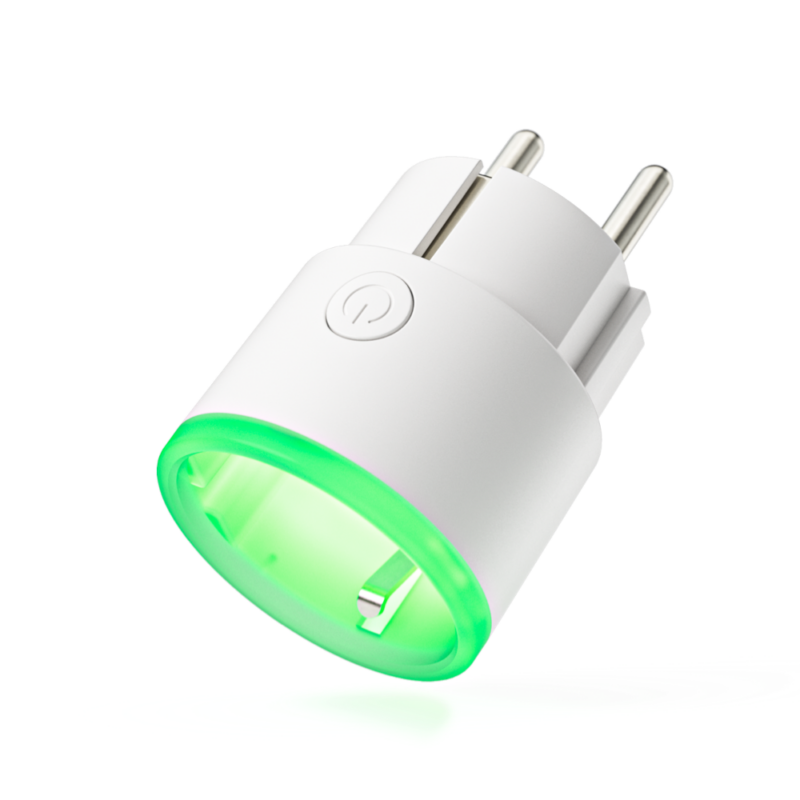
Measure over multiple complete days. A compressor cycle or defrost event makes a short snapshot misleading.
A practical verification method is:
- Let the new appliance stabilize after installation and loading.
- Record energy for at least seven days, preferably longer.
- Note unusual events such as initial cooldown, large grocery loads, hot weather, frequent door opening, ice production, or a power interruption.
- Divide total kWh by measured days and multiply by 365 for a rough annualized estimate.
- Repeat during a different season before concluding that the label and reality materially disagree.
For example, 6.3 kWh measured over seven representative days annualizes to about 329 kWh:
6.3 kWh / 7 days x 365 = 328.5 kWh/year
This is still an estimate. The standardized label uses controlled test conditions, while your measurement reflects the kitchen, household, season, and settings. A moderate difference is not automatically a fault. A large and persistent difference deserves checks for door sealing, clearances, temperature settings, ambient heat, defrost behavior, or a service issue.
Browse energy monitoring devices if a plug-level or circuit-level measurement is needed, and see How to Find Your Home's Always-On Power Load for a broader baseline-testing workflow.
For portfolios and small sites, measure the fleet
The same buying logic becomes more valuable when a landlord, hospitality operator, laboratory, office, or small retailer manages many refrigerators.
Do not compare only one unit's instantaneous watts. Track:
- daily and weekly kWh;
- energy per unit or per litre of useful capacity;
- duty cycle and compressor runtime pattern;
- ambient temperature;
- door-opening or occupancy periods;
- maintenance events;
- defrost timing;
- temperature compliance;
- change from the unit's own historical baseline.
A fleet dashboard can reveal that one refrigerator is consuming far more than similar units, or that all units in one room rise with ambient temperature. That is more actionable than a monthly building total.
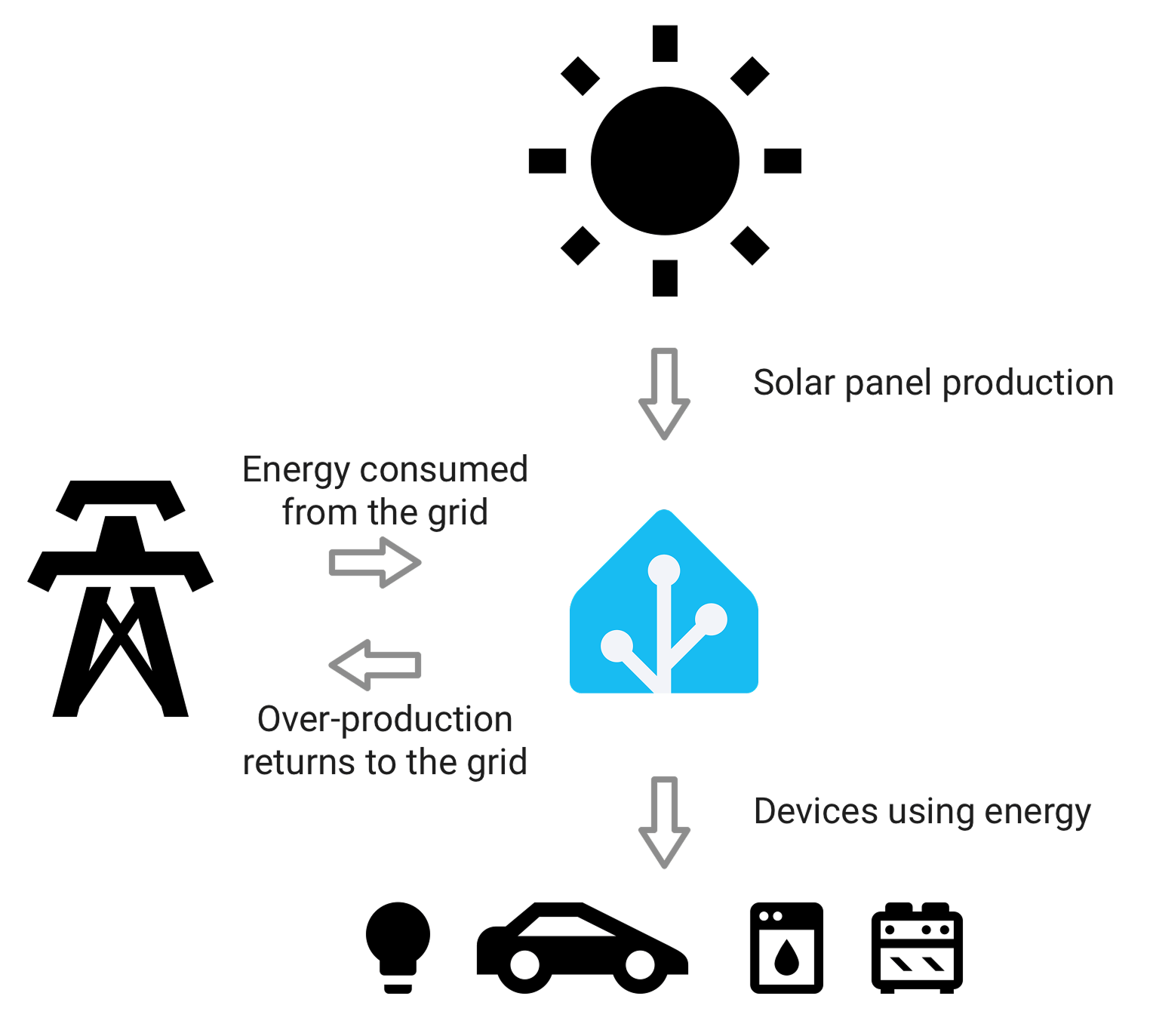
Trend data is most useful when equipment, time windows, tariffs, and operating conditions are defined consistently.
For permanent monitoring, use appropriately installed metering and follow local electrical rules. A qualified electrician may be needed for circuit-level equipment. The monitoring goal is not merely to collect data; it is to detect drift early enough to prevent wasted energy, spoiled stock, or avoidable replacement.
A practical buying scorecard
Use a scorecard before visiting a showroom or comparing online listings.
| Criterion | Record for each shortlisted model |
|---|---|
| Total and compartment capacity | litres or cubic feet |
| Annual energy consumption | kWh/year |
| Configuration | top freezer, bottom freezer, side-by-side, multi-door, built-in |
| Energy label | class, stars, certification, and market |
| Estimated annual cost | annual kWh x your tariff |
| Simple lifetime cost | annual cost x expected ownership years |
| Purchase-price premium | versus a comparable baseline model |
| Ambient operating range | from label, data sheet, or manual |
| Installation clearances | rear, side, top, and ventilation |
| Noise | label or data-sheet value where available |
| Refrigerant | type and lower-GWP option where disclosed |
| Essential features | only the features you will regularly use |
| Warranty and service | parts, labour, compressor terms, local support |
| Measurement plan | label comparison, plug monitoring, or circuit monitoring |
Reject a model when the fundamentals do not match. A discount cannot fix the wrong capacity, insufficient ventilation, poor service access, excessive annual kWh, or a layout that encourages you to keep a second refrigerator.
Final decision
Choose the refrigerator that fits the household before choosing the refrigerator that wins the label contest.
A sound decision has four parts:
- the capacity and compartment layout are appropriate;
- annual kWh is competitive among truly comparable models;
- the price premium is supported by credible lifetime savings or useful features;
- the installation and monitoring plan give the appliance a fair chance to perform as rated.
That is how to buy efficiency without overpaying: compare like with like, turn kWh into money, and verify the result with real data.
Sources
- ENERGY STAR: Refrigerators buying guidance and saving tips
- ENERGY STAR: Refrigerators and Freezers Key Product Criteria
- U.S. Department of Energy: Purchasing Energy-Efficient Residential Refrigerators
- European Commission: Fridges and Freezers energy label
- Australian Energy Rating: Fridges and Freezers