If you want the short answer first, here it is: for most single-EV homes, a 7 kW charger is enough. If the car is parked overnight, that power level is usually enough to replace normal daily driving without making home charging feel slow.
The cases where 7 kW starts to feel limiting are usually very specific: unusually high daily mileage, a very short charging window, two EVs sharing one charger, or a home and vehicle that can genuinely take advantage of higher AC power. In other words, the real question is usually not "Is 7 kW too slow?" It is "How much energy do I actually need to put back into the car before morning?"
Start with overnight energy, not charger marketing
The fastest way to judge a home charger is simple math.
A 7 kW charger running for 8 hours can deliver about 56 kWh before losses. Even after normal charging losses, that is still a substantial overnight refill for a normal home-use pattern.
Use rough energy replaced, not charger branding, as the first filter:
| Energy you need to put back | Approximate time at 7 kW | What that usually means |
|---|---|---|
| 15 kWh | about 2.1 hours | Light daily driving |
| 25 kWh | about 3.6 hours | Normal commuting and errands |
| 40 kWh | about 5.7 hours | Heavy daily use, still realistic overnight |
| 55 kWh | about 7.9 hours | Big day, but still usually possible with a full night window |
These are rounded energy examples, not vehicle-specific promises. The point is practical: if your car is home for 8 to 10 hours, 7 kW is already a meaningful amount of charging.
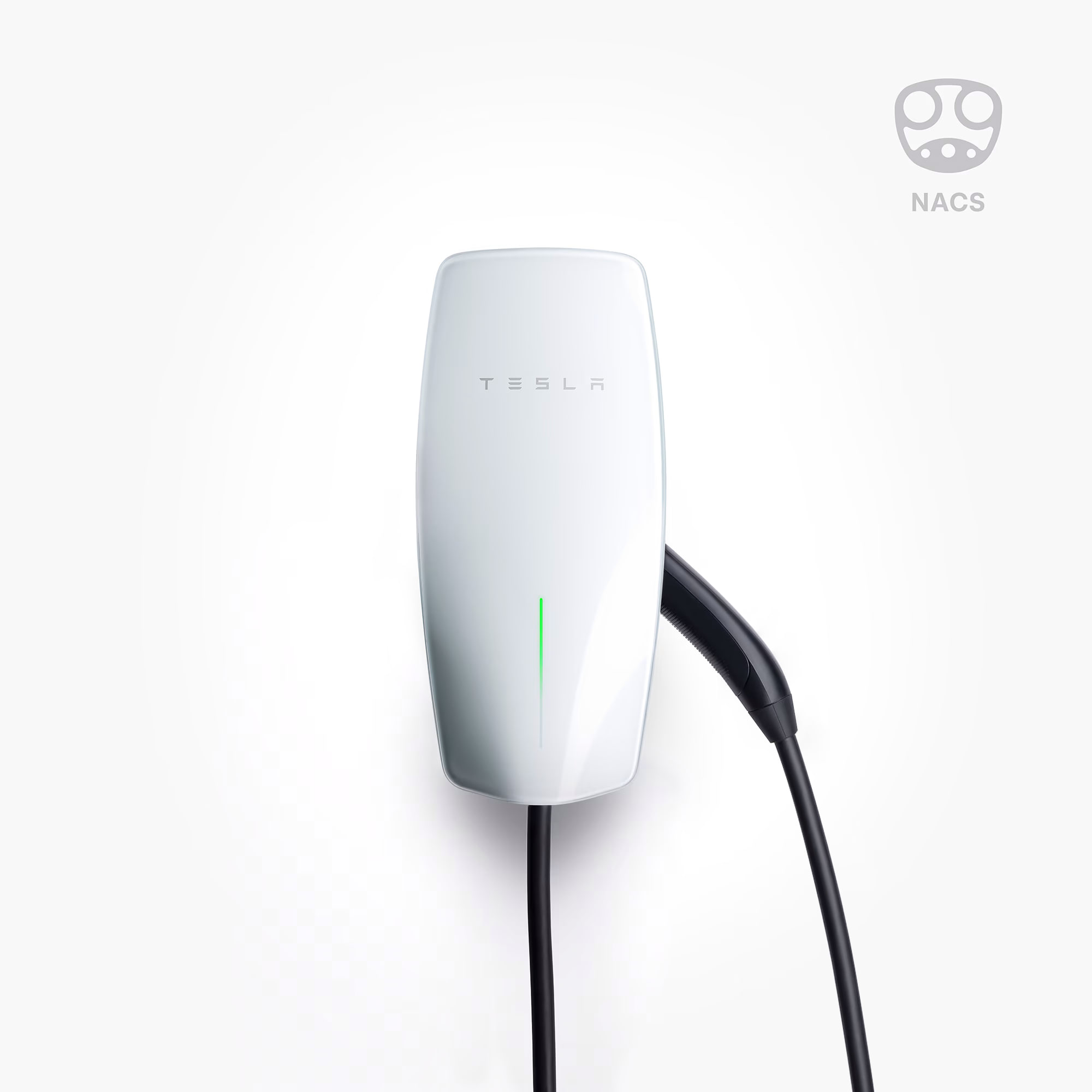
Tesla's Wall Connector support page makes the same point from the other side. In Tesla's own charging-speed table, a 32 A setup at 7.7 kW can add up to 30 miles of range per hour on compatible Model 3 and Model Y rear-wheel-drive versions, while the full 48 A setup at 11.5 kW reaches up to 44 miles per hour in the right configuration. The faster setup is stronger, but the 7 kW class is clearly not a token speed.
Why 7 kW is the normal home answer
This is where buyers often overcomplicate things.
The U.S. Department of Energy's AFDC home-charging guidance says most EV drivers charge overnight at home using AC Level 1 or AC Level 2 equipment, and it notes that many owners can meet daily driving needs overnight even with Level 1. That matters because it reframes the whole decision: 7 kW is not a weak home charger. It is already well into the normal Level 2 home-charging range.
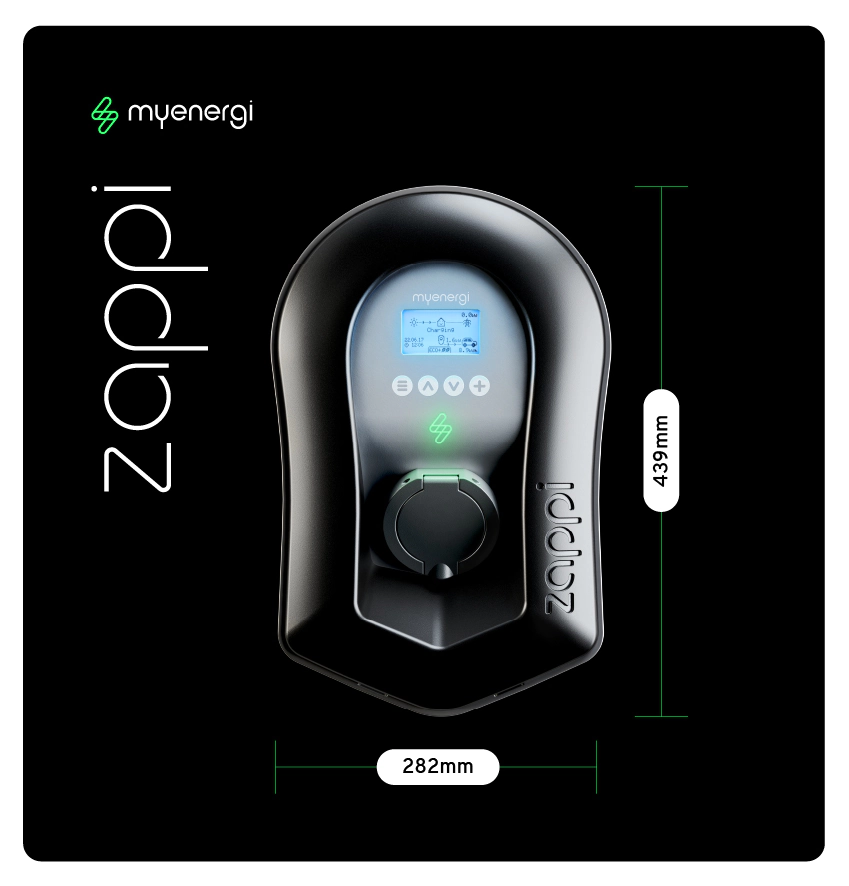
myenergi's zappi page makes the home-vs-faster split very clear too. It sells zappi in both 7 kW single-phase and 22 kW three-phase versions, and explicitly describes the 7.4 kW single-phase model as the version most commonly found in homes and domestic properties.

That is the practical baseline for this article:
- 7 kW is usually the default serious home charger
- 11 kW or 22 kW only matter if the home supply, charger, and vehicle can all use them
- many buyers need smarter charging, not just more charging power
If you are comparing actual charger options rather than just power class, read Best EV Chargers for Solar Homes in 2026: 3 Smart Chargers Worth Shortlisting.
When 7 kW starts to feel slow
There are real cases where moving beyond 7 kW makes sense.
1. Your daily mileage is consistently high
If you are routinely putting large amounts of energy back into the car every night, the margin gets smaller. A long-distance commuter, airport-transfer driver, or rep who arrives home nearly empty most nights may want more headroom.
2. Your overnight charging window is short
If the car only sits at home for four or five hours before it has to leave again, charger power matters more. A household that plugs in at 1 a.m. and leaves at 5:30 a.m. is solving a different problem from a household that plugs in at 9 p.m. and leaves at 7 a.m.
3. Two EVs are sharing the same setup
This is one of the most common places buyers misdiagnose the problem. Sometimes the answer is a faster charger. Sometimes it is better scheduling, better load management, or a second charging point.
4. You actually have the supply for more
A lot of homes do not have the electrical setup to make higher AC charging worthwhile without additional work. If you are on single-phase service, 7 kW to 7.4 kW is often the natural ceiling. Paying for a higher-rated charger does not automatically mean you will charge faster.
The charger is only one limit in the chain
A charger can only deliver what the whole chain allows:
- the home's electrical service
- the circuit breaker size
- the cable run and installation design
- the vehicle's onboard AC charging limit
- any load-management rules on the property
That is why a headline number can mislead buyers.
A 22 kW charger sounds much faster than a 7 kW charger, but if the house is not on three-phase supply, or if the vehicle cannot use that much AC power, the extra nameplate number does not translate into real overnight benefit.
This is also why the best charger is not always the highest-output charger. Features like scheduling, app reliability, solar integration, and load balancing often change the ownership experience more than a move from 7 kW to a higher bracket.
Four home-use patterns
One commuter, one EV, full overnight parking window
This is the cleanest yes. For this household, 7 kW is usually enough and often comfortably enough.
One EV, heavy use, but still parked all night
This is still often a yes, but with less margin. If the daily energy put back is large, or if the car is inefficient, 7 kW can move from "easy" to "just enough."
Two EV household
Do not assume the first answer is higher charger power. Check whether you actually need:
- better scheduling
- smart load sharing
- one charger plus one slower secondary charger
- or a second proper charging point
Solar household
If the car is at home during the day, the smarter question is often not "Should I install more than 7 kW?" but "Can this charger use solar well enough to reduce grid charging?"
That is where chargers like myenergi zappi and Wallbox Pulsar Plus become interesting for reasons that go beyond raw speed.
If your real goal is lower charging cost rather than faster charging, the more useful next read is Charge Your EV With Solar or Off-Peak in Australia? What Actually Saves More in 2026. If you are trying to use surplus midday generation better, also read How to Use Excess Solar at Home in 2026: EV Charging, Hot Water, Battery, or Pool Pump?.
When paying for more than 7 kW makes sense
You should look harder at 11 kW or 22 kW if most of these are true:
- your home has the electrical supply to support it
- your vehicle can actually accept higher AC charging power
- your overnight dwell time is regularly short
- your daily energy refill is large enough that 7 kW leaves too little margin
- you are designing around two EVs or a more demanding charging schedule
If most of those are false, a better charger experience is usually a smarter buy than a bigger power number.
That is one reason a charger like Tesla Wall Connector can still make sense for Tesla-first homes even if the buying conversation is really about app experience, install simplicity, and dependable scheduling rather than chasing the maximum possible AC output.
What to check before you buy
Before you pay extra for higher charging power, check these six things:
- Your car's maximum AC charging rate
- Whether the property is single-phase or three-phase
- How many hours the car is actually parked and plugged in
- Your real daily energy refill, not your battery's total size
- Whether you need solar-aware charging, load balancing, or simple timed charging
- Whether the real problem is one EV, two EVs, or limited household electrical capacity
If you do not know your real daily energy use, work backward from mileage and efficiency first. That number is usually more useful than any charger brochure.
Bottom line
For most home drivers, 7 kW is enough.
Not because it is the biggest number available, but because it usually matches the real job: refill a normal day's driving while the car is parked overnight. Move beyond 7 kW when your home, vehicle, and schedule can all make proper use of the extra power. Otherwise, spend your attention on charger quality, scheduling, solar fit, and installation quality instead.