Best Energy-Saving Upgrades for Renters That Actually Matter
If you rent, the upgrades that matter most are the ones that reduce heating and cooling losses, cut lighting waste, and lower background electricity use without requiring major electrical work. In most rentals, the best first moves are LED lighting, draft control around doors and windows, smarter control of standby loads, and better window coverings before you spend money on niche gadgets.
Many renters waste money on products that feel efficient but barely move the bill. A worthwhile renter upgrade usually does at least one of four things: it reduces hours of heating or cooling, lowers hot-water use, cuts always-on power, or replaces an inefficient device you use often.
Quick answer table
| Upgrade | Why it matters | Best when | Usually landlord approval? |
|---|---|---|---|
| LED bulbs in the most-used fixtures | Cuts one of the easiest avoidable loads | You still have halogen or incandescent bulbs | Usually no |
| Weatherstripping and draft stoppers | Reduces heating and cooling leakage | Rooms feel drafty or hard to keep comfortable | Sometimes |
| Thermal curtains or tight-fitting blinds | Lowers summer heat gain and winter heat loss | You have sunny rooms or cold windows | Usually no |
| Smart plugs or advanced power strips | Cuts standby power from electronics | You have clusters of TV, desk, or entertainment gear | No |
| Efficient showerhead or shower timer habits | Reduces hot-water energy use | You pay for electric or gas water heating | Sometimes |
| Efficient room air conditioner or heater replacement | Matters more than small gadgets if you use climate control often | You own the portable or room-based unit | No for your own appliance |
1. Start with the upgrades that touch the biggest loads
The biggest renter win is rarely a novelty gadget. It is usually a basic upgrade that affects heating, cooling, hot water, or a device you use for long hours.
That is why LED bulbs and draft control punch above their size. Lighting is a simple load to improve, while heating and cooling losses can quietly affect your bill every day for months. If a room gets too hot in the afternoon or too cold overnight, comfort fixes often have an energy payoff too.
A good rule is this: if the upgrade only saves power when a small device is running for short periods, keep expectations low. If it changes the way your home keeps temperature or reduces a load that runs every day, it is more likely to matter.
2. Replace the worst bulbs first, not every bulb at once
If your rental still uses halogen or incandescent bulbs in the living room, kitchen, or hallway, replacing those high-use bulbs with quality LEDs is one of the fastest low-risk upgrades.
Do not start by replacing rarely used bulbs in closets or spare rooms. Start with the fixtures used for hours every evening. That is where the savings show up first. This is also one of the easiest upgrades to take with you when you move.
What makes this upgrade worth doing is not just wattage reduction. LEDs also run cooler, last longer, and reduce the annoyance of frequent replacements in hard-to-reach fixtures.
3. Fix drafts before buying more heating or cooling gear
Renters often try to solve an uncomfortable room by running the heater or air conditioner longer. If the real problem is air leakage around a balcony door, loose window frame, or bottom door gap, that extra runtime becomes an expensive workaround.
Low-cost sealing steps that often matter:
- add a draft stopper to exterior-facing doors
- use removable weatherstripping where the fit is poor
- close gaps around window frames if your lease and surface type allow it
- keep curtains or blinds closed during strong afternoon sun
This is one of the few renter upgrades that can improve both comfort and cost at the same time. It also pairs well with articles like How Much Electricity Does a Split-System Air Conditioner Use in Real Life? because reducing unwanted heat gain can save more than obsessing over small temperature adjustments alone.
4. Use smart plugs and power strips where standby load actually lives
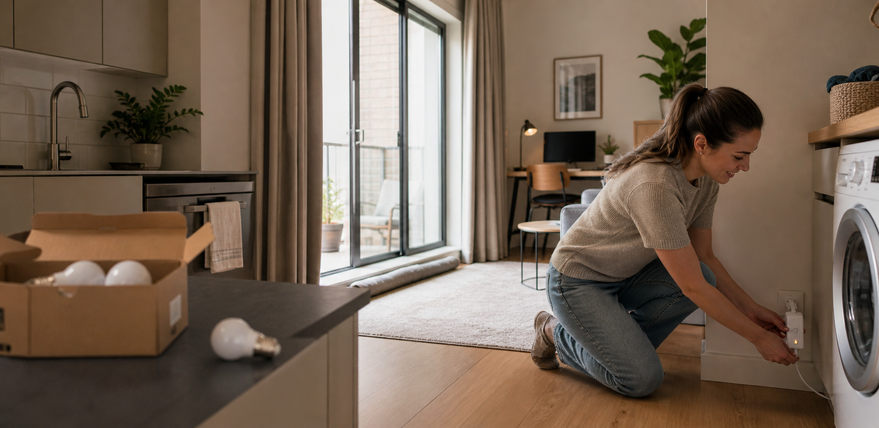
Standby power is real, but it is easy to overstate. The best targets are clusters of equipment that stay plugged in all the time: TV areas, desktop setups, gaming gear, printers, speakers, and chargers that are permanently left on.
A smart plug on one tiny load will not transform your bill. A well-placed power strip or smart plug controlling several devices can be worth it because it cuts the background load every day without needing constant discipline.
This upgrade matters more if your bill still feels high overnight or when nobody is home. That is the same logic behind How to Find Your Home's Always-On Power Load and Cut It: first find the loads that never seem to switch off, then decide whether a control device will actually remove them.
5. Window coverings are not just decoration
For many rentals, especially apartments with large west-facing glass, curtains and blinds do more than change the look of the room. They reduce solar heat gain in summer and can limit heat loss sensation in winter by making the room feel less exposed.
The biggest benefit is usually in the rooms you spend the most time in, not the whole home. Focus on the bedroom that overheats, the living room with hard afternoon sun, or the study where you run heating or cooling for long work hours.
If you are choosing between a decorative curtain and a better-fitting thermal option, the second choice is often the one that actually affects the bill.
6. Do not ignore hot water if you pay for it
In many homes, hot water is one of the largest energy costs after heating and cooling. Renters often focus only on electricity plugs and forget that shorter showers, lower hot-water waste, and a more efficient showerhead can move the bill more than another smart gadget.
This will not matter the same way in every lease. If hot water is included in rent, the financial benefit may be weaker. But if you pay the utility bill directly, hot-water efficiency deserves to be near the top of the list.
A simple test is to ask which change affects a daily ten-minute shower versus which change affects a charger that idles quietly on the wall. The shower usually wins.
7. If you are buying an appliance, target the one you run often
Renters sometimes spend on small accessories while continuing to use an expensive portable heater, an old room air conditioner, or a second fridge that runs all day. If you own the appliance and use it heavily, replacing that one device can matter more than several minor add-ons combined.
Priority usually looks like this:
- heating or cooling appliance used for many hours
- old dryer or second fridge you personally own
- entertainment and desk standby clusters
- lighting in high-use rooms
This is why broad bill-saving decisions work better when you look at usage hours and major loads first, not just product labels.
What renter upgrades usually matter less than expected
Some products are marketed as energy savers but rarely change much on their own. Be cautious with plug-in gadgets that promise broad savings without explaining which load they reduce, how many hours it runs, or what problem they are solving.
Also be careful about over-automating tiny loads while leaving the largest loads untouched. A smart plug on a lamp is fine, but it should not distract from a badly sealed sliding door or an inefficient appliance you run every day.
When to ask the landlord for help
Some of the best savings are outside a renter's control: failed seals, poor insulation, outdated fixed appliances, worn door sweeps, or HVAC maintenance issues. The best landlord request is specific and evidence-based.
Useful examples:
- the bedroom window has a visible gap and strong draft
- the supplied air conditioner no longer seals properly
- the exhaust fan or HVAC filter is affecting airflow
- the water heater or fixed appliance seems unusually inefficient
A landlord is more likely to act if you frame the request around maintenance, comfort, and property condition rather than a vague request to make the home greener.
A practical order of attack
If you want the shortest path to a lower bill, use this order:
- replace the most-used old bulbs with LEDs
- control drafts and sun exposure in the rooms that are hardest to keep comfortable
- cut standby power in electronics clusters with smart plugs or power strips
- improve hot-water efficiency if you pay for it
- replace renter-owned appliances that run for long hours before buying more accessories
That order works because it follows the loads most likely to matter in real homes.
Final takeaway
The best energy-saving upgrades for renters are not the flashiest ones. They are the upgrades that reduce heating and cooling waste, improve the efficiency of devices you use a lot, and cut background electricity without needing major changes to the property.
If you are trying to decide where to start, begin with LEDs, draft control, and standby-load management. Then move to hot water and appliance replacement only where you directly control the equipment and will use it enough for the savings to show up.
References
- U.S. Department of Energy, Tips for Renters and Rental Property Owners
- U.S. Department of Energy, 5 Tips for Energy-Saving Renters
- ENERGY STAR, Low- to No-Cost Tips for Saving Energy at Home
- U.S. Department of Energy, Reducing Electricity Use and Costs