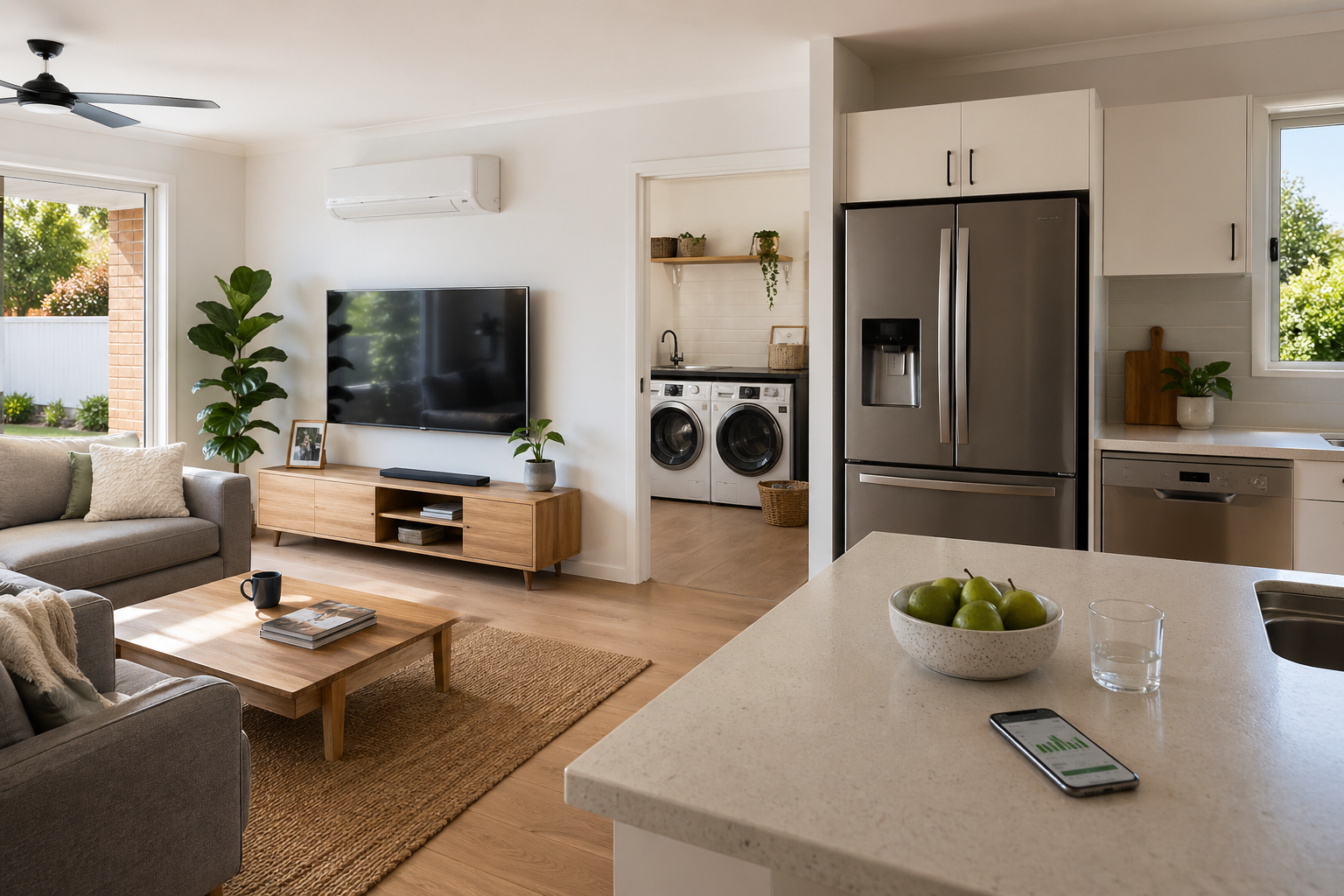
What Uses the Most Electricity in a Normal Home? A Room-by-Room Guide
If you want the short answer first, heating and cooling usually sit at the top of the list in a normal Australian home, and hot water is often next. After that, the biggest contributors are usually the appliances that either run for long periods, create heat, or stay on all the time: fridges and freezers, clothes dryers, dishwashers, ovens, pool pumps, and the standby load that never fully switches off.
That is why two households with a similar floor area can still end up with very different bills. The expensive part is not always the appliance with the biggest sticker or the newest purchase. In many homes, the real drivers are a reverse-cycle system working harder than expected, an older electric storage hot water system, a second fridge in the garage, or a cluster of medium-sized loads that run every day.
Energy use also changes by climate, occupancy, and tariff. A small apartment with no air conditioning may be dominated by hot water and kitchen loads. A detached house in a hot or cold climate may be led by heating and cooling for much of the year. If you have a pool, spa, EV charger, or older resistive heating, those can jump close to the top very quickly.
The big picture first
Australian guidance is consistent on the overall pattern even though the exact percentages move from home to home. YourHome says heating and cooling together account for around 40% of household energy use in the average Australian home, with appliances around 25%, water heating around 21%, lighting around 7%, and cooking around 5%. The Department of Climate Change, Energy, the Environment and Water also notes that heating and cooling can account for 20% to 50% of energy used in Australian homes depending on climate zone, and that water heating is typically the second-largest segment at around 15% to 30%.
That means the fastest way to understand your bill is usually to start with the loads that:
- run daily for long periods
- make or move heat
- stay on in the background
- operate on expensive peak tariff windows
Room-by-room: where the electricity usually goes
| Area | Usually the biggest loads | Why this area matters |
|---|---|---|
| Living areas and bedrooms | Air conditioning, electric heaters, ceiling fans, TVs, standby devices | Climate control often dominates whole-home use, especially in seasonal extremes |
| Kitchen | Fridge, freezer, oven, cooktop, dishwasher, microwave, kettle | Some loads are constant, others are short but high-power |
| Laundry | Clothes dryer, washing machine, ironing | Dryers can add large bursts of use, especially in winter |
| Bathroom and utility area | Hot water system, heat lamps, exhaust fans | Water heating is often one of the biggest line items in the whole home |
| Garage and outdoors | Second fridge, chest freezer, pool pump, workshop tools, EV charging | These loads are easy to forget because they are not always visible in daily routines |
1. Living room and bedrooms: heating and cooling often win
In most homes, the biggest electricity user is not a single plug-in appliance. It is the heating and cooling pattern of the home. Reverse-cycle air conditioning can be efficient compared with resistance heating, but it still uses meaningful electricity because it may run for hours at a time. Ducted systems can push that even further if they condition rooms you are not actively using.
This is also the area where the bill can drift upward without any obvious new purchase. A thermostat set a little lower in summer or a little higher in winter, longer evening occupancy, poor sealing around doors and windows, or a heatwave can all move the number more than people expect. The Australian government advises that every extra degree can lift heating or cooling energy use by roughly 5% to 10%.
What to watch:
- long daily runtime instead of short bursts
- whole-home conditioning when only one room is occupied
- old portable heaters, which can be costly to run for the comfort delivered
- standby-heavy entertainment setups with consoles, sound systems, and always-on boxes
If you want one quick test, compare your overnight base load with and without climate control. If the baseline is modest but the bill is still high, heating and cooling hours are often the real story.
2. Kitchen: the fridge is constant, but the heat-making appliances create spikes
The fridge and freezer matter because they run 24/7. A well-performing modern unit may be reasonable, but an older fridge, poor ventilation around the cabinet, weak door seals, or a second garage fridge can quietly add more than many people assume. Energy Rating guidance also points out that fridge efficiency falls when airflow is poor, thermostat settings are colder than necessary, or doors are opened repeatedly for long periods.
Then there are the burst loads:
- ovens and electric cooktops
- kettles and toasters
- dishwashers, especially when they heat their own water
- microwaves, which are high-power but usually short-duration
These kitchen loads are important because they often land right in the expensive evening window. Even if they do not dominate total monthly consumption the way heating, cooling, or hot water can, they can still drive the cost of energy at the worst time of day on time-of-use tariffs.
For many households, the kitchen lesson is simple: the fridge is your quiet constant load, while cooking and dishwashing create the visible peaks.
3. Laundry: dryers are often the hidden heavyweight
Washing machines usually matter less than people fear, especially when you wash full loads and use cold water. The dryer is the one that deserves attention. If you use a vented or older electric dryer regularly, especially in cooler months, it can become one of the most expensive room-specific appliances in the home.
This is one reason household bills can jump in winter even if the heater settings did not change much. Laundry habits often change with the weather, and a dryer used several times a week can materially raise consumption. Ironing is usually secondary, but it still adds short, high-power sessions.
What is normal:
- the washing machine is rarely the top electricity user by itself
- the dryer can become a top-tier load if you rely on it heavily
What deserves a closer look:
- daily dryer use
- half-load washing cycles repeated often
- hot-water washing when cold wash would do
4. Bathroom and utility area: hot water is often the second-biggest category
Hot water is one of the most important parts of the household picture because it sits half in the background and half in daily habit. Government guidance says water heating is typically the second-largest segment of household energy use, ranging from about 15% to 30%.
In practical terms, homes with electric storage hot water, long showers, high hot-water temperatures, or poor tank scheduling can spend more on water heating than on almost anything except climate control. In smaller apartments or mild climates, hot water can even become the main electricity story.
This category is especially important for meter-based troubleshooting because it can hide in plain sight. You may not see a hot water system running the way you notice an oven or dryer, but the energy still lands on the bill.
Signs hot water may be a major driver:
- the home uses an older electric storage tank
- bills stay high even in mild weather
- usage rises with guests or teenagers at home
- controlled-load timing changed or the system is no longer on the expected tariff
5. Garage and outside: the forgotten loads
Many homeowners focus on the main living spaces and miss the equipment outside them. This is where some of the most persistent hidden consumption lives:
- second fridges and chest freezers
- pool pumps
- workshop heaters or tools
- EV charging
- outdoor electric hot water boosters
A second fridge is a classic example because it often runs in a hotter garage, may be older, and is easy to forget about. Pool pumps can also be significant because they operate for long scheduled blocks. An EV charger is not part of every normal home, but in households that have one it can quickly move near the top of the list simply because vehicle energy demand is large.
What is usually normal, and what is worth investigating?
Normal:
- heating and cooling are your biggest line item across seasonal peaks
- hot water is the next major contributor
- the fridge is always part of the baseline, not the headline surprise
- dryers, ovens, dishwashers, and kettles create short high-usage periods
Worth investigating:
- your bill rises sharply in mild weather with no clear heating or cooling reason
- overnight usage stays high when everyone is asleep
- a second fridge, old freezer, or pool pump runs longer than expected
- hot water costs seem high even with modest shower use
- the cost increased more than the kWh because your usage shifted into peak windows
If you want to measure instead of guess
The easiest mistake is to hunt for a single guilty appliance when the real answer is a pattern. Whole-home monitoring and smart meter data are most useful when they help you separate three things:
- your always-on load
- your scheduled or seasonal load
- your short, high-power peaks
That is the difference between good energy monitoring and random appliance suspicion. If you can see the shape of usage across the day, you can usually tell whether the problem is overnight baseline, hot water recovery, evening cooking peaks, or long climate-control runtime.
For readers who want to go further, these related guides can help:
- Why Is My Electricity Bill So High Even Without a Big Appliance Change?
- How to Read an Electricity Bill in Australia Without Getting Lost
- Can a Smart Meter Actually Lower Your Bill in 2026? What It Can and Cannot Do
A practical way to cut the biggest loads first
If your goal is a lower bill, do not start with the smallest plug loads. Start in this order:
- heating and cooling runtime, settings, zoning, and draught reduction
- hot water temperature, shower length, and tariff setup
- clothes dryer use and whether line drying can replace part of it
- second fridges, garage freezers, and other always-on extras
- dishwasher, oven, and laundry timing if you are on time-of-use pricing
That sequence lines up with how most normal homes actually spend electricity. It also helps you avoid spending energy-monitoring time on low-value targets while the large loads keep running unchanged.
Bottom line
In a normal home, the biggest electricity users are usually not mysterious. Heating and cooling are commonly first, hot water is often second, and the next tier is made up of appliances that either run all day or create heat: fridges, dryers, dishwashers, ovens, pool pumps, and sometimes a second fridge or EV charger. The fastest way to reduce costs is to identify which of those categories is dominant in your home, then measure the timing and runtime instead of guessing from brand names or appliance size alone.