Device Comparison
HomeWizard kWh Meter 3-Phase vs Wi-Fi kWh Meter 1-Phase vs Wi-Fi kWh Meter 3-Phase
A HomeWizard meter comparison for buyers choosing between direct kWh metering and Wi-Fi-connected 1-phase or 3-phase options.
Free Compare
Build your own comparison
Which To Choose
Start with the practical fit, then read the table.
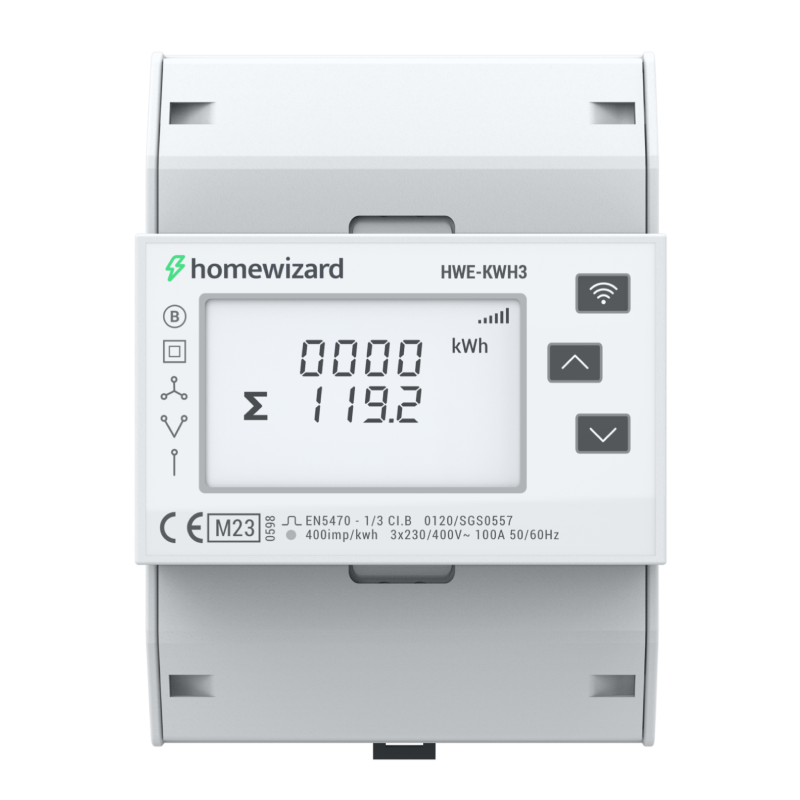
HomeWizard kWh Meter 3-Phase
Best fit when three-phase 3P4W with neutral or supported 3P3W without neutral., solar import/export visibility, and local dashboards and Home Assistant.
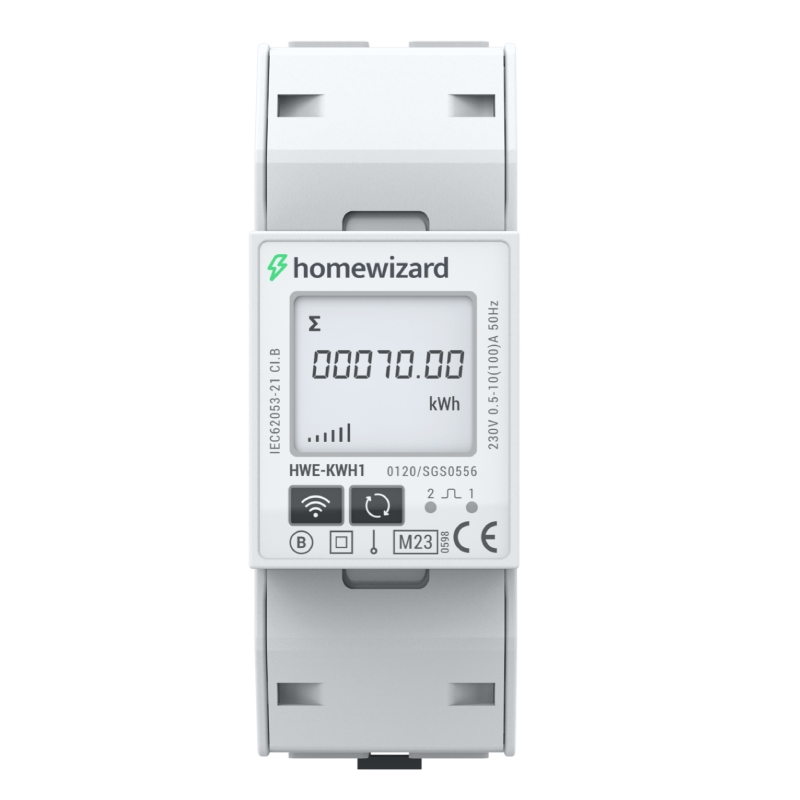
HomeWizard Wi-Fi kWh Meter 1-Phase
Best fit when single-phase, solar import/export visibility, and local dashboards and Home Assistant.
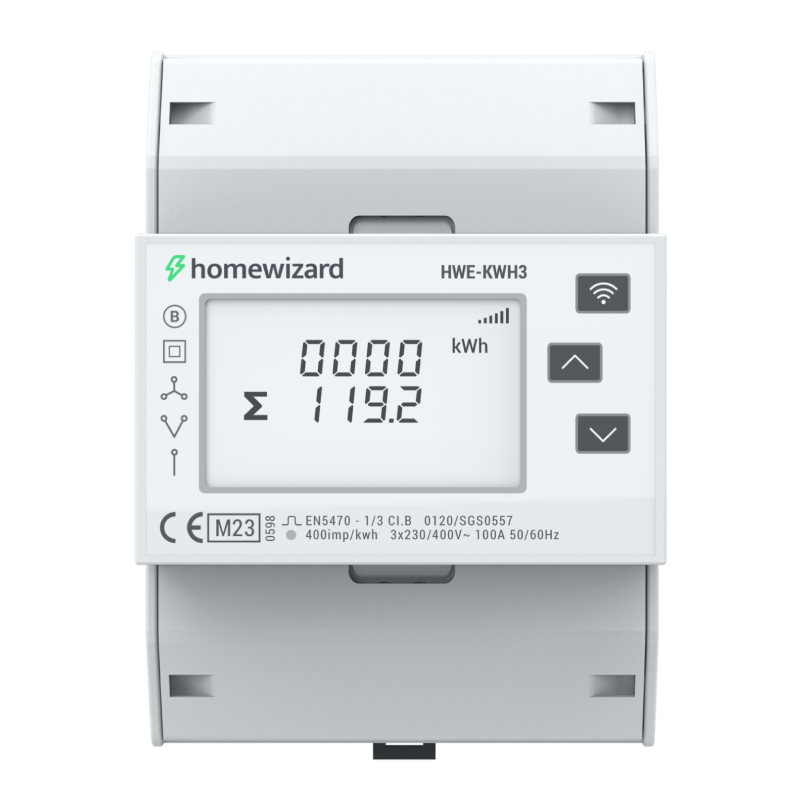
HomeWizard Wi-Fi kWh Meter 3-Phase
Best fit when three-phase 3P4W or 3P3W; 100 A maximum per phase, solar import/export visibility, and local dashboards and Home Assistant.
Use this comparison when you already like HomeWizard and need to choose the right meter format for the wiring style and connectivity expectations in the home.
At A Glance
Key fit signals before the full table
A quick pass over the most decision-shaping details for each device in this featured comparison.
HomeWizard kWh Meter 3-Phase
- Phase
- Three-phase 3P4W with neutral or supported 3P3W without neutral.
- Installation
- Four-module 35 mm DIN-rail direct-connected three-phase meter installed after the circuit breaker; qualified electrical installation required.
- Measurement
- Bidirectional three-phase import/export energy, total and per-phase power, voltage, current, power factor and frequency monitoring.
- Max current
- 100 A
HomeWizard Wi-Fi kWh Meter 1-Phase
- Phase
- Single-phase
- Installation
- 35 mm DIN-rail mounted direct-connected meter for a circuit, solar inverter, EV charger, heat pump, or main single-phase feed.
- Measurement
- Single-phase bidirectional kWh meter for import/export energy, active power, voltage, current, frequency, and production/consumption monitoring.
- Max current
- 100 A
HomeWizard Wi-Fi kWh Meter 3-Phase
- Phase
- Three-phase 3P4W or 3P3W; 100 A maximum per phase
- Installation
- 4-module (72 mm) 35 mm DIN-rail inline installation after the circuit breaker; electrical-installation competence is required.
- Measurement
- Bidirectional three-phase direct-connected import/export energy and electrical-parameter metering
- Max current
- 100 A
Before You Decide
Checks that matter before price.
- Confirm your supply type first: single-phase, split-phase, or three-phase.
- Decide whether DIN-rail wiring, CT clamps, or utility-meter access fits your switchboard.
- Choose between cloud convenience and local data access before comparing prices.
- For solar homes, make sure import, export, and load readings are measured at the right point.
| Install fit | |||
|---|---|---|---|
| Phase support | Three-phase 3P4W with neutral or supported 3P3W without neutral. | Single-phase | Three-phase 3P4W or 3P3W; 100 A maximum per phase |
| Installation | Four-module 35 mm DIN-rail direct-connected three-phase meter installed after the circuit breaker; qualified electrical installation required. | 35 mm DIN-rail mounted direct-connected meter for a circuit, solar inverter, EV charger, heat pump, or main single-phase feed. | 4-module (72 mm) 35 mm DIN-rail inline installation after the circuit breaker; electrical-installation competence is required. |
| Measurement | Bidirectional three-phase import/export energy, total and per-phase power, voltage, current, power factor and frequency monitoring. | Single-phase bidirectional kWh meter for import/export energy, active power, voltage, current, frequency, and production/consumption monitoring. | Bidirectional three-phase direct-connected import/export energy and electrical-parameter metering |
| Max current | 100 A | 100 A | 100 A |
| Meter fit | |||
| Accuracy class | Class B (MID) | Class B (MID) | Class B (MID) |
| Current sensing | Direct-connected inline measurement up to 100 A continuous per phase; no external CTs. | Direct-connected single-phase DIN-rail kWh meter; no external CT required. | Direct-connected inline meter; no external CT; supports up to 100 A continuous load per phase. |
| Monitoring | |||
| Protocol | Wi-Fi 2.4 GHz / HomeWizard Local API v1-v2 / HTTPS JSON / WSS WebSocket | 2.4 GHz Wi-Fi / local JSON API v1 / authenticated HTTPS API v2 / WebSocket | 2.4 GHz Wi-Fi / local API v1 HTTP JSON / API v2 HTTPS bearer token / WSS WebSocket |
| Local API | Yes | Yes | Yes |
| Cloud dependency | Optional cloud. Local API v2 and local Home Assistant polling can operate without cloud; disabling cloud removes app access and future firmware updates. | Optional cloud; local API and Home Assistant work without it. Disabling cloud also disables the app and firmware updates. | Optional cloud for local API and Home Assistant. Disabling cloud enables fully local operation but removes app access and future firmware updates. |
| Home Assistant | Yes | Yes | Yes |
| Solar fit | |||
| Solar import/export | Yes | Yes | Yes |
| Buying context | |||
| Price range | About EUR 100-EUR 150 | About EUR 59.95 | About EUR 129.95 |
| Availability | HomeWizard international and localized European official-store markets; delivery, tax and electrical suitability vary by destination. | HomeWizard official international / EU store regions; availability and electrical suitability depend on country, stock, and local DIN-rail installation rules. | Europe through HomeWizard's international and localized official stores; destination availability, currency, tax and shipping vary. |
| Source check | |||
| Last verified | Sep 25, 2026 | Sep 22, 2026 | Sep 18, 2026 |
| Product page | Official page | Official page | Official page |
| Documentation | Official docs | Official docs | Official docs |
Verdict
Choose by phase count first, then by whether built-in Wi-Fi convenience matters more than the simpler kWh-only metering path.
FAQ
Common decision questions.
Which energy meter should I choose?
Choose the option that matches your installation constraints and data path first. For 3 energy meter options, the full table is most useful after you know whether local data access, cloud convenience, backup behavior, solar visibility, or expansion matters most.
What should I check before comparing prices?
Check installation fit, required accessories, official documentation, monitoring platform support, and any unknown fields in the source-checked table. Price is only useful once those constraints are clear.
Can these devices work with local dashboards or Home Assistant?
HomeWizard kWh Meter 3-Phase, HomeWizard Wi-Fi kWh Meter 1-Phase, HomeWizard Wi-Fi kWh Meter 3-Phase list Home Assistant support in the catalog. HomeWizard kWh Meter 3-Phase, HomeWizard Wi-Fi kWh Meter 1-Phase, HomeWizard Wi-Fi kWh Meter 3-Phase are marked with local API support. Confirm firmware, region, and integration maturity before treating this as a final compatibility guarantee.
Are unknown fields a reason to avoid a device?
Not always. Unknown means the field was not confirmed from the reviewed source data. Treat it as a question for the installer, reseller, or manufacturer before making a purchase decision.
Does the verdict replace the specification table?
No. The verdict is a practical shortcut. Use the table to confirm the exact constraints that matter for your home, especially installation, monitoring, and support details.